Advancing through Artificial Intelligence
Machine Learning Interplay
Beyond the Buzzwords
You already know that Artificial Intelligence is the broad field of creating intelligent machines. Within that field, Machine Learning (ML) is a subfield where systems learn from data, and Deep Learning (DL) is a further subfield of ML. But this simple hierarchy doesn't capture the most important difference between them.
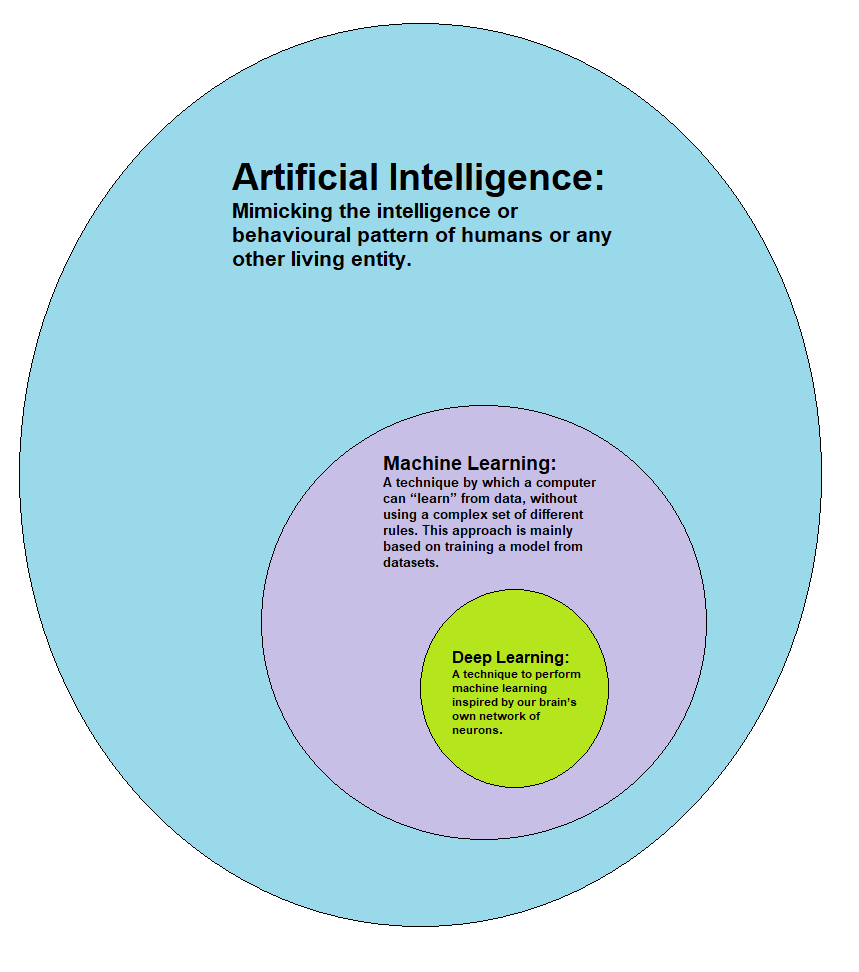
The real distinction isn't just about nesting dolls of terminology. It's about how each approach handles the raw material of data. The fundamental shift from traditional ML to DL lies in a concept called feature engineering.
The Art of Feature Engineering
Traditional machine learning models are powerful, but they require a human guide. Before the model can learn, a data scientist or engineer must manually select and transform the most relevant variables, or "features," from the raw data. This process, called , is both a science and an art. It relies heavily on domain expertise.
For example, to train a traditional ML model to predict house prices, you wouldn't just feed it a pile of addresses and photos. You would first engineer features you believe are predictive: square footage, number of bedrooms, age of the roof, proximity to good schools, crime rate, etc. The model’s success is fundamentally limited by the quality of these hand-picked features. If you forget to include a crucial feature, the model will never discover its importance.
In traditional ML, the model learns from features defined by a human. The quality of the output depends on the quality of the human's input.
Deep Learning's Automated Approach
Deep learning flips this script. Instead of relying on a human to define features, deep learning models perform automatic feature extraction. They learn the important features directly from the raw data itself. This is possible because of their structure, which is based on with many layers.
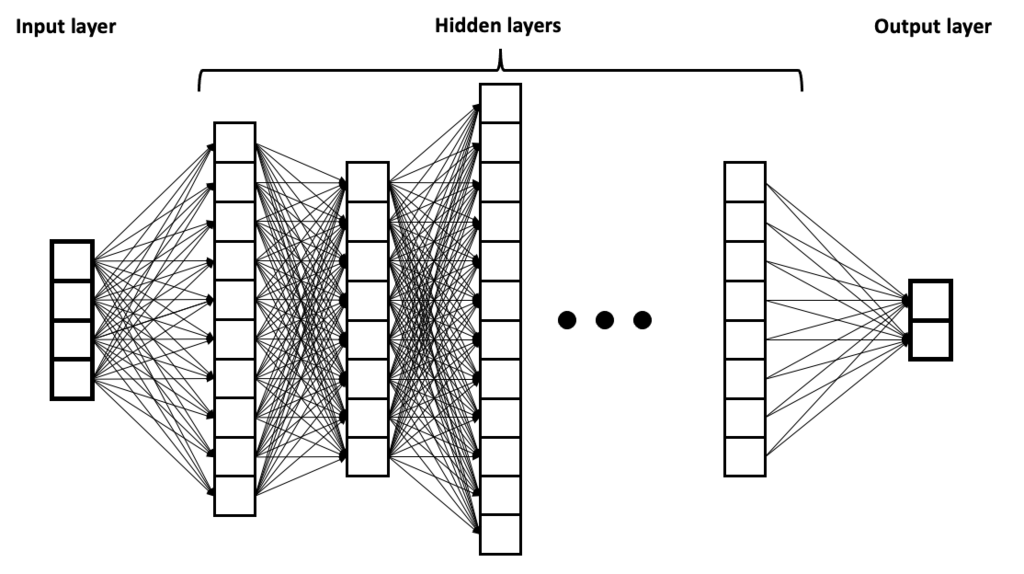
Imagine trying to identify a cat in an image. In a deep learning model, the first layer might learn to recognize simple features like edges and colors. The output of this layer is then fed to the next layer, which might learn to combine those edges into more complex shapes like corners and curves. A subsequent layer might combine those shapes to recognize eyes and ears. This process continues through many layers, with each one learning a more abstract and complex representation of the data.
This is called automated representation learning. The "deep" in deep learning refers to the depth of these layers. The network isn't told what to look for; it learns the hierarchy of features that are most predictive, from pixels to paws.
The Trade-Offs
This automated power comes at a cost. The trade-offs between traditional ML and DL are significant and often dictate which approach is best for a given problem.
| Consideration | Traditional Machine Learning | Deep Learning |
|---|---|---|
| Data Needs | Works well with smaller datasets. | Requires vast amounts of labeled data. |
| Hardware | Can often run on standard CPUs. | Requires powerful GPUs for efficient training. |
| Feature Engineering | Manual, labor-intensive, requires domain expertise. | Automatic, learned from data. |
| Training Time | Relatively fast. | Can take hours, days, or even weeks. |
| Performance | Can plateau as data volume increases. | Performance continues to improve with more data. |
| Interpretability | Models are often more transparent ("white box"). | Often a "black box," making it hard to know why a decision was made. |
Deep learning excels at complex problems with huge datasets, like image recognition or natural language processing, where manually engineering features would be nearly impossible. Traditional ML remains a go-to choice for problems with smaller, structured datasets or when model interpretability is a high priority.
What is the fundamental difference in how traditional Machine Learning (ML) and Deep Learning (DL) models handle data?
To build a model that predicts if an email is spam, a data scientist creates variables like 'number of exclamation points', 'presence of the word "free"', and 'sender's domain reputation'. This process is an example of what?
Understanding these relationships and trade-offs is key to moving beyond simple definitions and appreciating how these powerful tools actually work.