Advancing in the Indian Share Market
Indian Market Structure
The Market's Machinery
To a casual observer, India's two main stock exchanges, the National Stock Exchange (NSE) and the Bombay Stock Exchange (BSE), might seem interchangeable. Both facilitate the buying and selling of securities. Yet, for professional traders, their underlying architectures present distinct landscapes of opportunity and risk. The key difference isn't just the stocks listed, but the very nature of their liquidity.
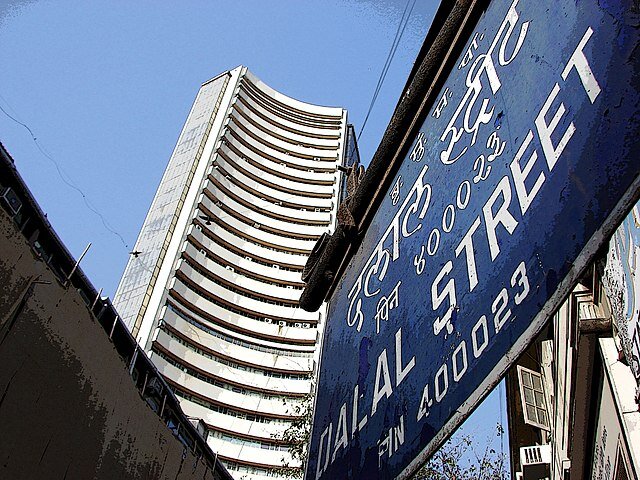
The NSE typically boasts deeper liquidity, especially in the derivatives market. This means large institutional orders can be executed with minimal price impact. The BSE, on the other hand, has a longer history and lists more companies, offering opportunities in less-traded, smaller-cap stocks. High-frequency trading firms and large mutual funds often gravitate towards the NSE's architecture, which is optimised for speed and high volume. Traders must choose their venue based not just on the security, but on the execution quality they require.
The T+1 Revolution
One of the most significant recent changes in the Indian market is the shift to a T+1 settlement cycle. This means that when you buy or sell a share, the transaction must be settled—with shares delivered and funds transferred—by the next business day. This is a major leap from the previous T+2 system and makes India's settlement process one of the fastest in the world.
The primary benefit is reduced risk. A shorter settlement window means less time for a counterparty to default on their obligation. It also improves market liquidity. Capital that was once locked up for an extra day is now freed up faster, allowing traders to redeploy it more quickly. However, this speed demands greater operational efficiency from brokers and institutional investors, especially those in different time zones.
A shorter settlement cycle reduces both counterparty risk and systemic risk across the entire market ecosystem.
Guaranteeing the Trade
What happens after an order is matched on the exchange? Who ensures the buyer gets their shares and the seller gets their money? This critical function is handled by Clearing Corporations (CCPs). For every trade, they step in to become the buyer to every seller and the seller to every buyer. This process, called novation, is the bedrock of market integrity.
India has two primary CCPs: the NSE Clearing Limited (NCL), which is part of the NSE group, and the Indian Clearing Corporation Limited (ICCL), a subsidiary of the BSE. They manage risk by collecting margins from brokers, and in the event a broker defaults, the CCP uses these funds to fulfill the settlement, ensuring the rest of the market is unaffected.
This guarantee mechanism is what gives investors confidence to participate in the market. A key development that enhances this system is the SEBI Interoperability framework. Before interoperability, a trade executed on the NSE had to be cleared through NCL, and a BSE trade through ICCL. Now, a broker can choose a single clearing corporation to settle trades executed across both exchanges. This allows brokers to consolidate their positions and collateral, leading to significant cost savings and more efficient risk management. For traders, this can translate into lower brokerage fees and better utilisation of margin capital.
When Things Go Wrong
Occasionally, a seller fails to deliver the required shares by the settlement date. This is called a delivery default or 'short delivery'. When this happens, the exchange doesn't just cancel the trade. Instead, it conducts an Auction Market to acquire the shares on behalf of the defaulting seller.
The exchange invites offers from other market participants to sell the short-delivered shares. The auction price is often higher than the original trade price, and this difference, along with a penalty, is recovered from the defaulting broker. The shares are then delivered to the original buyer, typically on T+2. This process ensures the buyer is made whole, albeit with a slight delay, and creates a strong disincentive for sellers to default on their obligations.
Understanding these structural mechanics is what separates a novice from an informed market participant. The interplay between exchanges, settlement cycles, and clearing corporations forms the invisible but essential foundation upon which all trading activity is built.
What is a primary distinguishing feature of the National Stock Exchange (NSE) compared to the Bombay Stock Exchange (BSE)?
What is the main benefit of India's shift to a T+1 settlement cycle?