Advancements in Modern Biotechnology
Advanced Gene Editing Tools
A New Era of Genetic Control
For decades, altering an organism's DNA was a bit like performing surgery with a sledgehammer. Traditional recombinant DNA techniques could insert genes, but with little control over where they landed. This unpredictability limited their use. The breakthrough came with the development of programmable nucleases, molecular scissors that could be engineered to cut DNA at a precise location. This ability to create a targeted double-strand break (DSB) is the foundation of modern gene editing.
Three major classes of these tools have emerged: Zinc-Finger Nucleases (ZFNs), Transcription Activator-Like Effector Nucleases (TALENs), and the most famous, CRISPR-Cas9. All three work on the same principle: a DNA-binding domain recognizes a specific sequence, and a nuclease domain (often FokI for ZFNs and TALENs) makes the cut. The key difference lies in how they recognize their target. ZFNs use protein motifs called zinc fingers, while TALENs use a different set of protein repeats. CRISPR, however, uses a short piece of guide RNA (gRNA) to find its target, a revolutionary simplification that made gene editing widely accessible.
CRISPR-Cas9 is a novel technology that allows geneticists and medical researchers to edit regions of the genome by removing, inserting, or modifying DNA sequences.
The Cell's Repair Crew
Creating a double-strand break is only half the battle. The real magic happens when the cell's own DNA repair machinery takes over. Editors exploit two main pathways: Non-Homologous End Joining (NHEJ) and Homology-Directed Repair (HDR).
NHEJ is the cell's emergency response. It's fast, efficient, and active throughout the cell cycle, but it's sloppy. The machinery essentially glues the two broken ends of DNA back together, often inserting or deleting a few base pairs (called indels) in the process. This imprecision is actually a feature for researchers wanting to disable, or "knock out," a gene. A small indel can cause a frameshift mutation, scrambling the gene's code and rendering the resulting protein non-functional.
HDR is the high-precision alternative. This pathway uses an undamaged DNA template to fix the break flawlessly. It's much less frequent than NHEJ and primarily active when a cell is preparing to divide. Researchers can hijack this process by providing their own custom DNA template along with the gene-editing tool. The cell's HDR machinery then uses this template to repair the break, allowing for the precise insertion of a new sequence or the correction of a faulty one.
| Feature | Non-Homologous End Joining (NHEJ) | Homology-Directed Repair (HDR) |
|---|---|---|
| Mechanism | Directly ligates broken DNA ends | Uses a template for repair |
| Outcome | Prone to insertions/deletions (indels) | Precise, high-fidelity repair |
| Cell Cycle | Active throughout | Primarily active in S/G2 phases |
| Requirement | None | Donor DNA template |
| Primary Use | Gene knockout (disruption) | Gene insertion or correction |
Challenges and Refinements
While powerful, these tools aren't perfect. One of the biggest concerns is —the nuclease cutting at unintended sites in the genome that resemble the target sequence. Such errors can have serious consequences, potentially disrupting essential genes or even activating oncogenes. Researchers have developed higher-fidelity Cas enzymes and improved guide RNA design to minimize these risks.
Another major hurdle is delivery. Getting the gene-editing components into the target cells can be tricky. Scientists use various methods, broadly categorized as viral and non-viral. Viral vectors, like adeno-associated viruses (AAVs), are highly efficient at infecting cells and delivering their genetic payload. However, they can trigger immune responses and have limits on the size of the cargo they can carry. Non-viral methods, such as lipid nanoparticles or electroporation, avoid these issues but are generally less efficient.
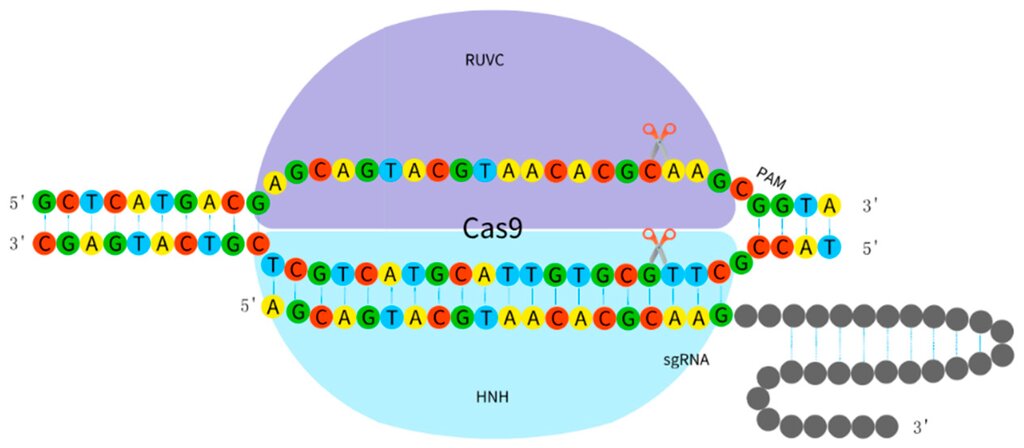
The relative simplicity, cost-effectiveness, and efficiency of the CRISPR-Cas9 system have made it the dominant tool in most labs. Its reliance on a programmable RNA guide instead of a custom-built protein makes designing new editors faster and easier. Furthermore, the discovery of a wide variety of Cas enzymes, such as Cas12 and Cas13, has expanded the toolkit. These variants have different properties, such as recognizing different target sequences or cutting DNA in a different way, giving researchers more options.
These advanced tools are rapidly moving from the research bench to the real world. In medicine, clinical trials are underway using CRISPR to treat genetic disorders like sickle cell anemia. In agriculture, they're being used to develop crops that are more resistant to drought, pests, and disease, promising a new revolution in food production.
What is the foundational step that modern gene editing tools like ZFNs, TALENs, and CRISPR-Cas9 use to begin altering a genome?
What is the key difference in how CRISPR-Cas9 recognizes its target DNA sequence compared to ZFNs and TALENs?