Advanced Zohar Interpretations
Sephirot and Archetypes
The Cosmic Psyche
The ten Sephirot are not a simple list of divine attributes. They are a dynamic, living system, a blueprint for both the cosmos and the human soul. Think of them as ten distinct lenses through which a singular, infinite light pours into reality. This infinite source is known in Kabbalah as the Ein Sof (literally, 'without end'). For anything to exist, this undifferentiated oneness had to make space for creation.
This leads to the concept of Tzimtzum, the great 'contraction' or 'withdrawal'. The Ein Sof pulled back its own essence to create a conceptual void, a space where the finite world could emerge. The Sephirot are the ordered stages of emanation that fill this void, structuring all of existence. They are often described as the 'garments' of the infinite, clothing the divine light in forms that consciousness can begin to grasp.
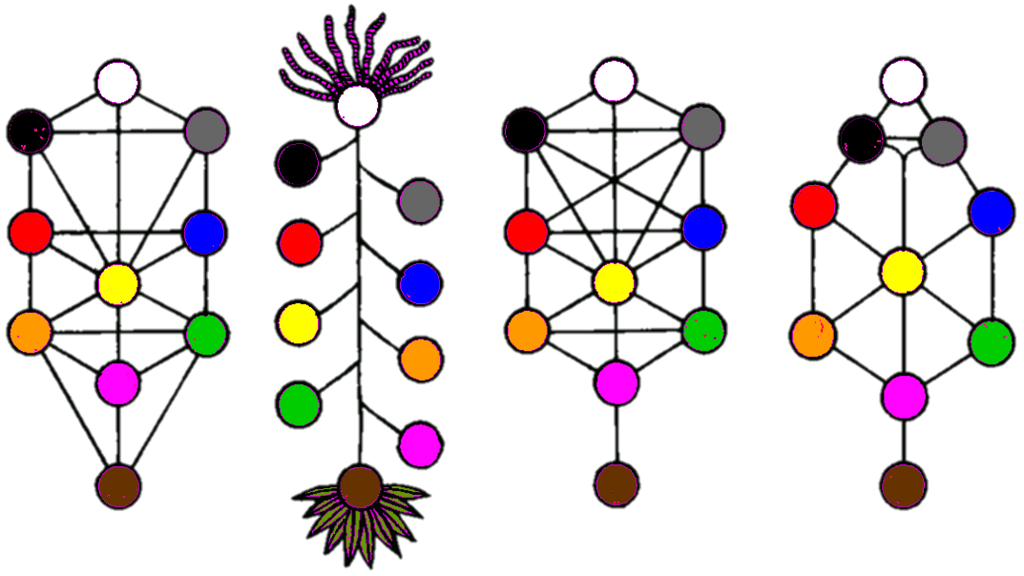
Archetypes on the Tree
To make these cosmic energies relatable, we can map them onto powerful psychological frameworks, such as Jungian archetypes. The King, Warrior, Magician, and Lover archetypes provide a useful lens for understanding the Sephirot not as abstract ideas, but as living forces within our own psyche.
The King archetype, representing sovereignty, centeredness, and order, finds its purest expression in Keter and Tiferet. Keter, 'the Crown', is the highest Sefirah. It is the first point of contact with the infinite, the superconscious will that is the seed of all that follows. It's the king in his most divine, untouchable aspect. Tiferet, or 'Beauty', sits at the heart of the Tree of Life. It harmonises the surrounding Sephirot, creating balance and integration. Tiferet is the benevolent king who rules from a place of compassion, connecting the higher and lower realms.
Keter is the pure potential of 'I am', while Tiferet is the active expression of 'I am here, in balance'.
The Merciful and the Severe
The Tree of Life is built on a dynamic of opposing, yet complementary, forces. This is most clearly seen in the balance between Chesed and Gevurah. These two Sephirot sit on opposite pillars of the tree, representing a fundamental polarity that drives much of creation and human experience.
Chesed, or 'Loving-Kindness', is pure, unbridled expansion. It is the energy of boundless generosity, connection, and mercy. In our archetypal map, this is the Lover. The Lover seeks to merge, to give without limit, to dissolve boundaries in an act of unconditional love. Without a counterbalance, however, Chesed can become overwhelming and suffocating.
This counterbalance is Gevurah, or 'Severity'. This is the Warrior archetype. Gevurah provides discipline, discernment, and boundaries. It is the power to say 'no', to judge, and to create clear distinctions. It contracts where Chesed expands. While Gevurah is essential for creating form and preventing chaos, unchecked it can lead to cruelty, rigidity, and isolation.
The psyche, like the cosmos, requires both. The King archetype in Tiferet actively mediates between the Lover's impulse to merge and the Warrior's need for separation. This balance is not static; it's a constant, dynamic process of adjustment. Understanding this interplay provides a map for navigating our own internal conflicts between connection and autonomy, mercy and justice. The Zohar is, in this sense, a profound guide to the landscape of the soul.
What is the Kabbalistic concept of Tzimtzum?
Which Jungian archetype is most closely associated with the Sefirah of Gevurah ('Severity')?