Advanced Women's Tailoring and Construction
Bust and Torso Shaping
Shaping the Torso
Turning a flat piece of fabric into a garment that fits the curves of a human body is the central challenge of tailoring. For the female form, this means creating shape around the bust and waist. The primary tool for this three-dimensional sculpting is the dart.
Dart
noun
A V-shaped, stitched fold in fabric used to shape a garment to the contours of the body. Darts remove excess fabric, creating curves and fullness where needed.
A standard bodice pattern, or block, typically has darts at the waist and side seam pointing towards the bust apex. This is the starting point. But these darts don't have to stay there. Through a process called dart manipulation, you can move this shaping anywhere on the pattern without changing the overall fit. The most common method is 'pivot and slide'.
From Darts to Seams
While darts are functional, they can interrupt the flow of a garment. A more elegant solution is to convert the darts into shaping seams. This is how you create princess seams, which are curved seams that travel from the shoulder or armhole, over the bust, and down to the waist or hem. A princess seam is essentially a dart that has been extended to become a design feature, creating long, flattering vertical lines.
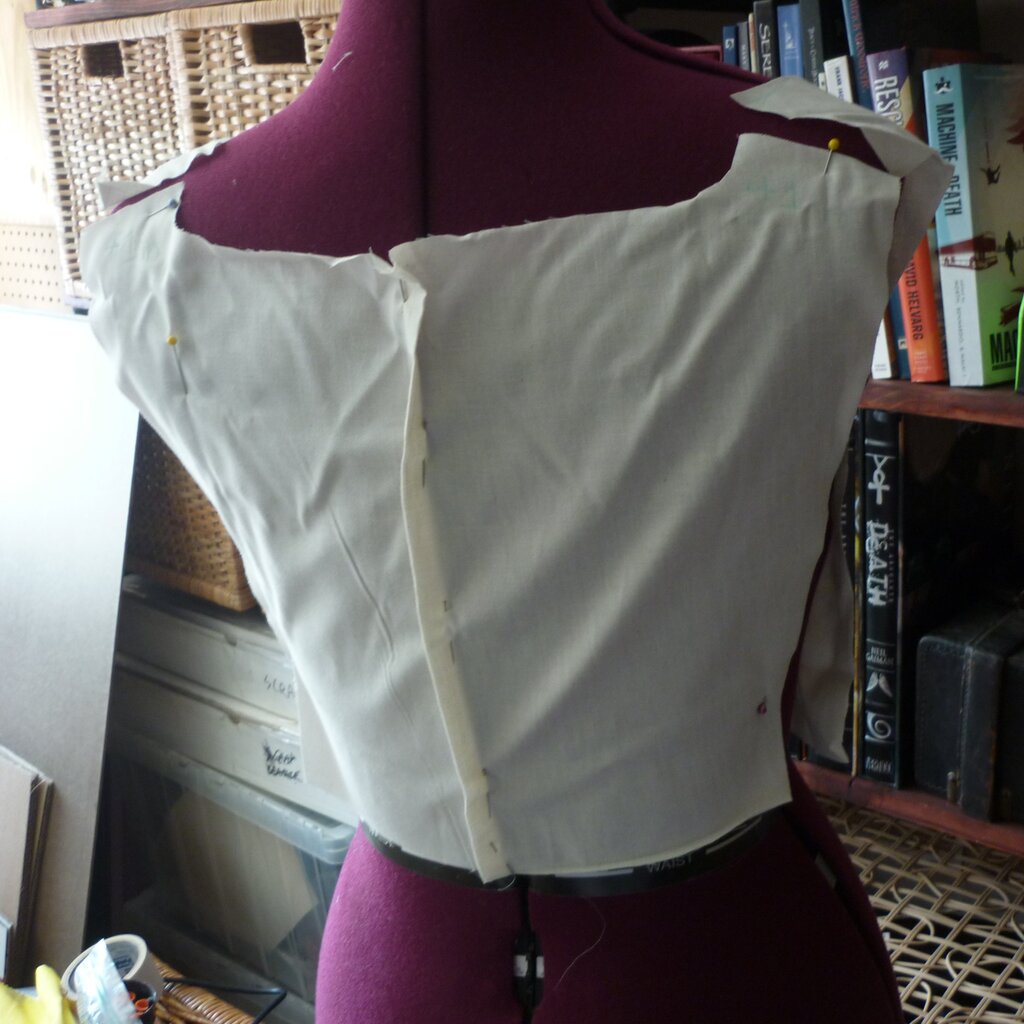
Creating a princess seam involves splitting the pattern into two or more pieces. You slash the pattern from the shoulder (or armhole) to the bust apex, and from the waist dart up to the bust apex. You then close the original side dart, pivoting its volume into the new slash lines. This separates the pattern into a centre front panel and a side front panel, with the shaping built directly into the seam that joins them.
Advanced Adjustments
Commercial patterns are typically drafted for a B-cup size. If the wearer's bust is larger, a Full Bust Adjustment (FBA) is necessary. An FBA adds fabric and shaping to the front of the garment to accommodate the bust, without altering the shoulders, waist, or back. It's a precise alteration that adds volume exactly where it's needed.
This process involves more than just adding width. It also requires adding length to the centre front of the pattern. This is because a larger bust follows a longer path from shoulder to waist. Neglecting to add length will cause the front hem of the jacket to ride up. The goal is to add volume in three dimensions, creating a pocket of space for the bust, ensuring the fabric drapes smoothly without any pulling or gaping.
If I start from the top and get the bodice perfect, all it takes is some weight at the bottom from the rest of the garment and suddenly my perfect bodice is stretched out of proportion and no longer perfect.
This kind of careful, anatomical shaping is what separates bespoke tailoring from mass-produced clothing. By manipulating darts and seams, you can create a garment that truly follows the unique contours of the body.
What is the primary function of a dart in garment construction?
A princess seam is essentially a dart that has been converted into a design feature.