Advanced Visual Storytelling and Narrative Cinematography
Advanced Lighting Ratios
Moving Beyond Exposure
You've mastered the basics of three-point lighting and know how to get a proper exposure. Now, we move from simply lighting a scene to sculpting it. Advanced cinematography is about control. It's about using light not just to see the subject, but to shape the audience's emotions.
This control comes from measuring and managing the ratios between your light sources. By creating specific, repeatable differences in light intensity, you can build a consistent visual language for your story, whether it's a bright, optimistic comedy or a dark, brooding thriller.
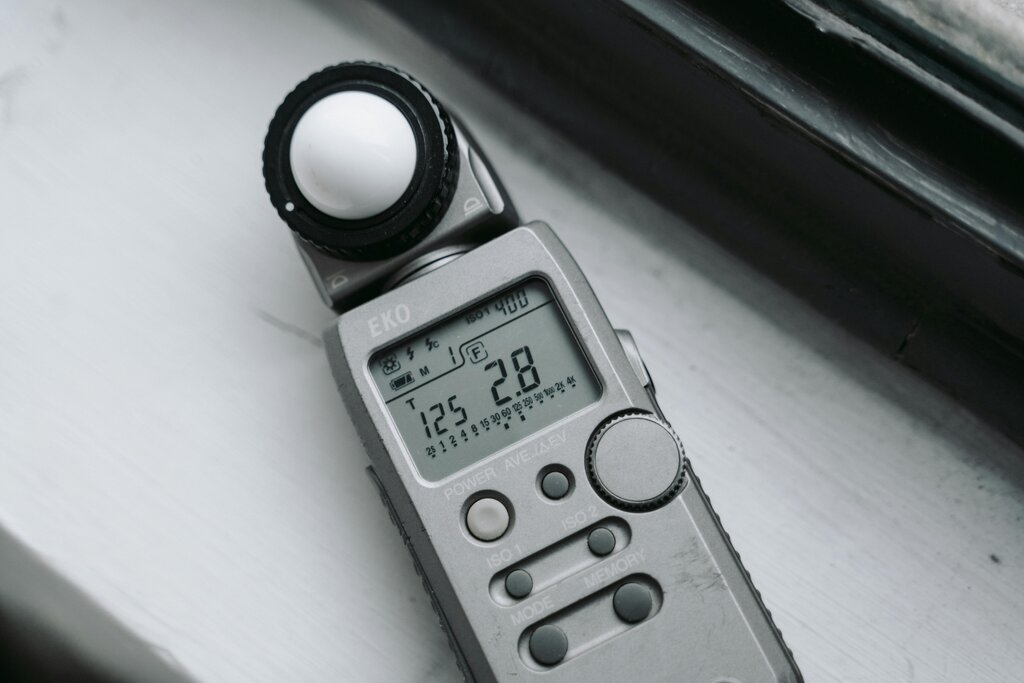
Using a light meter, you can move from guessing to knowing. Instead of just looking at a monitor, you can take precise readings of your key, fill, and background lights to build the exact mood you want, shot after shot.
The Key-to-Fill Ratio
The most fundamental relationship in lighting is the key-to-fill ratio. This measures the difference in brightness between your main light source (the key) and the light that fills in the shadows (the fill). This single ratio is the primary driver of contrast on your subject and sets the overall mood.
To measure it, point your light meter from the subject's position directly at the key light and take a reading. Then, turn off the key light and measure the fill light from the same position. The difference in f-stops between these two readings determines the ratio.
A one-stop difference means the key is twice as bright as the fill, creating a 2:1 ratio. A two-stop difference means the key is four times as bright (2²), for a 4:1 ratio. This exponential relationship is why a small change in stops can have a huge impact on the mood.
| F-Stop Difference | Ratio | Mood & Application |
|---|---|---|
| 1 Stop | 2:1 | Natural, flat. Ideal for comedies, news, corporate. |
| 2 Stops | 4:1 | More dramatic, noticeable shadows. Common in drama. |
| 3 Stops | 8:1 | High contrast, strong modeling. Classic film noir, thrillers. |
| 4+ Stops | 16:1+ | Extreme contrast, deep shadows. Chiaroscuro lighting for intense psychological drama. |
Shaping the Shadows
Sometimes, you want to increase your lighting ratio and create deeper, more dramatic shadows without adding another light. Or perhaps ambient light from the room is bouncing around, filling in shadows more than you'd like. The solution is to take light away.
This is called negative fill. Instead of adding a fill light, you place something black and non-reflective on the shadow side of your subject. This could be a black flag, a piece of black foam core, or the black side of a 5-in-1 reflector. This surface absorbs light rather than reflecting it, preventing ambient light from contaminating your shadows and making them deeper and richer.
Using negative fill is a key technique for achieving a high-contrast, cinematic look. It's often more about what light you take away than what light you add.
Creating Separation and Focus
Beyond shaping the light on your subject, you must also control the relationship between your subject and their environment. The key-to-background ratio helps you do this. It's the brightness difference between the key light on your subject and the light on the background.
This ratio determines how much your subject stands out. To make a subject pop, a common technique is to make the background one to two stops darker than the subject. This separation creates a sense of depth and draws the viewer's eye exactly where you want it.
Conversely, for a high-key, commercial, or sci-fi look, you might overexpose the background, making it significantly brighter than the subject. This creates an airy, clean, and sometimes ethereal feeling.
Lighting in cinematography plays a crucial role in setting mood, creating depth, and guiding viewer attention
Consistency is critical, especially when shooting coverage like a shot-reverse-shot conversation. If your lighting ratios change from one character's close-up to the other's, the scene will feel disjointed. Take meter readings for each setup. Ensure that if one character has an 8:1 key-to-fill ratio, the other character has a matching ratio. This continuity creates a seamless and professional-looking scene, allowing the audience to stay immersed in the story.
What does the key-to-fill ratio primarily control in a scene?
A cinematographer measures their key light, then turns it off and measures their fill light. They find a three-stop difference between the two readings. What is the resulting lighting ratio?
By moving beyond simple illumination and into the deliberate control of lighting ratios, you gain a powerful tool for visual storytelling.