Advanced Virology and the Impact of Coronaviruses
Genomic and Structural Architecture
The Coronavirus Blueprint
At the heart of a coronavirus like SARS-CoV-2 lies its genome, a single, long strand of positive-sense RNA. Think of it as a detailed instruction manual, about 30,000 letters long, that tells a host cell exactly how to build more viruses. Being "positive-sense" means the host cell's machinery, the ribosomes, can read it directly, just like a piece of its own messenger RNA (mRNA). This allows the virus to start making proteins immediately upon entering a cell.
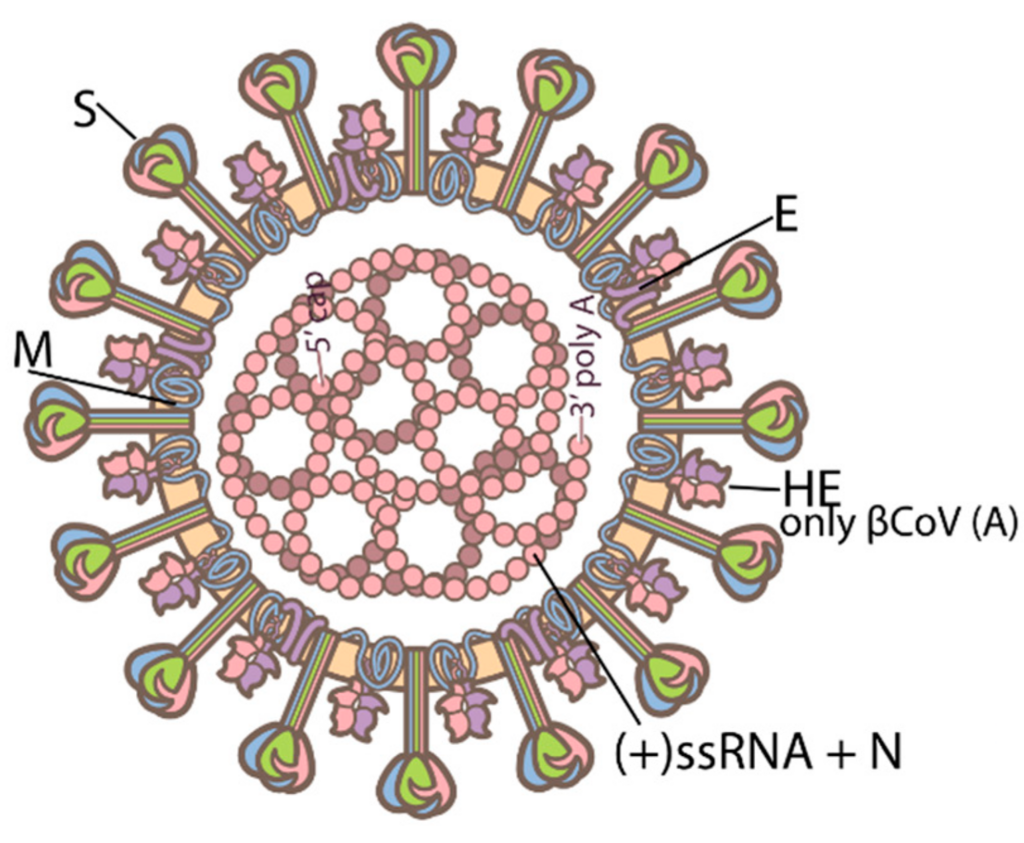
The genome is organized into distinct sections. The first two-thirds is a massive region containing two large (ORFs), called ORF1a and ORF1ab. These aren't just simple instructions; they're a complex, multi-part recipe for the virus's replication machinery. The virus uses a clever trick here called ribosomal frameshifting to produce two different, overlapping polyproteins from this single stretch of RNA. This process allows it to pack a huge amount of information into a compact space.
This initial translation creates pp1a and pp1ab, enormous polyproteins that are essentially long chains of non-functional proteins linked together. They must be chopped up into individual, active parts to do their jobs.
The Replication Team
Once the giant polyproteins are made, viral proteases get to work. Two key enzymes, nsp3 (a papain-like protease) and (the main protease or 3CLpro), act like molecular scissors. They meticulously snip the polyprotein chain at specific points, releasing 16 distinct non-structural proteins (nsps).
These nsps assemble into a sophisticated machine called the replicase-transcriptase complex. The star player of this team is nsp12, an RNA-dependent RNA polymerase (RdRp). Its job is to read the virus's RNA genome and make countless new copies. Other nsps assist, with functions like unwinding the RNA (a helicase, nsp13) and even proofreading to catch errors during replication (an exonuclease, nsp14), a rare feature for an RNA virus.
Building the Virion
While the nsps are busy copying the genome, the last third of the RNA serves as a template for the structural proteins. These are the physical components that form the new virus particle, or virion. There are four main types:
| Protein | Name | Function |
|---|---|---|
| S | Spike | Forms large protrusions on the virus surface; responsible for binding to host cell receptors. |
| E | Envelope | A small protein that plays a role in virus assembly and release. |
| M | Membrane | The most abundant structural protein; defines the shape of the viral envelope. |
| N | Nucleocapsid | Binds to the RNA genome, protecting it and packaging it into a helical structure. |
The Spike (S) protein is particularly important. It's a trimer, meaning three identical S protein molecules join together to form the characteristic "crown" that gives coronaviruses their name. Each S protein has two main parts. The S1 subunit contains the receptor-binding domain (RBD), which latches onto the ACE2 receptor on a human cell. After binding, the S2 subunit takes over, mediating the fusion of the viral envelope with the host cell membrane, allowing the genome to enter.
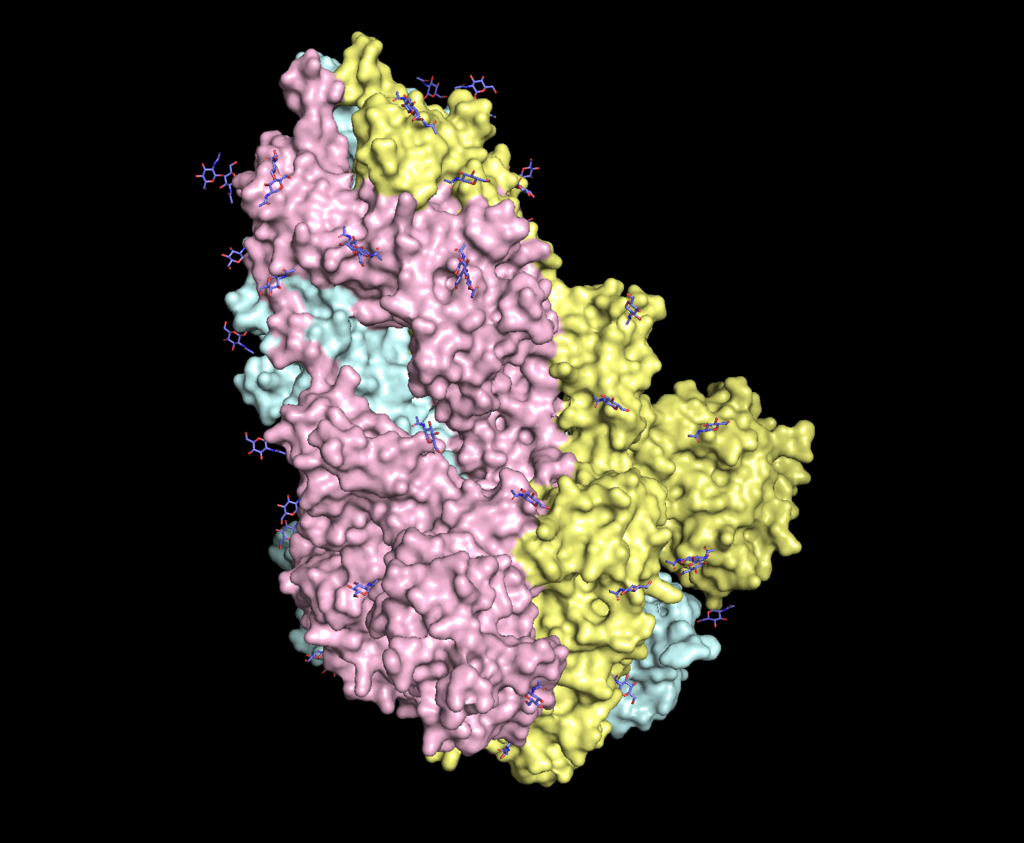
Spike (S) protein of coronavirus, including those which causes severe acute respiratory syndrome (SARS), was reported to be responsible for virus entry into host cells.
Finally, sprinkled throughout this latter part of the genome are genes for various accessory proteins. These aren't part of the final virion structure, but they play crucial roles during infection. They often work to counteract the host's immune defenses, helping the virus replicate undetected for as long as possible. They are key players in the virus's ability to modulate the host immune response and establish a successful infection.
Now let's test your understanding of the virus's molecular architecture.
What is the primary function of the nsp5 (main protease) in the SARS-CoV-2 life cycle?
The SARS-CoV-2 genome is described as "positive-sense" RNA. What does this mean for the virus?
Understanding this genomic layout is key to grasping how SARS-CoV-2 functions. From the clever frameshifting that produces its replication machinery to the specific roles of each structural protein, every part of its RNA blueprint is optimized for one purpose: hijacking a host cell to create more copies of itself.