Advanced Vehicle Operation Dynamics
Internal Combustion Dynamics
Boosting Engine Breath
An engine’s power comes from burning fuel. To burn that fuel completely and efficiently, it needs a precise amount of oxygen. Think of it like a campfire: too little air and it smothers; too much and it cools down. The ideal air-fuel mixture is known as the stoichiometric ratio. For petrol, this is about 14.7 parts air to 1 part fuel by mass.
An engine's ability to 'breathe' in this air is called its volumetric efficiency (VE). It’s a measure of how well the cylinder fills with air during the intake stroke compared to its total volume. A 1.0-litre engine that only draws in 0.8 litres of air has a VE of 80%. Higher VE means more air, which allows for more fuel to be burned, resulting in more power.
Perfect breathing is a moving target. The ideal volumetric efficiency changes with engine speed (RPM), as the speed of air flowing into the cylinder and the time the intake valve is open both vary.
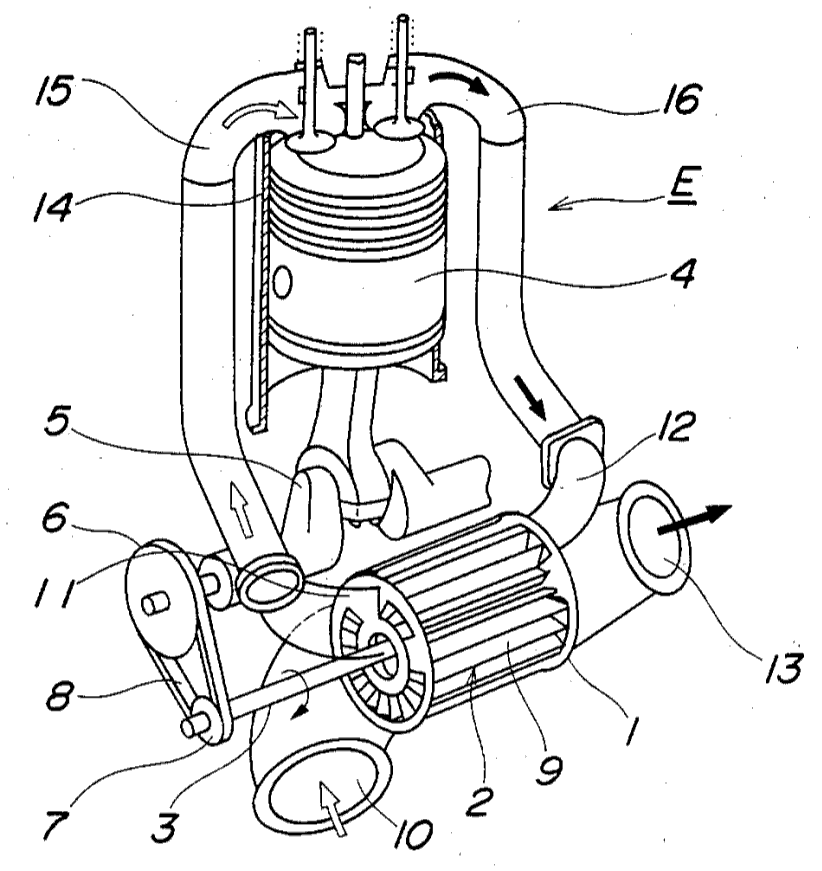
To squeeze more power out of an engine, engineers often turn to forced induction. This involves using a compressor to force more air into the cylinders than they could draw in naturally. The two main types are turbochargers and superchargers. A turbocharger uses the engine's own exhaust gases to spin a turbine, which in turn spins a compressor. A supercharger is driven directly by the engine, usually with a belt. While both increase air density and power, they have different characteristics. Turbos have a slight delay, or 'turbo lag', before they spool up, whereas superchargers provide instant boost but use some of the engine's power to run.
The Big Squeeze
Once the air-fuel mixture is in the cylinder, the piston moves up to compress it. The ratio of the cylinder volume when the piston is at the bottom of its stroke to the volume when it's at the top is the compression ratio (CR). It's a fundamental parameter that dictates an engine's thermal efficiency – its ability to convert heat energy into mechanical work.
A higher compression ratio means the mixture is squeezed into a smaller space, leading to a more powerful explosion and extracting more energy. However, there's a limit. If you compress a petrol-air mixture too much, it can spontaneously ignite before the spark plug fires. This is called detonation, or 'knocking', and it can severely damage an engine. High-octane fuel resists detonation better, allowing for higher compression ratios.
Diesel engines work differently. They don't have spark plugs. Instead, they use extremely high compression ratios (often 14:1 to 25:1) to heat the air so much that the fuel ignites as soon as it's injected. This makes them very thermally efficient.
Perfect Timing
The timing of when the intake and exhaust valves open and close is critical for performance. This is controlled by the camshaft, which has lobes that push the valves open. The shape of these lobes determines how long (duration) and how far (lift) the valves open. At low RPM, the engine needs shorter duration and less lift for stable idling and good torque. At high RPM, it needs longer duration and more lift to get enough air in and exhaust out quickly.
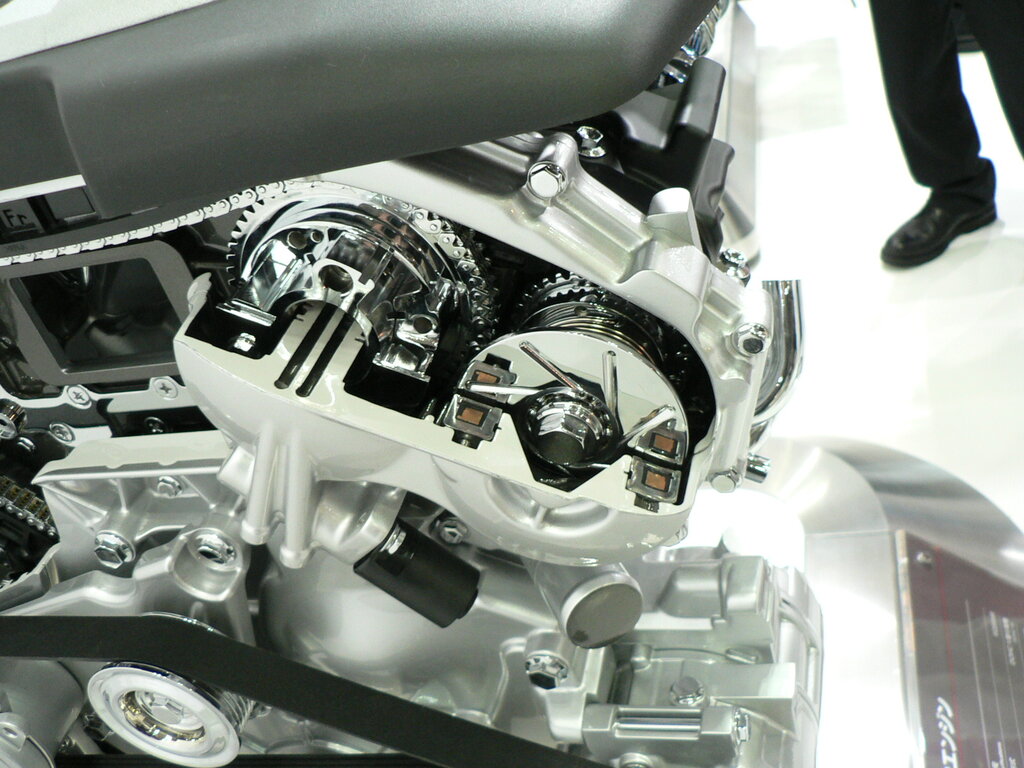
A fixed camshaft is always a compromise. This is where Variable Valve Timing (VVT) comes in. It's a technology that can change the valve timing on the fly. Simple systems might just shift the timing of when the valves open (advancing or retarding it), while more complex systems can also change the duration and lift. This allows an engine to have the best of both worlds: efficient, smooth operation at low speeds and maximum power at high speeds.
Fuel Delivery
Finally, how the fuel is introduced makes a big difference. For decades, most petrol engines used port injection, where fuel is sprayed into the intake port just before the intake valve. This allows it to mix well with the incoming air before entering the cylinder. It's a reliable and relatively simple system.
More recently, (DI) has become common. Here, the injector sprays fuel directly into the combustion chamber at very high pressure, similar to a diesel engine. This allows for more precise control over the amount of fuel and when it's injected. Injecting the fuel directly into the hot cylinder causes it to evaporate rapidly, which cools the air-fuel charge. This cooling effect helps prevent detonation, allowing for a higher compression ratio and thus better efficiency and power.
However, DI systems are more complex and expensive. They can also suffer from carbon build-up on the back of the intake valves, since they are no longer being cleaned by the fuel spray. Some modern engines use both port and direct injection to get the benefits of each system.
By fine-tuning these interconnected systems – how the engine breathes, how much it squeezes, when the valves open, and how fuel is delivered – engineers can tailor an engine's performance to meet specific goals, whether it's maximum power, ultimate fuel economy, or a smooth blend of both.