Advanced UX Design Mastery
User-Centered Design
Putting People First
User-Centered Design, or UCD, is a simple but powerful idea: design products and services with the end user in mind from start to finish. Instead of creating something and then hoping people will like it, you build it based on their actual needs, behaviors, and preferences. Think of it like a tailor measuring a client for a suit. They don't just guess the size; they take precise measurements to ensure a perfect fit. UCD is the process of measuring your users' needs to create a product that fits them perfectly.
User-centered design (UCD) processes prioritize meeting the needs and preferences of actual users.
This approach is built on a few key principles:
- Empathy: You strive to understand the user's world, their challenges, and their goals.
- Focus on the User: All design decisions are evaluated based on how they serve the user.
- Iteration: The design process is a cycle of creating, getting feedback from users, and refining. You don't aim for perfection on the first try.
Understanding Your Users
To design for users, you first have to understand them. This is where user research comes in. It's the process of systematically studying your target users to gain insights into their lives. The goal isn't to ask them what features they want, but to understand the problems they're trying to solve.
This research can take many forms, from one-on-one interviews and surveys to observing people as they go about their day. You might ask questions about their routines, what frustrates them, and what tools they currently use. This foundational work uncovers the real needs that your design can address.

Creating User Personas
After conducting research, you'll have a lot of data. User personas help you make sense of it. A persona is a fictional character created to represent a typical user. This isn't just a random profile; it's a detailed character sketch based on your research findings.
Personas transform abstract data into relatable human stories, helping the entire team stay focused on a shared vision of the user.
A persona typically includes a name, a photo, a short bio, goals, and frustrations. By creating these characters, you shift the conversation from "What do we think is a good idea?" to "What would our user, Alex, need to accomplish this?" It keeps the focus on real people, not just statistics.
Here’s a simplified example:
| Alex Chen | |
|---|---|
| Role | Freelance Graphic Designer |
| Age | 28 |
| Goals | - Manage multiple client projects efficiently. - Find inspiration for new designs. - Collaborate easily with clients. |
| Frustrations | - Wasting time on administrative tasks. - Juggling feedback from different sources. - Software that is overly complex. |
A Collaborative Process
User-centered design is not a one-time event; it’s a continuous loop. Involving users throughout the design process is crucial. After creating an initial concept or a simple prototype, you put it in front of real users to see how they interact with it.
This isn't about asking if they "like" the design. It's about observing their behavior. Can they find what they're looking for? Do they get stuck anywhere? Their feedback provides invaluable insights that guide the next round of improvements. This cycle of building, testing, and learning ensures the final product is genuinely useful and easy to use.
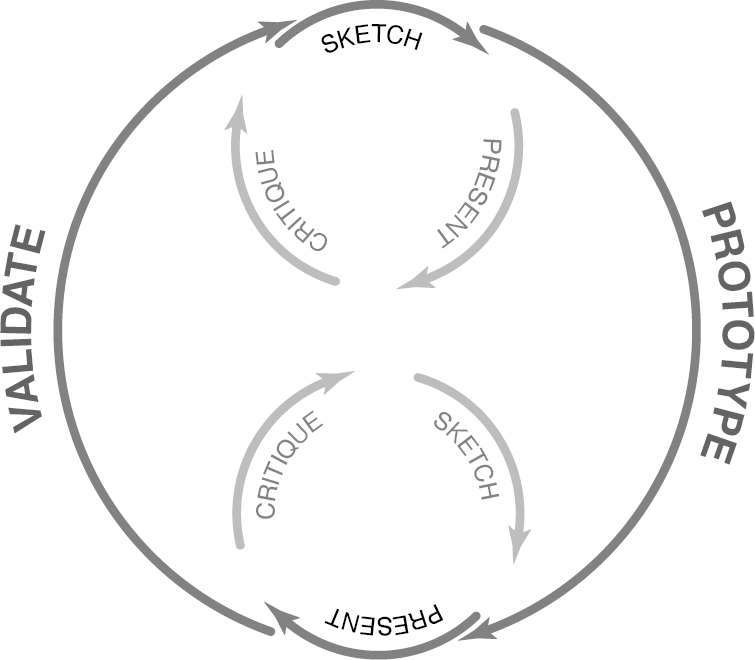
By following these principles, you move from making assumptions to making informed decisions. The result is a product that doesn't just work, but works for the people it was designed to serve.