Advanced UPSC Prelims Strategy and Optimization
Constitutional Interpretations and Judgments
Beyond Kesavananda
The Basic Structure doctrine, established in Kesavananda Bharati v. State of Kerala, is the starting point, not the conclusion. For the UPSC Prelims, the crucial analysis lies in its evolution. The doctrine transitioned from a vague concept to a robust shield against legislative overreach through a series of key judgments. In Indira Nehru Gandhi v. Raj Narain, the Supreme Court struck down the 39th Amendment, explicitly adding free and fair elections to the Basic Structure. This demonstrated the doctrine's real-world teeth beyond the theoretical confines of property rights.
The present position is that the Parliament under Article 368 can amend any part of the Constitution including the Fundamental Rights but without affecting the ‘basic structure’ of the Constitution.
The Minerva Mills v. Union of India case further fortified this by declaring judicial review and the harmony between Fundamental Rights (FRs) and Directive Principles of State Policy (DPSPs) as integral to the constitution's basic framework. This judgment was a direct counter to the 42nd Amendment's attempt to grant absolute primacy to all DPSPs over FRs under Articles 14 and 19. Later, S.R. Bommai v. Union of India cemented secularism and federalism as non-negotiable components, directly impacting the use of Article 356.
The Ninth Schedule's Diminishing Shield
Articles 31A, 31B, and 31C form a complex triad governing the conflict between property rights and socio-economic reforms. While Article 31A provides a protective cover for laws concerning agrarian reform, Article 31C, as amended by the 42nd Amendment, sought to shield any law implementing any DPSP from challenge under Articles 14 and 19. The Supreme Court in Minerva Mills read down this expansion, restoring the balance by holding that the harmony between FRs and DPSPs is itself a basic feature.
The real game-changer, however, was the case, which directly addressed the immunity conferred by Article 31B and the Ninth Schedule. Prior to this, the Ninth Schedule was treated as an impregnable fortress. The Coelho judgment established a clear cutoff: any law placed in the Ninth Schedule after April 24, 1973—the date of the Kesavananda judgment—is open to judicial review.
The Coelho case established a 'rights test'. A law in the Ninth Schedule can be struck down if it damages or destroys the essence of a Fundamental Right, and this damage is considered a violation of the Basic Structure.
Procedural Nuances and Judicial Power
The judiciary's role extends into procedural domains often tested in the Prelims. The Tenth Schedule (Anti-defection Law) is a prime example. While the Speaker's decision on disqualification is subject to judicial review, the Supreme Court in Kihoto Hollohan v. Zachillhu clarified that this review can only occur after the Speaker has made a final order. The court cannot intervene at an interlocutory stage, preserving the procedural autonomy of the legislature.
Another area of subtle distinction involves minority rights. Articles 29 and 30 protect the rights of linguistic and religious minorities to conserve their culture and establish educational institutions. These are constitutionally mandated fundamental rights. In contrast, Articles 350A and 350B are directives. Article 350A directs every state to provide primary education in the mother tongue for linguistic minorities, and Article 350B establishes the office of a Special Officer for Linguistic Minorities. These are not enforceable fundamental rights but are fundamental to governance, a critical distinction for statement-based questions.
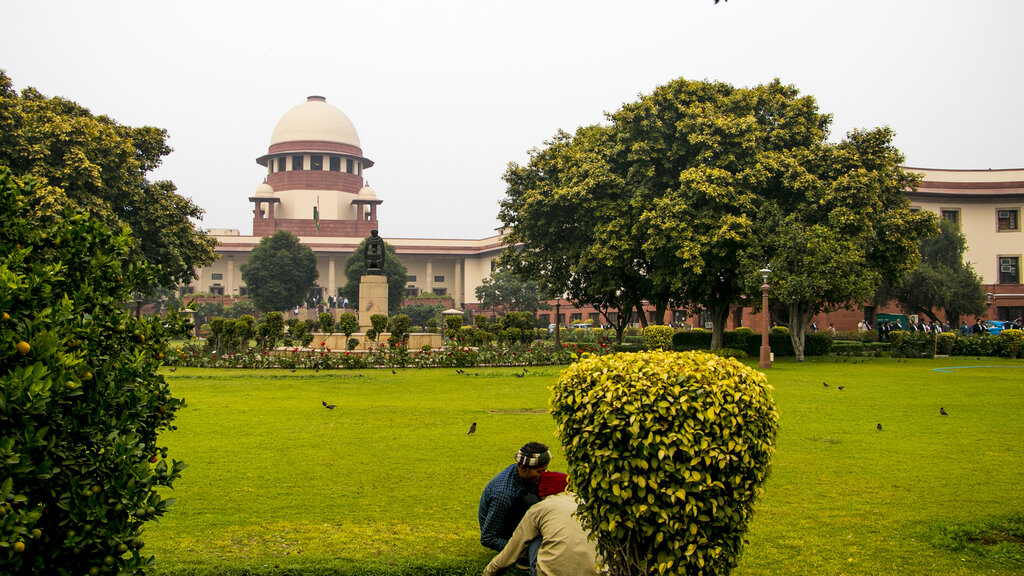
Finally, the Supreme Court's inherent powers under Article 142 allow it to pass any decree or order necessary for doing "complete justice." This is a vast, judicially evolved power, not a constitutionally mandated procedure for specific cases. Its application led to the development of the in the Rupa Ashok Hurra v. Ashok Hurra case. This petition is a final, discretionary remedy against a final judgment of the Supreme Court after a review petition has been dismissed. It is entertained on extremely narrow grounds, such as a violation of the principles of natural justice or apprehension of bias on the part of a judge.
Mastering these distinctions—between mandated articles and judicially evolved doctrines, between procedural bars and substantive review—is essential for navigating the complex multi-statement questions that characterize the UPSC Prelims.