Advanced Text to Speech Voice Model Architectures
TTS Architectures
The First Talking Machines
The earliest computer voices were built on a simple idea: record a person speaking, chop up the recordings into tiny pieces, and then glue them back together to form new sentences. This method is called concatenative synthesis.
Concatenate
verb
To link things together in a chain or series.
Think of it like creating a ransom note out of newspaper clippings. You find the letters and words you need and arrange them to say something new. Concatenative systems do the same with sound. The most basic versions store entire words. When you type "The train is arriving," the system just finds its recordings for "the," "train," "is," and "arriving" and plays them in order.
More advanced systems break speech down into smaller pieces, like syllables or even individual phonetic units called diphones. A diphone is a sound that includes the transition from the middle of one phoneme to the middle of the next. Storing sound this way is more efficient, as you need a much smaller library of sounds to construct any word in a language.
The main advantage of concatenative synthesis is that the individual audio pieces are high-quality recordings of a real human voice. But when stitched together, the seams often show. The rhythm and pitch can sound unnatural and choppy because the tone from the end of one word doesn't smoothly match the beginning of the next.
Building Voices from Rules
To create more flexible and less robotic voices, engineers developed parametric synthesis. Instead of storing chunks of audio, this approach stores a statistical model of a voice. It's like having a recipe for speech rather than a collection of pre-recorded sounds.
The system analyzes a massive amount of speech from a single speaker and creates a mathematical representation of their voice. This model captures key acoustic features, or parameters, like vocal pitch, timing, and spectrum (the texture of the sound). To generate speech, the system feeds text into this model, which then predicts the right parameters for those words. Finally, a component called a vocoder uses these parameters to synthesize the audio waveform from scratch.
Parametric models are lightweight and fast. Because they generate audio based on rules, they can pronounce words they've never seen before. However, the quality often suffers. The vocoders used in this process tend to produce a buzzy, muffled sound that lacks the richness of a real human voice. It's a trade-off: you gain flexibility but lose audio fidelity.
Teaching Machines to Speak
The latest revolution in TTS comes from neural networks, a type of AI inspired by the human brain. Instead of relying on pre-recorded chunks or simplified statistical models, neural TTS models learn to generate audio waveforms directly from text. The most famous early example of this was Google's WaveNet.
These systems are trained on vast datasets of human speech. During training, the network learns the incredibly complex relationships between text and the raw audio that represents it. It learns how phonemes connect, how intonation rises and falls, and the subtle textures that make a voice sound human.
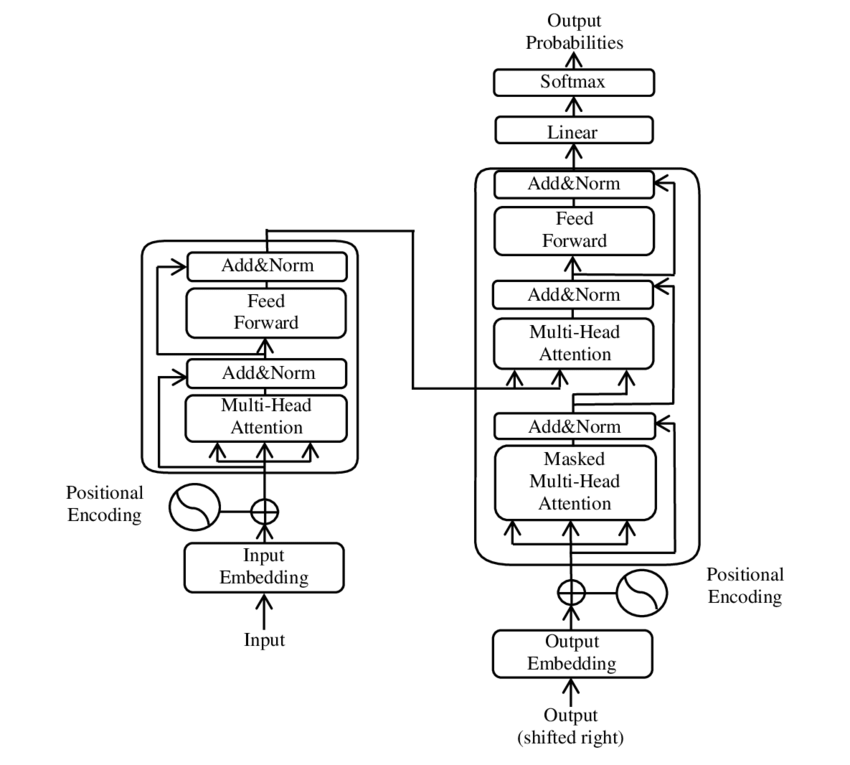
When given new text, the neural network generates the corresponding audio sample by sample, predicting the shape of the sound wave one point at a time. This process is computationally intensive, but the result is a voice that is remarkably clear and natural. Neural models can capture subtleties like breath sounds and slight pauses, making them far more realistic than previous architectures.
Today, most high-quality TTS systems, from smartphone assistants to audiobooks, are built using neural networks. They combine the flexibility of parametric models with a sound quality that can be indistinguishable from a human recording.
Each new architecture has built upon the last, moving from simple assembly to complex generation. This evolution has brought us closer to the goal of creating synthetic speech that is truly indistinguishable from our own.