Advanced Texas Horticulture and Black Gumbo Methodology
Black Gumbo Mineralization
The Gumbo Soil Conundrum
Texas Gulf Coast 'Black Gumbo' soil presents a unique challenge. Its high clay content gives it a massive, but often latent, Cation Exchange Capacity (CEC). In its native state, this soil is a dense, anaerobic mass where nutrients are chemically locked up. The fine clay particles are so tightly packed that water infiltration is poor, leading to periods of saturation followed by cracking when dry. This physical compaction severely limits root penetration and oxygen availability, effectively stifling the aerobic microbial life necessary for nutrient cycling.
The problem isn't a lack of nutrients, but a lack of bioavailability. The potential is there, locked within the clay's molecular structure.
The clay colloids and organic matter have a net negative charge, allowing them to adsorb and hold positively charged ions (cations) like calcium (), magnesium (), and potassium (). Plant roots release hydrogen ions () into the soil solution, which they exchange for these essential mineral cations from the colloid surfaces. In compacted Gumbo, this exchange is inefficient. The lack of porous structure means poor contact between roots and colloid surfaces, and limited water movement to transport ions.
Beyond Organic Matter
Purely organic approaches, such as the Rodale or Back to Eden methods, are often insufficient for remediating Black Gumbo. While adding massive amounts of compost or wood chips provides crucial carbon to feed microbes and improve aggregation, it cannot fix a core problem: mineral deficiency. Organic matter is excellent for supplying macronutrients like nitrogen, but it lacks the broad spectrum of trace minerals required for robust biological function. These systems function well in soils that already have a balanced mineral profile, but they fall short in geologically unique clays like Gumbo.
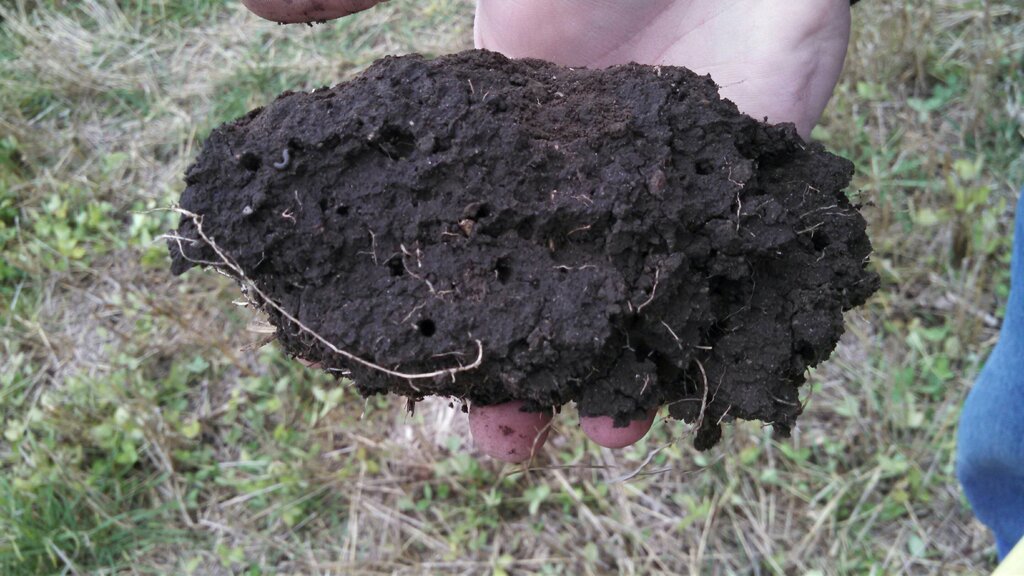
This is where mineralization becomes the catalyst. By introducing a diverse array of rock dusts, we provide the raw elemental building blocks that were never present in sufficient quantities. Specifically, paramagnetism from certain rock types appears to enhance nutrient uptake and microbial communication. The goal is not just to add organic matter, but to pair it with a full-spectrum mineral supplement to kickstart the soil's entire biological engine.
Aggregate make up, structure, and form are all important to soil function and habitability due to their ability to sequester microorganisms and store water and gasses.
The key is using rock dusts like to remineralize the soil. This material contains a wide array of over 70 trace elements, such as selenium, cobalt, and molybdenum. While needed in minute quantities, these elements are critical as cofactors for enzymes in both plants and soil microbes. Without them, metabolic pathways operate inefficiently or not at all, limiting the breakdown of organic matter and the synthesis of beneficial compounds.
Shifting the Microbial Web
The transformation of Black Gumbo from an anaerobic, compacted state to a healthy aerobic structure depends on shifting the microbial community. The initial anaerobic environment is dominated by bacteria that can survive without oxygen. Our goal is to create conditions that favor a robust, balanced web of both aerobic bacteria and, crucially, beneficial fungi.
Fungi, particularly mycorrhizal fungi, are the architects of good soil structure. Their hyphae are microscopic threads that weave through the soil, binding clay particles together into stable aggregates. This process, called aggregation, creates the macropores necessary for air and water to penetrate the soil profile. The produced by these fungi acts as a powerful glue, creating long-lasting structure.
Achieving a higher fungal-to-bacterial (F:B) ratio is key. While bacteria excel at breaking down simple organic compounds, fungi are needed to decompose complex, lignin-rich materials like wood chips. Mineralization acts as the trigger for this shift. The availability of trace minerals boosts the efficiency of fungal enzymes, allowing them to outcompete the anaerobic bacteria as oxygen levels rise from improved soil structure. This creates a self-reinforcing cycle: minerals boost fungi, fungi create structure, structure improves aeration, and aeration favors more beneficial fungi.
In practice, this means incorporating both high-quality compost for microbial inoculation and carbon, alongside a calculated application of rock dusts. The combination provides the food, the organisms, and the essential mineral cofactors needed to transform dense clay into a productive, living soil ecosystem.
What is the primary physical characteristic of Texas 'Black Gumbo' soil that makes it challenging for agriculture?
Why is a purely organic approach, like adding large amounts of compost alone, often insufficient for remediating Black Gumbo soil?
By addressing the root causes of compaction and nutrient lock-up through targeted mineralization and biological support, even the most challenging Black Gumbo clay can be transformed.