Advanced Tensor Decomposition Dynamics
Multilinear Algebra Foundations
Beyond Matrices
In linear algebra, we work with vectors (1st-order tensors) and matrices (2nd-order tensors). But what happens when data has more than two dimensions? Think of a video clip: it has height, width, and time. This is where multilinear algebra comes in, using tensors to represent this multi-way data.
A tensor is essentially a multi-dimensional array. The 'order' of a tensor refers to the number of dimensions, or 'modes,' it has. A scalar is order-0, a vector is order-1, and a matrix is order-2. A 3rd-order tensor can be visualized as a cube of numbers, and so on.
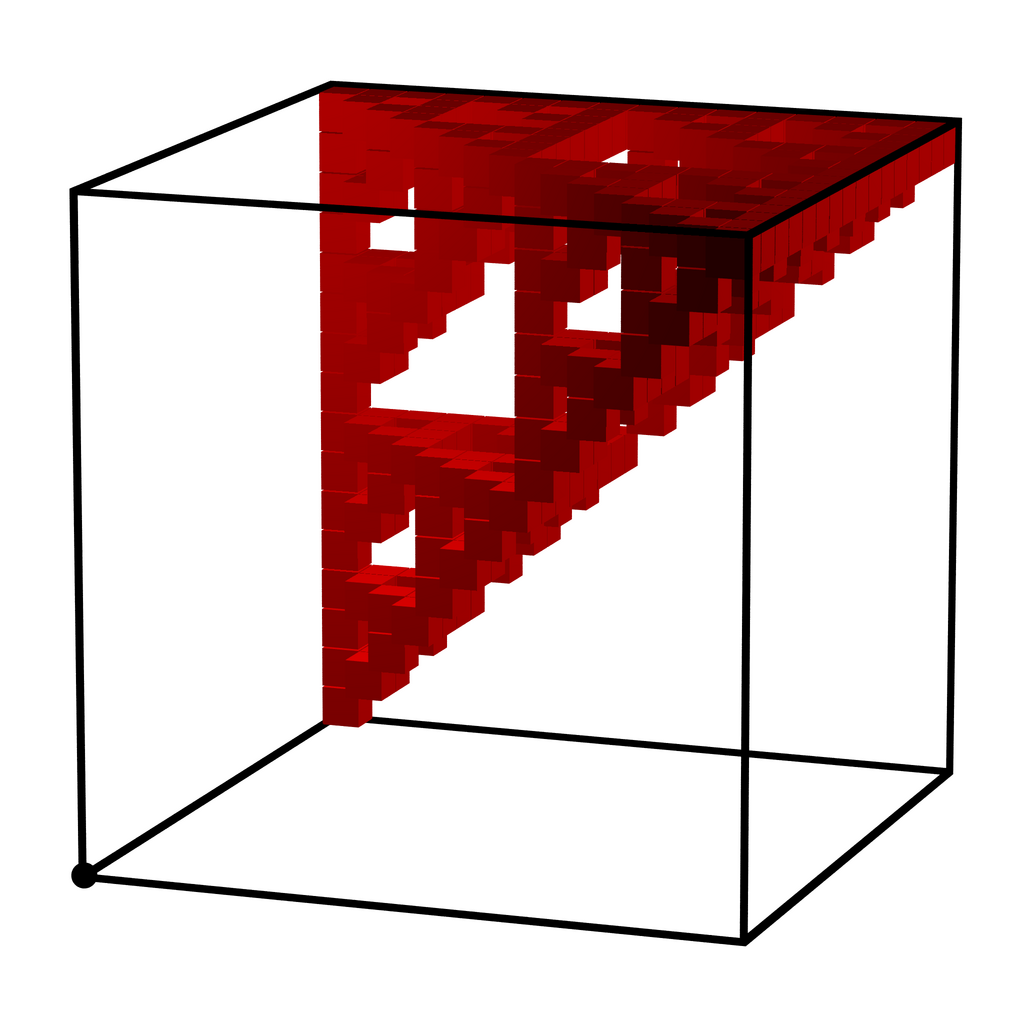
Slicing and Dicing Tensors
To analyze a tensor, we need ways to look at its internal structure. We can do this by examining its 'fibers' and 'slices'.
-
Fibers are the higher-order equivalent of rows and columns. They are defined by fixing all but one of the tensor's indices. For a 3rd-order tensor, a fiber is a vector that runs through the cube along one of its axes.
-
Slices are two-dimensional sections of the tensor, obtained by fixing one index. For a 3rd-order tensor, you can imagine slicing the cube of data horizontally, vertically, or front-to-back. Each slice is a matrix.
The most powerful technique for applying familiar matrix tools to tensors is 'unfolding,' also known as matricization or flattening. This process rearranges the elements of a higher-order tensor into a matrix. The way we unfold it depends on which mode we want to analyze.
For an tensor, we can unfold it into three different matrices: of size , of size , and of size . In each case, the fibers along the chosen mode become the columns of the new matrix.
New Ways to Multiply
Once we have a tensor, how do we operate on it? A key operation is the n-mode product, which defines how to multiply a tensor by a matrix along a specific mode. This is the cornerstone of many tensor decomposition methods, like the Tucker decomposition.
The n-mode product of a tensor with a matrix along the n-th mode is another tensor, . The size of the resulting tensor is .
Beyond the n-mode product, several specialized matrix products are fundamental in tensor computations. They provide compact ways to express complex operations, especially within decomposition algorithms like the CP model.
| Product | Symbol | Operation | Key Feature |
|---|---|---|---|
| Kronecker | Creates a large block matrix from two smaller matrices. | Expands dimensionality. If is and is , the result is . | |
| Khatri-Rao | A column-wise Kronecker product. Only for matrices with the same number of columns. | Preserves the column count while expanding the row count. | |
| Hadamard | Element-wise product. Matrices must be the same size. | Simple element-by-element multiplication. Used in filtering and scaling operations. |
The creates a large block matrix, the Khatri-Rao product is a more specialized column-wise version, and the Hadamard product is a straightforward element-wise multiplication. Understanding the distinction between these is crucial for implementing and interpreting tensor algorithms.
In multilinear algebra, what does the 'order' of a tensor describe?
If you visualize a 3rd-order tensor as a cube of data, what is a 'fiber'?