Advanced Tax Optimization Strategies
Tax Planning Fundamentals
The Building Blocks of Tax Planning
Tax planning isn't about finding secret loopholes. It's about understanding the basic rules of the system to manage your finances smartly. By learning a few core concepts, you can make informed decisions that lower the amount of tax you owe, legally and effectively.
What You're Actually Taxed On
The government doesn't tax every dollar you make. Instead, it taxes your taxable income, which is your total income minus certain adjustments and deductions. The calculation is a multi-step process.
First, you start with your Gross Income, which is all the money you receive during the year. This includes your salary, freelance earnings, and investment returns. From there, you subtract specific adjustments, like contributions to a traditional IRA, to arrive at your Adjusted Gross Income (AGI). This number is important because it's used to determine your eligibility for certain tax benefits.
Finally, you subtract deductions from your AGI to get your taxable income. This is the final amount your tax is calculated on.
Lowering Your Bill
Once you know your taxable income, the goal is to lower your final tax bill as much as possible. Two primary tools help you do this: deductions and credits.
Think of deductions as reducing the amount of income the government can tax, while credits directly reduce the amount of tax you have to pay.
Deductions come in two flavors: standard and itemized.
-
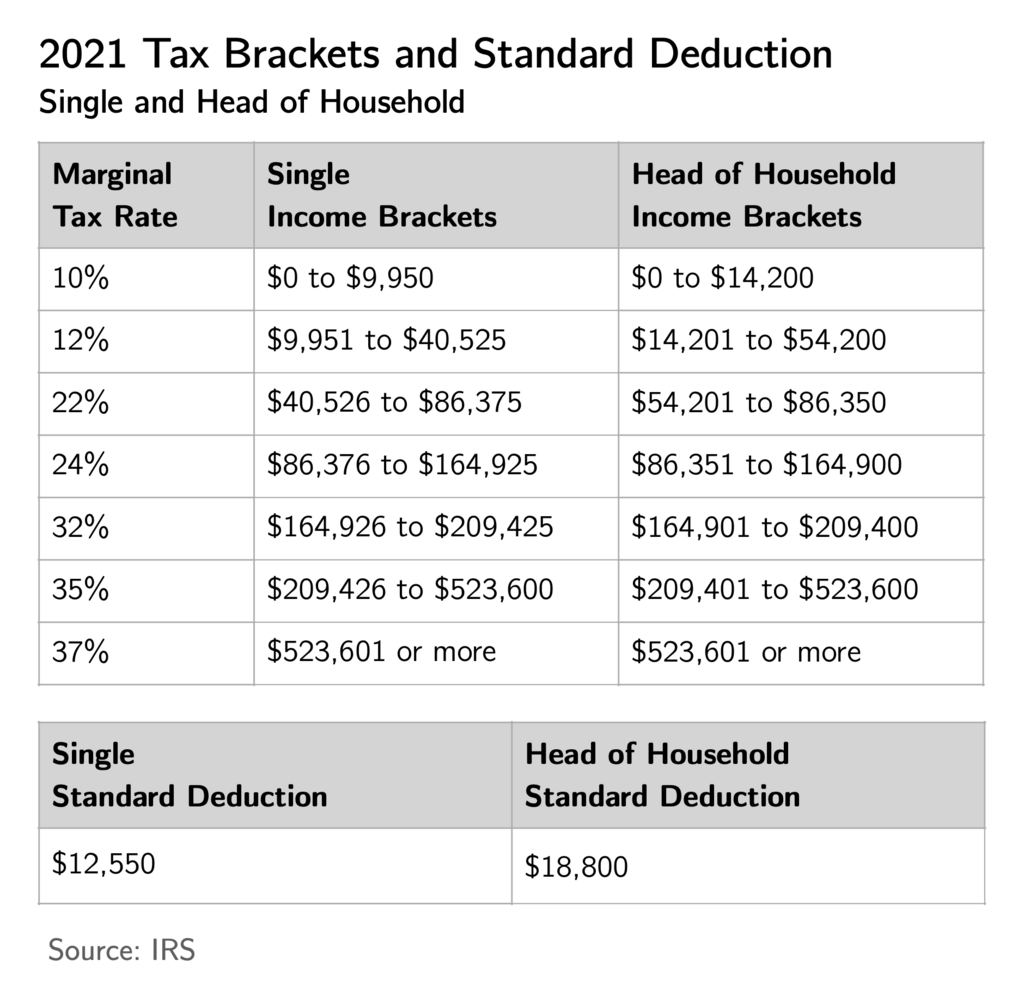
The standard deduction is a fixed dollar amount that you can subtract from your AGI. The amount depends on your filing status, like 'single' or 'married filing jointly'. It's the simplest option.
-
Itemized deductions are a list of specific, eligible expenses. These might include mortgage interest, state and local taxes, or charitable donations. You'd choose to itemize only if the total of your eligible expenses is greater than the standard deduction for your filing status.

Tax credits are even more powerful. While a deduction reduces your taxable income, a credit reduces your final tax bill dollar-for-dollar. A $1,000 tax credit saves you $1,000 in taxes, period. A $1,000 deduction, on the other hand, only saves you an amount equal to your tax rate times $1,000. For example, if you are in the 22% tax bracket, a $1,000 deduction only saves you $220.
How Your Income Is Taxed
The United States uses a progressive tax system. This means that people with higher taxable incomes are taxed at higher rates. The system is divided into several income ranges, called tax brackets, each with its own tax rate.
It's a common misconception that if you move into a higher tax bracket, all your income is taxed at that higher rate. That's not how it works. You only pay the higher rate on the portion of your income that falls within that specific bracket.
The type of income you earn also matters. Earned income is money from a job, like salary or wages. Investment income comes from sources like stock dividends, interest from a savings account, or capital gains from selling an asset. These different income types are often taxed at different rates. For instance, long-term capital gains are typically taxed at lower rates than your regular salary.
Which of the following has the most significant impact on reducing the final amount of tax you owe?
What is the correct order for calculating your taxable income?
Understanding these core principles is the first step in effective tax planning. They provide the foundation for making smarter financial choices throughout the year.