Advanced Tailings Monitoring and Risk Governance
Precision Geotechnical Instrumentation
Advanced In-Situ Monitoring
Effective monitoring of tailings storage facilities (TSFs) requires moving beyond periodic inspections and embracing real-time, high-precision data. While remote sensing provides a valuable overview, in-situ sensors offer the granular, point-specific data needed to detect the subtle, internal signs of potential failure. These instruments are our eyes and ears beneath the surface, tracking changes that precede instability.
Measuring Pore-Water Pressure
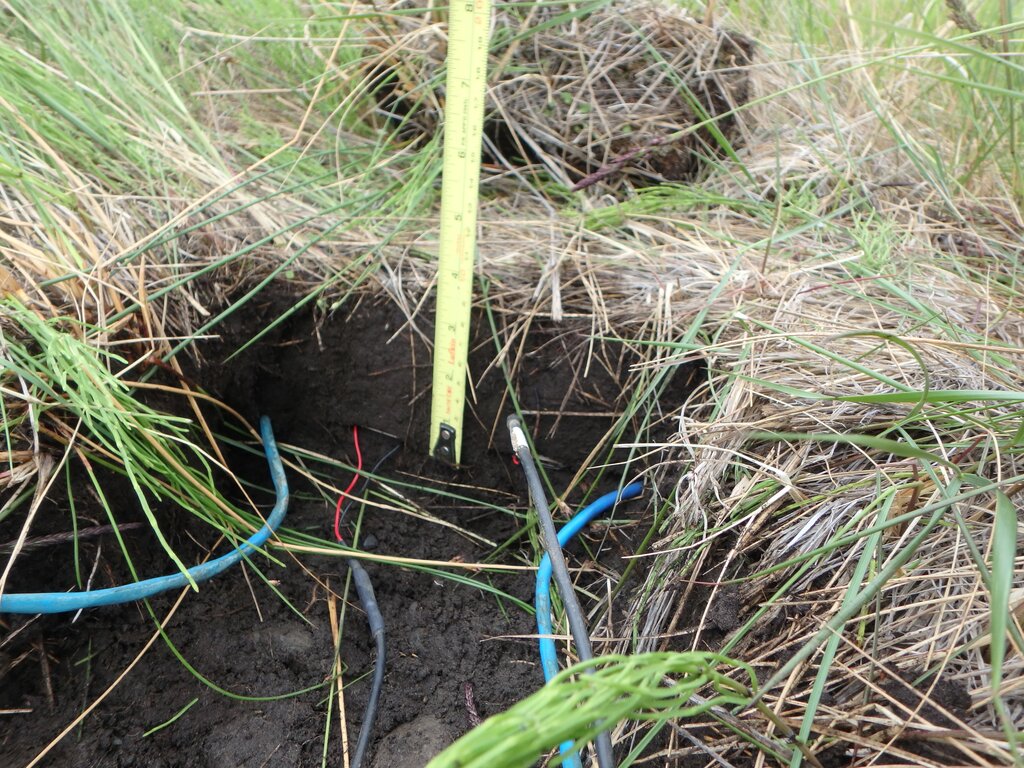
One of the most critical parameters inside a TSF is pore-water pressure. Excess pressure within the tailings mass reduces its strength and can lead to liquefaction. To monitor this, we rely on (VWPs). A VWP works by measuring the pressure of the fluid in the pores of the soil or rock. It consists of a tensioned steel wire anchored at one end and attached to a diaphragm at the other. External water pressure on the diaphragm changes the tension in the wire, which in turn alters its resonant frequency when plucked by a small electromagnetic coil.
The data from these sensors is vital for tracking the location of the phreatic line, or the level of saturation within the dam. A rising phreatic line is a classic indicator of poor drainage and increasing risk. In gold mining environments, VWP specifications are crucial. They must be constructed from materials resistant to the specific chemical leachates present in the tailings and robust enough to withstand the high pressures and densities of settled tailings over many years.
Tracking Sub-Surface Deformation
While piezometers track pressure, another class of instruments tracks movement. Sub-surface deformation can indicate that internal shear planes are forming, a direct precursor to a slope failure. The workhorse for this task is the automated In-Place Inclinometer (IPI). IPIs are installed in vertical boreholes that pass through the tailings and into stable ground. Each instrument consists of a string of sensors that measure tilt in two perpendicular directions. By integrating these tilt measurements along the length of the borehole, we can get a precise profile of any lateral displacement.
A more modern alternative to IPIs are Shape Arrays. These instruments provide a higher-resolution, continuous profile of deformation. A consists of a series of rigid segments connected by joints that can measure bend and twist. This allows it to create a real-time, 3D model of the borehole's shape. This continuous data stream is invaluable for pinpointing the exact depth and thickness of a developing shear zone with much greater accuracy than discrete IPI sensors.
Connecting the Data
Individual sensors are useless without a reliable way to collect their data. Real-time data loggers connected to telemetry systems are the central nervous system of a modern TSF monitoring program. These systems automatically collect readings from all on-site instruments at regular intervals and transmit them to a central server for analysis. Communication protocols like are often used for their ability to transmit small data packets over long distances with very low power consumption, perfect for a sprawling mine site. Cellular networks provide another robust option where coverage is available.
This network of sub-surface sensors is complemented by surface monitoring. Automated Total Stations (AMTS), also known as robotic total stations, are ground-based survey instruments that can measure distances and angles with extreme precision. They are programmed to automatically aim at a series of reflective prisms installed on the TSF's surface and abutments. By repeatedly measuring the 3D position of these prisms, an AMTS can detect surface movements as small as a few millimetres, providing a clear picture of overall facility deformation.
Ultimately, an effective monitoring strategy isn't about using a single instrument, but integrating data from multiple systems. Sensor placement must be deliberate, focusing on areas identified as high-consequence through geotechnical analysis and failure mode assessment. This includes the downstream toe, the crest, abutments, and along any identified or suspected failure surfaces within the dam.
What is the primary purpose of installing Vibrating Wire Piezometers (VWPs) within a tailings storage facility?
A monitoring system detects a consistently rising phreatic line within a TSF. What is the most immediate concern this indicates?
By combining these precision instruments, engineers gain a comprehensive, real-time understanding of a TSF's behaviour, enabling them to detect warning signs and act long before a problem becomes a crisis.