Advanced Swarm Intelligence Algorithms
Swarm Intelligence Foundations
The Power of the Crowd
Have you ever watched a flock of birds move as one, or seen an ant colony build an intricate nest? These are examples of a powerful concept called swarm intelligence. It’s the collective behavior that arises when a group of simple individuals follows a set of basic rules. There's no single leader calling the shots. Instead, complex, intelligent behavior emerges from many simple interactions.
Swarm Intelligence (SI) is a fascinating field within artificial intelligence (AI) that draws inspiration from the collective behavior of social insects and other animal groups like birds and fish.
Think of it like a crowd of people trying to exit a stadium. No one person is in charge of directing traffic. Each person just follows a few simple rules: move towards an exit, avoid bumping into others, and follow the general flow of people nearby. The result is an orderly, efficient exit—a complex solution created without a central plan.
Lessons from Nature
Nature is the ultimate showcase of swarm intelligence. Ant colonies are a classic example. When an ant finds a food source, it lays down a pheromone trail on its way back to the nest. Other ants are more likely to follow stronger trails. As more ants use a path, the trail gets stronger, creating a highly efficient route to the food. The colony solves the problem of finding the shortest path to food without any single ant understanding the entire map.
Another stunning example is a murmuration of starlings. Thousands of birds fly in a coordinated, swirling mass. This isn't choreographed. Each bird is only following simple rules related to its neighbors: stay close, match their speed, and don't collide. From these local interactions, a breathtaking global pattern emerges that helps protect the flock from predators.
Core Principles
Swarm intelligence operates on a few key principles that allow simple agents to achieve complex goals together. Understanding these ideas is the first step to harnessing their power.
The three pillars of swarm intelligence are decentralization, self-organization, and emergence.
First is decentralization. In a swarm, there is no leader or central command center. Control is distributed among all the individuals. This makes the system incredibly robust. If a few ants or birds are removed, the group’s overall behavior doesn't change. The system can adapt and continue its work without disruption.
Self-organization
noun
The process where a pattern or structure appears from local interactions between the individual components of a system, without external control.
Next is self-organization. This is the process where order arises from local interactions. The starling murmuration is a perfect example. Each bird isn't trying to create a beautiful pattern; it's just trying to stick with its neighbors. The complex, dance-like movement of the flock is an unintended but beautiful consequence of these simple, local rules. The order is built from the bottom up, not imposed from the top down.
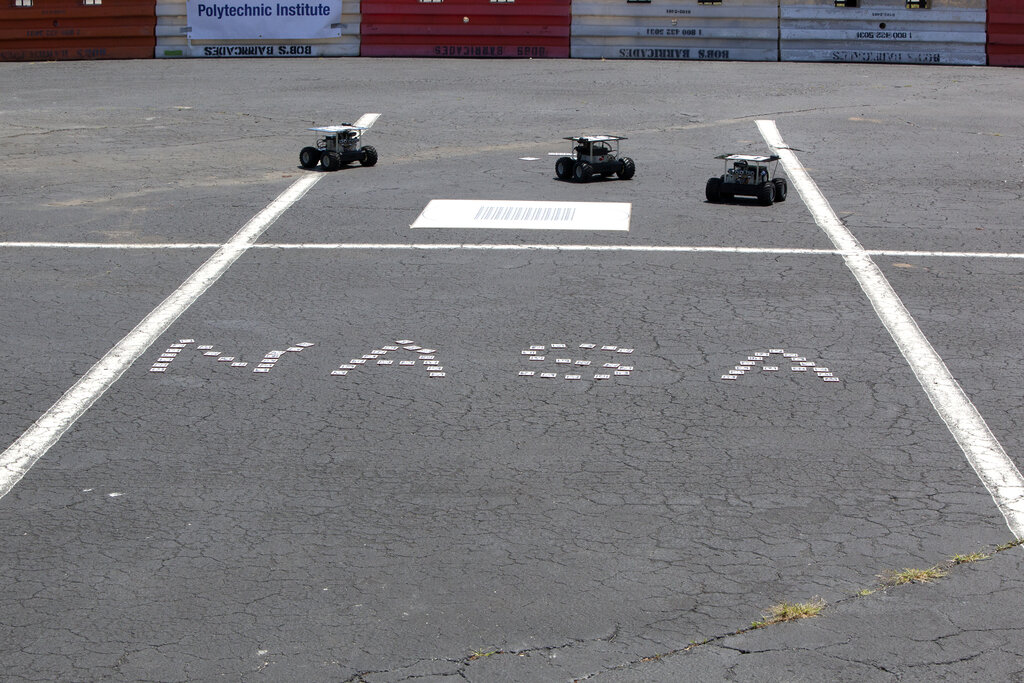
Finally, we have emergence. This is the phenomenon where the global behavior of the system is more complex than the sum of its parts. An individual ant is not very intelligent on its own. It has a limited view of the world and follows basic instincts. But together, the colony can build complex structures, manage food supplies, and defend its territory. This higher-level intelligence is an emergent property of the swarm.
Ready to test your knowledge? This quiz will cover the foundational ideas of swarm intelligence.
What is the defining characteristic of swarm intelligence?
The complex, dance-like pattern of a starling murmuration, which arises from birds following simple rules about their neighbors, is a classic example of what concept?
These core principles—decentralization, self-organization, and emergence—are the building blocks of swarm intelligence. They show how simple, autonomous agents can work together to produce surprisingly intelligent and adaptable behavior, a concept that has profound implications for AI and robotics.