Advanced Supply Chain Dynamics
Supply Chain Resilience
Bouncing Back from Shocks
Imagine a bridge built to be completely rigid. In a strong wind, it might crack and collapse. Now, picture a bridge designed to sway and flex with the wind. It absorbs the force and remains standing. A supply chain works the same way. A rigid, inflexible one is brittle. A resilient one can bend without breaking.
Resilience
noun
The ability of a supply chain to prepare for and adapt to unexpected events, and to recover quickly from disruptions.
In recent years, events like pandemics, trade disputes, and natural disasters have shown just how fragile global supply chains can be. A single factory shutdown or a blocked shipping lane can cause a ripple effect, leading to empty shelves and production halts thousands of miles away. Resilience isn't just about surviving these shocks; it's about adapting and even thriving in the face of uncertainty. It means building a system that can continue to deliver products and services, even when things go wrong.
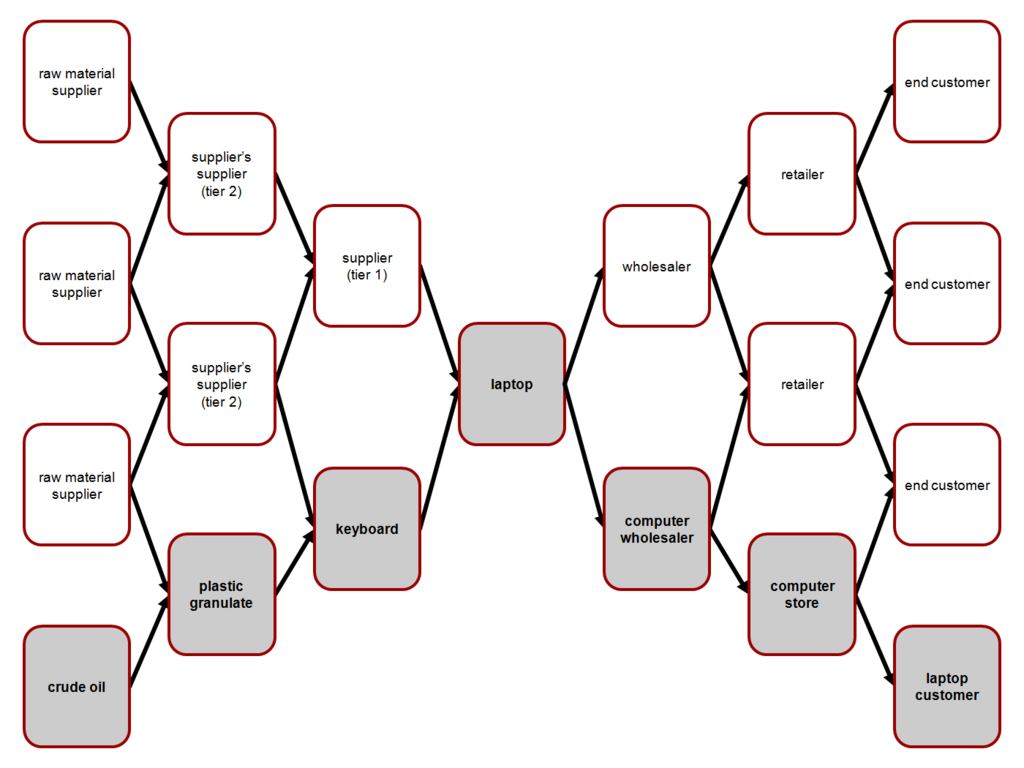
Strategies for Strength
Building a resilient supply chain isn't about creating an unbreakable system. It's about designing a flexible one. This involves a few key strategies that move away from a pure focus on cost-cutting and towards a more balanced approach that values stability and adaptability.
The core principle is simple: don't put all your eggs in one basket.
One of the most important strategies is supplier diversification. Instead of relying on a single supplier for a critical component, a resilient company sources it from multiple suppliers, ideally in different geographic locations. If a flood shuts down a factory in one country, production can be ramped up with a partner in another. This creates redundancy, a safety net that can absorb the impact of a localized disruption.
Hand-in-hand with diversification is flexible sourcing. This is the ability to quickly shift production or logistics from one partner or route to another. It might involve having pre-vetted alternative suppliers or transportation options on standby. Some companies practice near-shoring—moving production closer to home—to reduce dependency on long, complex global routes and shorten lead times.
The Role of Technology
Modern technology is the nervous system of a resilient supply chain. Without it, managing a diverse and flexible network would be nearly impossible. The key benefit it provides is visibility.
Imagine trying to navigate a city with a map from last year versus using a real-time GPS. Digital technologies like IoT sensors, blockchain, and cloud-based platforms provide that real-time view. Companies can track shipments, monitor inventory levels at every stage, and even check the operational status of a supplier's factory. This complete visibility allows them to spot potential problems long before they become full-blown crises.
This leads to enhanced responsiveness. With better data, companies can use AI and machine learning to run simulations and predict the impact of a potential disruption. If a typhoon is forecast to hit a key port, the system can automatically model alternative routes and calculate the costs and delays. This allows managers to make proactive, data-driven decisions instead of reacting to a crisis after it has already happened.
| Strategy | Goal | Example |
|---|---|---|
| Supplier Diversification | Reduce dependency on a single source | An automaker sources computer chips from factories in both Asia and North America. |
| Flexible Sourcing | Ability to switch partners or routes quickly | A clothing brand has backup manufacturers ready to take on orders if their primary factory faces delays. |
| Digital Visibility | Gain real-time insight across the network | A food company uses sensors to track the temperature of its refrigerated trucks from farm to store. |
Ultimately, building resilience is an ongoing process of identifying vulnerabilities and proactively addressing them. It requires a shift in mindset from prioritizing cost above all else to valuing flexibility and preparedness. The investment in a more resilient supply chain pays for itself by ensuring a business can continue to serve its customers, no matter what challenges arise.
According to the passage's analogy, a resilient supply chain is most like what?
What is the primary goal of supplier diversification?