Advanced Subconscious Communication and Neural Dialogue
Advanced Active Imagination
Beyond the Dream Journal
You already know the unconscious communicates through symbols, often in dreams. Dream journaling is a powerful tool for capturing these messages after the fact. But what if you could engage with these inner figures in real-time? This is the work of Active Imagination, a method developed by Carl Jung for entering into a direct, conscious dialogue with the deeper parts of your psyche.
It’s not daydreaming or fantasy. In fantasy, your ego is the director, creating the characters and the plot. In Active Imagination, your ego takes a step back. It becomes an observant participant, watching and interacting with figures that emerge and act on their own accord. You are not creating the story; you are stepping into a story that is already unfolding within you.
Active imagination is a technique developed by Jung that encourages dialogue with elements from your dreams through creativity and expression.
The goal is to allow the unconscious to reveal its contents without the ego’s constant interference. By doing this, you create a bridge between your conscious awareness and the autonomous, living reality of your inner world.
Setting the Stage
Before beginning, you must create a safe and contained space for this work. This isn't just about finding a quiet room. It's about establishing a mental 'sanctum'—a safe house in your mind where these encounters can take place. This internal space provides a necessary boundary, assuring your conscious mind that the experience will not overwhelm it.
Picture a place you feel secure and centered. It could be a study, a forest clearing, a temple, or any location that resonates with you. Furnish it in your mind. Know where the entrance is. This is your private theater, a dedicated space for dialogue. Your conscious self, the observer ego, must remain present and grounded throughout the experience. It acts as a stable anchor, witnessing the events without being swept away by them. This conscious presence is non-negotiable; it's what differentiates Active Imagination from simply falling into a dream.
The First Encounter
The process begins with a starting point, an image. This can come from a recent dream, a strong emotion, or even a physical sensation. Choose a single, clear image and bring it into your mental sanctum. For instance, if you dreamt of a locked door, you would visualize that door within your inner study.
The next step is the core protocol: fix your attention on the image without trying to change it. Just look at it. This focused staring is an act of invitation. You are waiting for the image to gain autonomy, to move or change on its own. This is the critical moment that distinguishes Active Imagination from passive visualization. The locked door might slowly creak open. A key might appear on the floor. A figure might emerge from the shadows beside it.
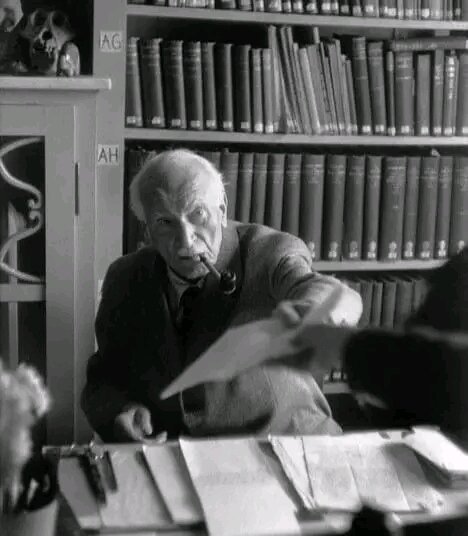
When a figure appears or the scene shifts, it's time to engage. The key is to interact honestly and non-judgmentally. Ask questions. Who are you? What do you want? Why are you here? Listen for the answer, which might come as words, feelings, or another symbolic action. Your task is not to debate or trick the figure, but to understand its perspective. This is a dialogue, not a conquest. Carl Jung believed this process was essential for integrating the fragmented parts of the psyche.
After the interaction, it's important to formally end the session. Consciously withdraw from your sanctum and return your focus to the external world. Then, document the experience. Write it down, draw it, or sculpt it. This act of giving the experience a physical form helps to integrate the insights into your conscious life. It anchors the dialogue in reality and honors the message from the unconscious.
This is a brief overview to get you started. Remember, Active Imagination is a practice that deepens over time. It requires patience, courage, and a willingness to meet what lies within.