Advanced Structural and Functional Male Anatomy
Integrated Reproductive Anatomy
Internal Layout and Connections
The male internal reproductive organs are arranged in a compact, logical way, centered around the urinary bladder. Think of the bladder as a central landmark. Tucked just behind and slightly below it are two small glands called the seminal vesicles. Directly beneath the bladder, encircling the start of the urethra, is the prostate gland.
This specific placement is crucial for function. The seminal vesicles produce a significant portion of the fluid that makes up semen, and their ducts join with the vas deferens to form the ejaculatory ducts. These ejaculatory ducts then travel through the prostate gland to empty into the urethra. This arrangement ensures that sperm from the testes and fluids from both the seminal vesicles and the prostate can merge efficiently before exiting the body.
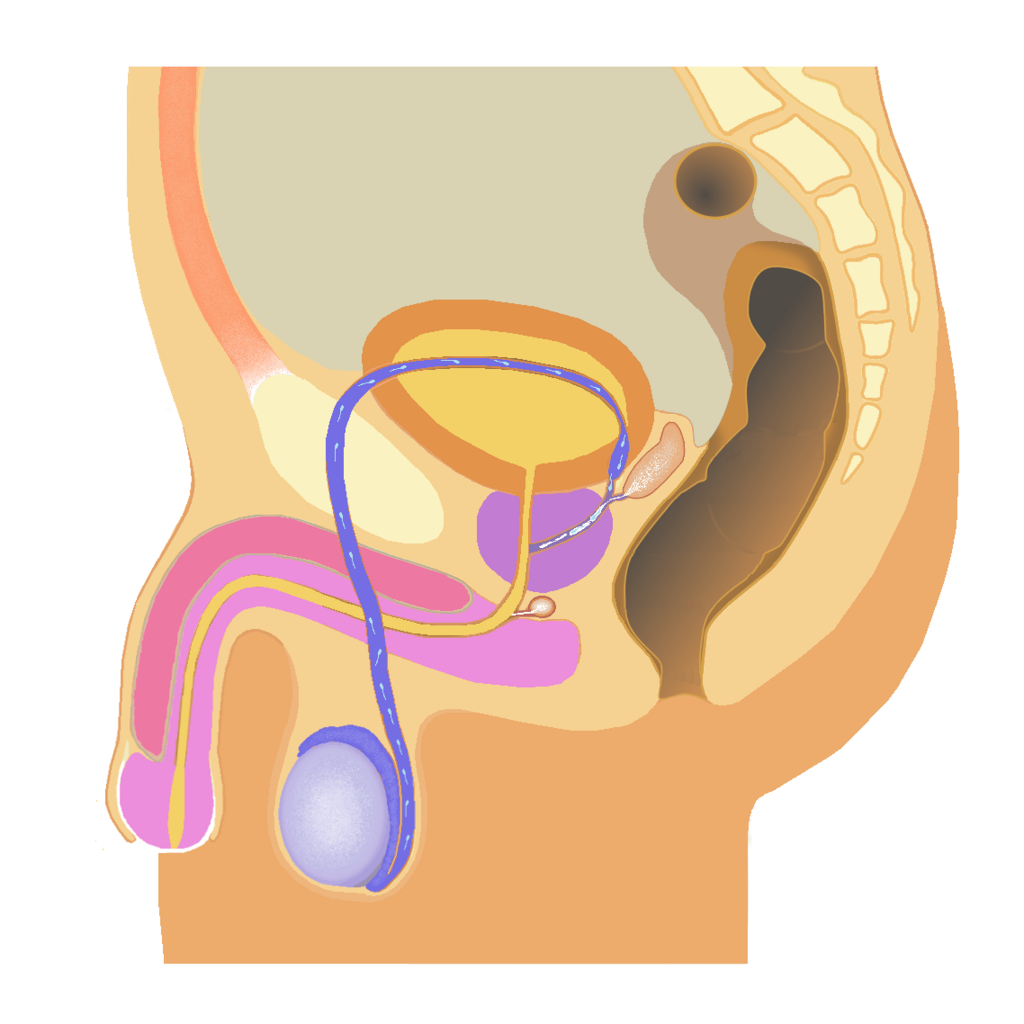
The Ductal Pathway
The journey of sperm is a long one, passing through a series of specialized tubes. After maturing in the epididymis, a tightly coiled tube on the back of each testis, sperm are propelled into the vas deferens (or ductus deferens). This long, muscular tube travels up from the scrotum, through the inguinal canal, and into the pelvic cavity, looping over the ureter to reach the back of the bladder.
Here, it joins with the duct from the seminal vesicle to form the ejaculatory duct, which, as mentioned, passes through the prostate. This marks the final convergence point before the urethra takes over. The male urethra is unique because it serves both the urinary and reproductive systems. It's divided into three distinct regions.
- Prostatic Urethra: The first section, passing through the center of the prostate gland.
- Membranous Urethra: A short segment that passes through the muscular floor of the pelvis (the urogenital diaphragm).
- Spongy (Penile) Urethra: The longest part, which runs through the length of the penis to the outside.
The Spermatic Cord and Testes
The testes are housed within the scrotum, suspended outside the main body cavity. This external positioning is vital for maintaining a temperature slightly lower than the core body temperature, which is necessary for sperm production. Each testis is connected to the abdomen by a spermatic cord.
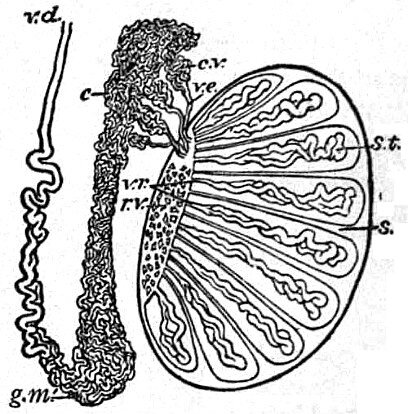
This cord is more than just a tether; it's a bundle of essential structures wrapped in connective tissue. It contains the vas deferens, testicular artery, nerves, and lymphatic vessels. A key feature of the spermatic cord is the pampiniform plexus, an intricate network of veins that surrounds the testicular artery. This network acts as a counter-current heat exchanger, cooling the arterial blood before it reaches the testes and warming the venous blood as it returns to the body.
The testis itself has protective layers. The outer layer, the tunica vaginalis, is a pouch of serous membrane descended from the peritoneum of the abdomen. Beneath it lies the tunica albuginea, a tough, fibrous capsule that directly covers the testis. This inner layer also extends into the testis, dividing it into small compartments called lobules, where the sperm-producing seminiferous tubules are located.
Finally, let's look closer at the prostate's internal structure. It isn't a uniform gland but is described in terms of zones. The peripheral zone makes up the bulk of the gland's posterior portion and is where most prostate cancers originate. The central zone surrounds the ejaculatory ducts. The transition zone surrounds the urethra as it enters the prostate and is the region typically responsible for benign prostatic hyperplasia (BPH), a common condition of prostate enlargement with age.
Now, let's test your understanding of how these structures work together.
The ejaculatory ducts, which carry both sperm and seminal fluid, are formed by the union of the vas deferens and the ducts from which gland?
What is the primary function of the pampiniform plexus located within the spermatic cord?
Understanding these spatial and structural relationships is key to appreciating how the male reproductive system functions as an integrated whole, from sperm production to delivery.