Advanced Striking Mechanics and Power
Ground-Up Kinetic Chain
Power from the Ground Up
Powerful striking isn't about arm strength. It's about physics. The force that lands in a punch or kick starts at your feet, travels up your body, and is finally delivered by your limb. This sequence of movement is called the kinetic chain. Think of it like cracking a whip. The handle moves a little, but the tip moves with explosive speed because energy is transferred efficiently along its length.
The secret to unlocking this power is force summation, the process of generating force in your largest, strongest muscles first (your legs and hips) and then adding the force from smaller muscle groups in a precise sequence. It’s an additive process. Each link in the chain builds on the last, culminating in a powerful impact.
By leveraging the kinetic chain, optimizing speed through relaxation, and training with intention, martial artists can develop more powerful and faster strikes.
The Pivot and the Push
Every powerful strike begins with a connection to the floor. This connection is where you generate the initial force. When throwing a cross, for example, the movement doesn't start in your shoulder. It starts with your rear foot.
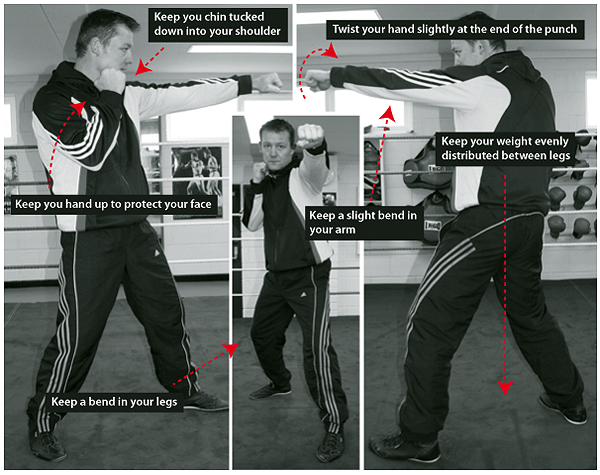
The key is engaging with the ground to create Ground Reaction Force (GRF). As you push off the ball of your rear foot, the ground pushes back with an equal and opposite force. This is Newton's Third Law in action. You aren't just pushing off the floor; you are using the entire planet as a backstop for your punch. This push initiates a chain reaction. The foot pivots, the ankle locks, and the knee drives forward, channeling that GRF into rotational energy.
force summation
noun
The sequential activation of body segments to generate maximum velocity in a final segment, like a hand or foot.
This pivot isn't just a twist. It's a
This pivot isn't just a twist. It’s a deliberate, forceful rotation on the ball of the foot. Imagine trying to squash a bug under your foot with a grinding motion. This is the kind of drive needed. The stability of your ankle and knee during this pivot is critical. If these joints wobble, energy bleeds out instead of traveling up the chain.
The Corkscrew Effect
As the energy from the ground travels up your leg, it meets your hips. This is where real power amplification happens. For a cross, your rear hip drives forward and rotates powerfully. For a lead hook, the lead hip loads by slightly dipping and then unloads with explosive rotation. This rapid hip rotation acts like a transmission, converting the linear drive from your legs into the rotational force that whips your torso and shoulder around.
Think of your hips and torso as a coiled spring. The pivot loads the spring, and the strike is the release.
This rotation creates what is often called the 'corkscrew effect'. Your entire core tightens and spins, transferring the now-massive rotational energy to your shoulder. The shoulder, arm, and fist are the last links in this chain. They are relatively relaxed until the final moment to maximize speed. Just before impact, the entire structure becomes rigid. Your fist, wrist, elbow, and shoulder lock into place, ensuring that 100% of the generated force is delivered into the target. Any looseness at the point of impact is an energy leak, weakening the strike.
The timing is everything. The pivot of the foot must be synchronized with the rotation of the hip and the landing of the fist. If the foot pivots too early, the energy dissipates before the punch is thrown. If it's too late, the arm is just pushing on its own, disconnected from the body's main engine. The arm doesn't create the power; it merely channels it.
In the context of striking, what is the best definition of the "kinetic chain"?
Which principle describes the process of generating force in the largest muscles (like legs and hips) first, followed by smaller muscle groups in sequence?
Mastering this sequence turns a simple punch into a full-body athletic movement, drawing power from the ground itself.