Advanced Stress Management and Resilience
Biological Stress Mechanisms
The Body's Stress Budget
Your body is designed to handle stress, but it operates on a budget. Short-term stress is like a necessary expense; the body pays the cost and moves on. The system responsible for managing this is called allostasis, which actively maintains stability through change. It's a dynamic process of adaptation.
But what happens when the stress never stops? When work deadlines, financial worries, or social pressures are relentless, the body's stress response system stays switched on. This chronic activation leads to what's known as 'allostatic load'—the cumulative wear and tear on your body from being in a constant state of physiological alert. It’s like running a car's engine in the red for months on end. Eventually, parts start to break down.
Allostatic load isn't the presence of stress, but the long-term cost of adapting to it.
This overload is managed by a crucial command chain: the Hypothalamic-Pituitary-Adrenal (HPA) axis. Think of it as the body’s stress management department. When your brain perceives a threat, the hypothalamus releases a hormone that tells the pituitary gland to act. The pituitary, in turn, signals the adrenal glands to release cortisol, the primary stress hormone.
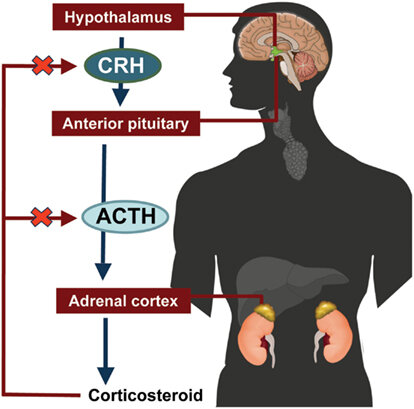
In a healthy response, cortisol helps mobilise energy and then signals the hypothalamus and pituitary to stand down, completing a negative feedback loop. However, under chronic stress, this system becomes dysregulated. The feedback loop can weaken, leading to persistently high cortisol levels. This sustained exposure can disrupt nearly every system in your body, from your immune response and metabolism to your memory and mood.
It's All in Your Head (Literally)
Why does a looming exam feel terrifying to one person and like a motivating challenge to another? The event is the same, but the reaction is different. This is explained by Cognitive Appraisal Theory, developed by Richard Lazarus and Susan Folkman.
They proposed that our emotional response to an event isn't about the event itself, but our interpretation of it. This happens in two steps:
- Primary Appraisal: You evaluate the situation. Is it stressful, positive, or irrelevant? If it's stressful, is it a threat (potential harm), a challenge (opportunity for growth), or a loss that has already occurred?
- Secondary Appraisal: You assess your resources. Do I have what it takes to cope with this? This includes your perceived skills, social support, and knowledge.
A situation becomes stressful when you appraise it as a threat and believe your resources are insufficient to handle it. If you see it as a challenge you can meet, the physiological response is often much healthier.
This theory highlights the critical role of perception. It separates physiological stressors, like an actual injury or infection, from psychosocial stressors, which are symbolic threats rooted in our thoughts and social context. Your body might react similarly to both, but your mind is the gatekeeper for the latter.
Feeling vs. Label
Now, let's connect the physical feeling to the named emotion. Imagine your heart is racing. Are you excited or terrified? According to the of emotion, you can't know without more information. The theory states that emotion is the result of two ingredients: physiological arousal and a cognitive label.
First, you experience a non-specific arousal—a racing heart, sweaty palms, quick breathing. Your body is just... activated. Then, your brain rapidly surveys the environment to figure out why. If you're on a roller coaster, you label the arousal 'excitement'. If you're facing a snarling dog, you label it 'fear'. The physical state is similar, but the cognitive label you apply, based on context, determines the emotion you experience.
Arousal + Cognition = Emotion. Without the cognitive label, the physical feeling is just noise.
This idea has powerful implications for managing stress. By changing how we label our physical responses—reframing the jitters before a presentation as 'readiness' instead of 'anxiety'—we can influence our emotional experience and performance. It puts a degree of control back in our hands, bridging the gap between our biological reactions and our conscious mind.
Now, let's see how well you've grasped these concepts.
What is the best definition of 'allostatic load'?
Which of the following correctly describes the sequence of activation in the HPA axis?
Understanding these mechanisms moves us beyond a simple 'stress is bad' mindset. It shows that our perception and interpretation are key players in the biological drama of stress.