Advanced Strength and Hypertrophy Programming
Progressive Overload Mechanisms
Beyond Adding Weight
The simple magic of adding five pounds to the bar every workout doesn't last forever. As an intermediate lifter, your body is no longer a blank slate. It's adapted. To keep progressing, you need to be more strategic about the signals you send your muscles.
The three primary signals for muscle growth, or hypertrophy, are mechanical tension, metabolic stress, and muscle damage. Think of them as dials you can turn up or down. While all three are intertwined, understanding each one individually is key to breaking through plateaus.
Mechanical Tension
This is the big one. Mechanical tension is the force generated within a muscle when it's stretched and then contracted under load. It's the most critical factor for triggering hypertrophy. Lifting heavy weights through a full range of motion creates high levels of mechanical tension, directly stimulating the muscle fibers to grow bigger and stronger.
Imagine stretching a rubber band and then trying to shorten it. That internal pulling force is tension. Your muscles experience this with every rep. To maximize it, you need to challenge your muscles with loads that are significant enough to force an adaptation.
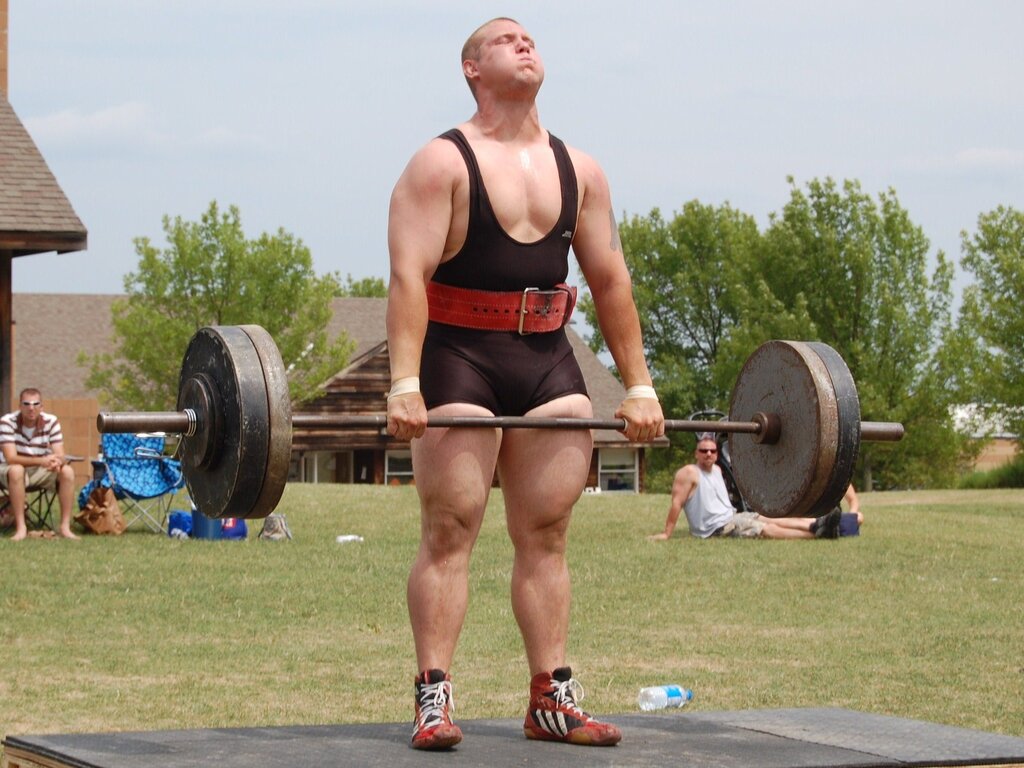
Simply put, muscles respond to being forced to generate force. The heavier the load (relative to your capacity), the greater the tension.
Metabolic Stress and Damage
If you've ever felt that deep, burning sensation in your muscles during a high-rep set, you've experienced metabolic stress. This occurs when byproducts like lactate accumulate in the muscle due to energy production outpacing oxygen supply. This "pump" isn't just for show; it's a legitimate signal for growth.
Metabolic stress causes cell swelling, which is thought to be perceived by the muscle cell as a threat to its integrity, kicking off anabolic (muscle-building) processes.
Muscle damage refers to the microscopic tears that occur in muscle fibers during intense exercise, particularly from movements that emphasize the eccentric (lowering) phase. This damage initiates an inflammatory response, signaling repair processes that can lead to the muscle being rebuilt bigger and stronger than before. However, more damage isn't always better. It's a signal, not the goal itself. Excessive damage can impair recovery and performance.
Managing Your Training
As an intermediate, your ability to recover from a workout is slower than a novice's, but your body can handle more total work. This is where the Stimulus-Recovery-Adaptation curve becomes crucial. After a training stimulus (a workout), your performance temporarily dips. With adequate recovery (rest, nutrition), your body adapts and your performance baseline rises. The key is applying the next stimulus after you've adapted, not before you've recovered.
For a novice, this cycle might take 48 hours. For you, it might take the better part of a week. This is why you can no longer add weight every session. Instead, you must manage your training on a weekly or even monthly scale.
To manage this longer cycle, you need better tools to measure your effort. Instead of just tracking sets, reps, and weight, intermediates should focus on two key concepts: volume and intensity of effort.
Volume is how much work you do. Intensity is how hard that work is.
For volume, simply counting total tonnage (sets × reps × weight) can be misleading. A set of 30 reps with a light weight might have the same tonnage as a set of 5 reps with a heavy weight, but the stimulus is completely different. A better metric is counting the number of hard sets per muscle group per week. A hard set is one taken close to muscular failure.
For intensity of effort, we use scales like RPE and RIR to subjectively measure how close we are to failure on a given set. This is more nuanced than just using a percentage of your one-rep max, because your strength can fluctuate daily.
| Scale | Meaning | Example |
|---|---|---|
| RPE | Rate of Perceived Exertion (1-10 scale) | An RPE of 8 means you feel you could have done 2 more reps. |
| RIR | Reps in Reserve (inverted RPE) | An RIR of 2 means you had 2 reps left "in the tank." |
By tracking your weekly hard sets and using RPE/RIR to ensure you're working hard enough, you can manage your training stimulus with much greater precision. This allows you to plan periods of higher volume to drive adaptation, followed by periods of lower volume (deloads) to allow for full recovery, ensuring you keep making progress long after linear progression has ended.
According to the text, which of the following is the MOST critical factor for triggering muscle growth (hypertrophy)?
An intermediate lifter's progress stalls. They've been doing the same routine for months, but they feel run down and their performance has dipped. Which concept best explains why they need to adjust their training, likely by incorporating a deload?