Advanced Strategies in Derivatives Trading
Options Greeks Dynamics
Delta: The Measure of Movement
An option's price doesn't move in lockstep with its underlying asset. The relationship is more nuanced, and Delta is the first tool we use to measure it. Delta tells us how much an option's price is expected to change for every $1 move in the underlying stock. For example, a call option with a Delta of 0.60 should increase in value by about $0.60 if the stock price rises by $1.
Delta ranges from 0 to 1 for call options and -1 to 0 for put options. A Delta of 1 means the call option moves exactly like the stock, while a Delta of -1 means the put option moves exactly opposite to the stock.
But Delta wears a second hat. It also serves as a rough proxy for the probability that an option will expire in-the-money (ITM). An option with a Delta of 0.30 has, very roughly, a 30% chance of finishing ITM. This is why deep ITM options have Deltas approaching 1 (or -1 for puts), while far out-of-the-money (OTM) options have Deltas near zero. As a trader, you're not just looking at a hedge ratio; you're seeing the market's implied odds.
Delta is used to measure changes in an option’s price that stem from changes in the underlying security.
Gamma: The Accelerator
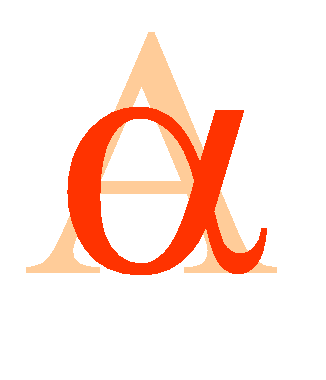
Delta isn't static. It changes as the underlying stock price moves, and this rate of change is called Gamma. If Delta is the option's speed, Gamma is its acceleration. It measures how much an option's Delta will change for every $1 move in the underlying asset. A high Gamma means Delta is very sensitive to price changes, which can be both an opportunity and a major risk.
This sensitivity creates something called , which is especially pronounced for options that are at-the-money (ATM) and close to expiration. Imagine you've hedged your position to be perfectly delta-neutral. A large, sudden move in the stock price can cause your Delta to change rapidly due to Gamma, instantly unbalancing your hedge and exposing you to significant losses. Managing Gamma means managing the stability of your hedge.
Theta and Vega: The External Forces
Time is a one-way street for options, and Theta measures its cost. Often called time decay, Theta quantifies how much value an option loses each day as it approaches its expiration date, assuming all other factors remain constant. For option buyers, Theta is a constant headwind; for sellers, it's a source of potential profit.
Crucially, Theta decay is not linear. It accelerates. An option with 90 days until expiration might lose a few pence per day, but an option with only 10 days left could lose that much every few hours. This acceleration is most dramatic for at-the-money options, where the uncertainty is highest.
While Theta eats away at an option's extrinsic value, Vega measures its sensitivity to changes in implied volatility (IV). IV reflects the market's expectation of how much the underlying stock will move in the future. Vega tells you how much an option's price will change for every 1% change in IV. When IV rises, options become more expensive because the potential for a large price swing increases. When IV falls, options become cheaper.
Long options (both calls and puts) have positive Vega, meaning they benefit from an increase in implied volatility. Short options have negative Vega.
Rho and Second-Order Greeks
Rho is the least influential of the major Greeks, but it's still part of the family. It measures an option's sensitivity to changes in interest rates. Specifically, it tells you how much an option's price will change for a 1% change in the risk-free interest rate. Rising interest rates generally increase the price of call options and decrease the price of put options, because higher rates increase the for holding the underlying asset.
Beyond the primary Greeks, there are second-order and even third-order Greeks that describe more subtle dynamics. Two notable second-order Greeks are Vanna and Charm.
- Vanna measures the change in Delta for a change in volatility. It tells you how an option's directional exposure shifts as the market's volatility expectations change.
- Charm (or Delta decay) measures the change in Delta over time. It shows how an option's Delta will move toward 0 or 1 simply due to the passage of time.
These higher-order Greeks are used by sophisticated traders to fine-tune their hedges, especially for large, complex portfolios where small inaccuracies can lead to significant risk exposure.
Now, let's test your understanding of how these forces interact.
A call option on stock XYZ has a Delta of 0.70. If the stock price increases by $1, by how much is the option's price expected to change?
If Delta represents the 'speed' of an option's price change, which Greek represents its 'acceleration'?
Understanding these dynamics moves you beyond simply buying and selling options into the realm of actively managing risk and probability.