Advanced Stock Trading Strategies and Market Analysis
Trade Execution Mechanics
Controlling Your Trades
You know how to place a basic buy or sell order. But simply hitting 'buy' at the market price is like telling a taxi driver to just 'go' without giving a destination. You'll get somewhere, but it might not be where you wanted, and you might pay more than you expected.
Advanced order types give you control over when you trade and at what price. They are the tools for turning a trading strategy into a precise action.
Traders incorporate potential trades into their online trading platforms, placing orders into the queues with entry and exit points and stop losses.
Let's start with the most fundamental tool for price control: the limit order.
Limit Order
noun
An order to buy or sell a stock at a specific price or better. A buy limit order can only be executed at the limit price or lower, and a sell limit order can only be executed at the limit price or higher.
If you want to buy a stock that's currently trading at $100.50, but you only think it's a good deal at $100 or less, you place a buy limit order at $100. Your order will only execute if the price drops to $100. The trade-off? If the price never falls to your limit, your order won't be filled, and you could miss a potential gain if the stock moves higher.
Limit orders guarantee your price, but not your execution.
Protecting Your Position
Once you're in a trade, managing risk is paramount. Stop orders are designed to get you out of a position automatically if the price moves against you. They are your primary defense against significant losses.
There are two main types, and the difference is critical.
| Order Type | How It Works | Key Trade-off |
|---|---|---|
| Stop-Market Order | You set a 'stop price'. If the stock hits this price, a market order is triggered to sell immediately. | Guaranteed Exit: Your order will execute, but the price could be much lower than your stop price in a fast-moving market. |
| Stop-Limit Order | You set two prices: a 'stop price' and a 'limit price'. If the stock hits the stop price, a limit order is triggered. The trade will only execute at your limit price or better. | Price Control: You won't sell for less than your limit price, but your order might not execute at all if the price gaps down past your limit. |
Imagine you own a stock trading at $55. You want to protect your profit, so you place a stop order at $50. If the price drops to $50, a stop-market order sells at the next available price, which might be $49.95 or even $49.50 in a panic.
A stop-limit order at $50 with a limit of $49.90 would only sell if a buyer is available at $49.90 or higher. If the price plummets straight to $49.00, your order doesn't fill, and you're still holding a losing position.
For protecting profits, a trailing stop is even more dynamic.
Trailing Stop
noun
An order that adjusts the stop price at a fixed percentage or dollar amount below the market price. If the stock price rises, the stop price rises with it. If the stock price falls, the stop price remains fixed.
If you buy a stock at $100 and set a 10% trailing stop, your initial stop price is $90. If the stock climbs to $120, your stop automatically moves up to $108 (10% below $120). It allows you to lock in gains as a trade moves in your favor without having to manually adjust your stop loss every day.
The Unseen Costs of Trading
Sometimes, you place an order at one price but get filled at another. This difference is called slippage. It's not an error by your broker; it's a feature of how markets work.
Slippage is the difference between the expected price of a trade and the price at which the trade is actually executed.
Slippage occurs for two main reasons:
- High Volatility: During major news events or market opens, prices can change in milliseconds. By the time your market order travels from your computer to the exchange, the price may have already moved.
- Low Liquidity: In thinly traded stocks, there aren't many buyers and sellers at any given moment. To fill a large order, your broker may have to accept progressively worse prices, causing slippage.
This relates directly to another core concept: the bid-ask spread.
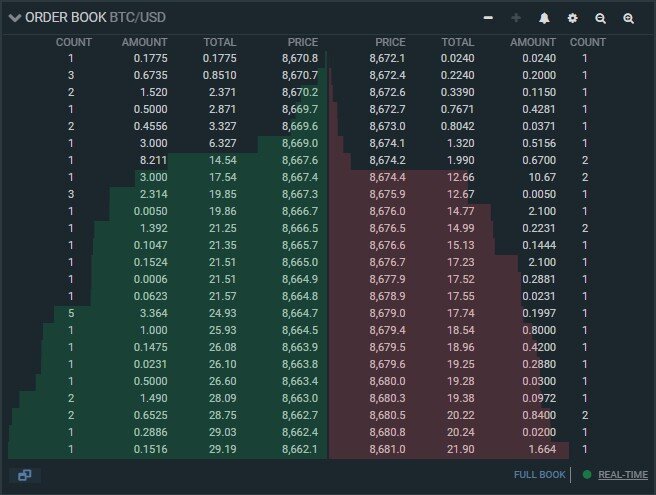
The bid price is the highest price a buyer is willing to pay. The ask price is the lowest price a seller is willing to accept. The difference between them is the spread. When you place a market order to buy, you pay the ask. When you sell, you get the bid. The spread is a hidden transaction cost.
A stock might be quoted at $100.00 (bid) and $100.05 (ask). The spread is $0.05. For highly liquid assets, this spread is tiny. For less popular ones, it can be much larger.
To minimize the cost of the spread, avoid trading during times of low liquidity or high volatility, like the first few minutes after the market opens or around major economic announcements.
Timing Your Order
Finally, you need to tell your broker how long your order should remain active. These time-in-force instructions are simple but important.
| Instruction | Meaning | When to Use It |
|---|---|---|
| Day Order | The order is active only for the current trading day. If not filled by the close, it's canceled. | This is the default for most brokers. Use it for trades you only want to execute based on today's conditions. |
| Good 'til Canceled (GTC) | The order remains active until you manually cancel it or it's filled. | Useful for setting a limit order to buy at a price far below the current market, or a stop-loss you want to keep in place indefinitely. |
| Immediate or Cancel (IOC) | This requires that all or part of the order be executed immediately. Any portion that cannot be filled instantly is canceled. | Used by traders trying to buy or sell a large quantity without signaling their full intent to the market. |
Mastering these execution mechanics is what separates a plan from a successful trade. A brilliant strategy can easily be undermined by poor execution, high slippage, or an incorrectly placed stop.
A stock is currently trading at $52. You want to buy it, but you believe it is only a good value at $50 or less. Which order type should you use to achieve this?
What is the primary trade-off when choosing between a stop-market order and a stop-limit order to protect against losses?
With these tools, you now have the precision needed to implement the strategies we'll explore next.