Advanced Stock Trading Strategies and Decision-Making
Algorithmic Trading
What Is Algorithmic Trading?
Algorithmic trading uses computer programs to place trades automatically based on a predefined set of rules. Instead of a human trader watching charts and making decisions, a software program does the heavy lifting, executing orders at speeds and volumes that are simply impossible for a person to match.
Algorithmic trading refers to the use of computer programs that follow defined sets of instructions (algorithms) to execute trades at speeds and frequencies impossible for human traders.
These systems, often called "trading bots" or "black boxes," are built around three core components that work together in a continuous loop.
-
Data Input: The system needs information to make decisions. This component ingests massive amounts of real-time data, like stock prices, trading volumes, and even news headlines from various sources.
-
Signal Generation: This is the brain of the operation. The algorithm analyzes the incoming data, looking for patterns or conditions that match its programmed strategy. When it finds a potential opportunity, it generates a signal, like "buy 100 shares of stock XYZ."
-
Order Execution: Once a signal is generated, this component sends the actual trade order to the stock exchange. The goal is to execute the trade as quickly and efficiently as possible to capitalize on the opportunity before it disappears.
The Need for Speed
In algorithmic trading, every microsecond counts. The technological infrastructure is designed for one primary goal: minimizing latency, which is the delay between an event happening and the system reacting to it.
To achieve this, firms rely on specialized hardware and services. Low-latency data feeds provide market information directly from the source, bypassing slower, public internet routes. Think of it as having a private, super-fast highway to the stock exchange's data center.
Many trading firms also use co-location services. This means they place their own computer servers in the same physical data center as the stock exchange's servers. The extreme proximity reduces the time it takes for data and trade orders to travel, giving their algorithms a crucial speed advantage.
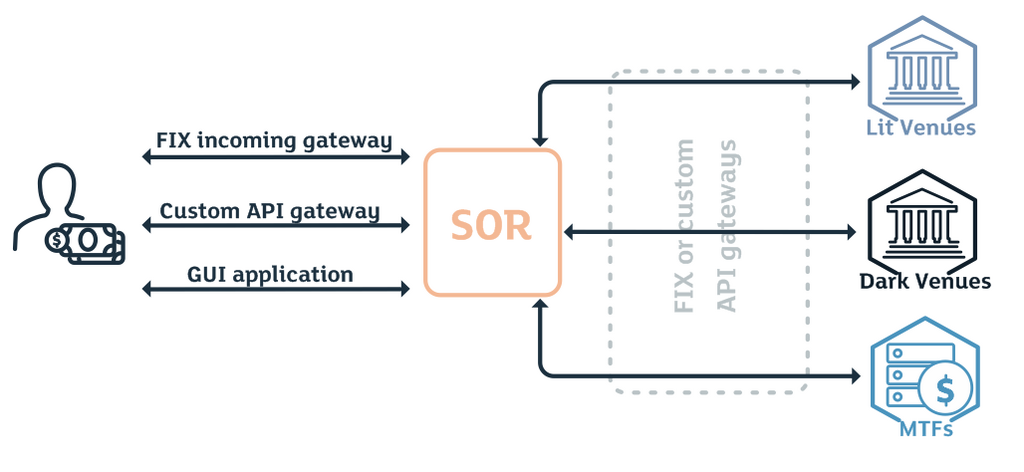
Common Strategies
An algorithm is only as good as the strategy it's programmed to follow. While firms develop highly secretive and complex strategies, most fall into a few well-known categories.
| Strategy | Goal | How It Works |
|---|---|---|
| Trend-Following | Ride market momentum | Buys assets that are trending up and sells assets that are trending down. It assumes that a current trend will continue. |
| Market-Making | Provide liquidity and capture the spread | Simultaneously places buy (bid) and sell (ask) orders for an asset, profiting from the small difference between the two prices (the bid-ask spread). |
| Statistical Arbitrage | Exploit pricing inefficiencies | Uses statistical models to find temporary price discrepancies between related assets (e.g., two stocks in the same industry) and trades them to profit when prices revert to their expected relationship. |
These strategies can be applied across different market conditions. A trend-following strategy might work well in a strongly bullish or bearish market, while a market-making strategy is more suited to stable, high-volume markets.
Rules of the Road
The rise of algorithmic trading has not gone unnoticed by regulators. Financial authorities like the Securities and Exchange Commission (SEC) in the U.S. have established rules to ensure that automated systems don't destabilize markets or give some participants an unfair advantage. These regulations cover everything from risk-management controls to testing requirements for new algorithms before they go live.
Beyond formal regulations, there are significant ethical considerations. The speed and anonymity of algorithmic trading can create opportunities for market manipulation. Practices like "spoofing"—placing large orders with no intention of executing them, just to trick other traders—are illegal but remain a concern for regulators trying to keep markets fair and transparent.
The ultimate goal of regulation is to harness the benefits of algorithmic trading, like increased market liquidity and efficiency, while mitigating the risks of instability and manipulation.
Algorithmic trading is a powerful tool that has fundamentally reshaped financial markets. It combines sophisticated financial strategies with cutting-edge technology, all while operating under the watchful eye of regulators.