Advanced Stock Trading Strategies
Market Microstructure
The Market's Plumbing
When you look at a stock chart, you see the price moving up and down. But how does that price actually get decided? Who is on the other side of your trade, and what are the rules they're playing by? This is the world of market microstructure.
Think of it like the plumbing in a house. You don't usually see the pipes, valves, and pumps, but they determine how water gets to your faucet. Similarly, market microstructure is the underlying system of rules, participants, and processes that determines how trades are executed and prices are formed. It’s the ‘how’ of the market, and it affects every single trade.
Where Trading Happens
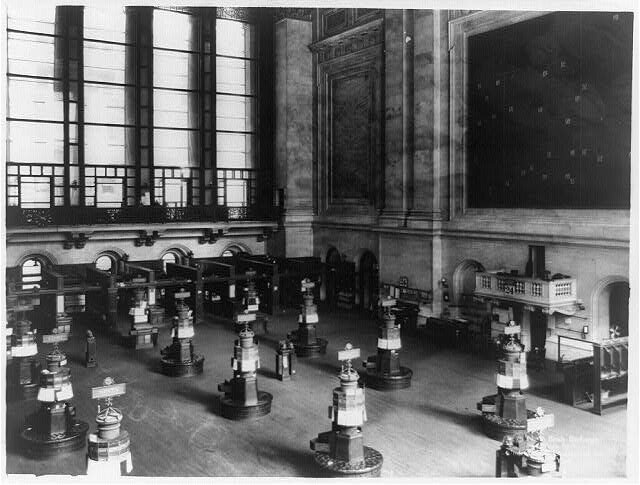
The most visible parts of the market's plumbing are the exchanges, like the New York Stock Exchange (NYSE) or Nasdaq. An exchange has two primary jobs: it provides a venue where buyers and sellers can meet, and it sets the rules to ensure trading is fair and orderly. It's the central hub for matching buy orders with sell orders.
However, trading isn't confined to a single exchange. For any given stock, trading might happen across dozens of different venues. This is called market fragmentation. Besides the major exchanges, trades also occur on alternative trading systems and in 'dark pools,' which are private exchanges where order details aren't visible to the public until after the trade is complete. This fragmentation can impact the price a trader gets, as the best price might be on a different venue at any given moment.
Key Players and Their Tools
Within these trading venues, certain participants have special roles. The most important are market makers. These are firms that stand ready to buy and sell a particular stock at any time during market hours. They are like a merchant at a food market who always has apples to sell and is always willing to buy more. By constantly providing both buy and sell prices, market makers provide the essential ingredient for a healthy market: liquidity.
Liquidity
noun
The ease with which an asset can be bought or sold at a stable price. In a liquid market, there are many buyers and sellers, making it fast and easy to execute trades.
How do market makers earn a profit? Through the bid-ask spread. They quote two prices: the 'bid,' which is the price they are willing to buy the stock for, and the 'ask,' which is the price they are willing to sell it for. The ask is always slightly higher than the bid. That small difference is the spread, and it's their compensation for providing liquidity and taking on risk.
Traders interact with the market using different types of orders. These are instructions sent to a broker that specify how a trade should be executed. The two most fundamental types are market orders and limit orders.
| Order Type | How It Works | Best For |
|---|---|---|
| Market Order | Execute a trade immediately at the best available price. | Speed and certainty of execution. |
| Limit Order | Execute a trade only at a specific price or better. | Price control. You set the max you'll buy for or min you'll sell for. |
The Hidden Costs of Trading
These microstructure details directly impact the costs and performance of any trading strategy. The bid-ask spread is a direct transaction cost; every time you buy at the ask and sell at the bid, you pay the spread. This is often called 'slippage.'
A market with low liquidity will have wider spreads, making it more expensive to trade. If a stock is traded across many different fragmented venues, your broker's ability to find the best price across all of them (called 'smart order routing') can significantly affect your execution price. A large market order in an illiquid stock can move the price against you, resulting in a much worse fill than you anticipated. Understanding these mechanics is not just academic; it is crucial for managing costs and maximizing profits.
The hidden plumbing of the market, its microstructure, directly influences every trader's bottom line. The structure of the market is part of the strategy.
What does the term 'market microstructure' primarily refer to?
What is the primary role of a market maker?
Understanding these core components of market microstructure provides the foundation for analyzing more complex market behaviors and developing more sophisticated trading strategies.