Advanced Steam Power Cycle Analysis
Reheat Cycle Deep Dive
Practical Reheat in Action
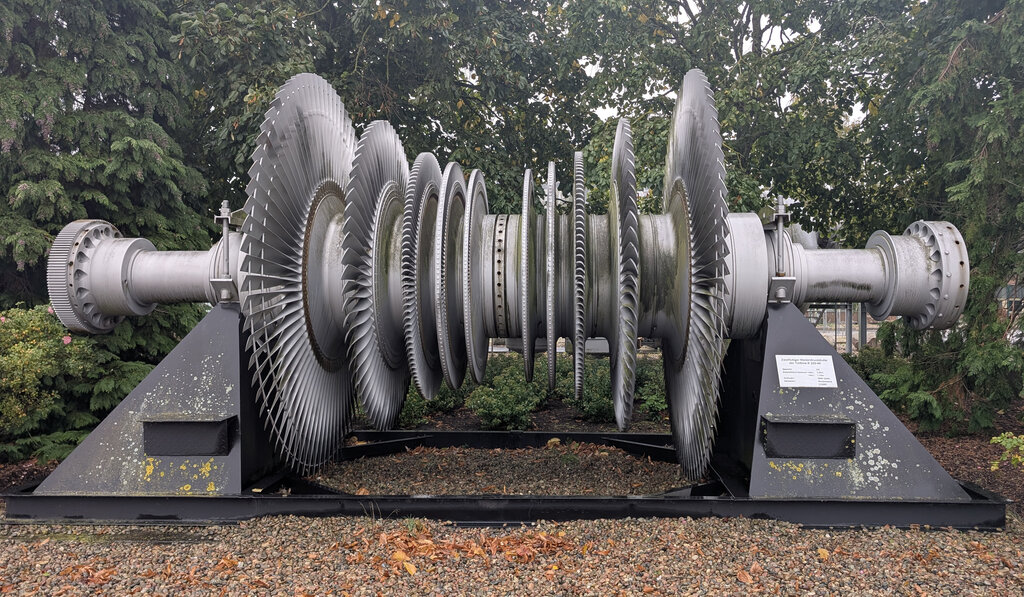
The simple reheat cycle you’ve learned about isn't just a theoretical diagram. It’s a core strategy in modern power plants, put into practice using multi-stage turbines. Instead of one large turbine, the expansion of high-pressure steam is split across at least two separate units: a high-pressure (HP) turbine and a low-pressure (LP) turbine.
Initially, high-pressure, superheated steam from the boiler drives the HP turbine. Instead of expanding all the way down to the condenser pressure, the steam is extracted when it's still in a gaseous, superheated state, but at a lower intermediate pressure. This partially expanded steam is piped back to the boiler or to a separate reheater unit, where it absorbs more heat at a constant pressure. Now revitalised, this hotter steam is sent to the LP turbine to generate more power before finally being condensed.
The Efficiency Equation
The primary reason for this complexity is a significant boost in thermal efficiency. By reheating the steam, we increase the average temperature at which heat is added to the cycle. According to the principles of thermodynamics, a higher average temperature of heat addition leads to a higher cycle efficiency. In practice, adding a single reheat stage can improve the thermal efficiency of a large power plant by 4–5% over a simple Rankine cycle operating between the same pressure limits. While that might not sound like a huge number, for a 1000 MW power station, it translates to an extra 40–50 MW of power for the same amount of fuel.
Reheat allows delivering more of the heat at a temperature close to the peak of the cycle.
The total work output from the turbines is the sum of the work done by the HP and LP stages. The heat input is also a sum: the initial heat added in the boiler and the heat added in the reheater. The efficiency calculation, , reflects this.
A crucial secondary benefit of reheat is its effect on the steam quality at the turbine exit. Without reheat, the steam would expand to a very low temperature and pressure, causing a significant portion of it to condense into tiny water droplets. These droplets, travelling at high speeds, can severely erode the blades of the final turbine stages, a problem known as moisture erosion This damage reduces turbine lifespan and efficiency. Reheating ensures the steam remains superheated for longer, exiting the LP turbine with a much lower moisture content, thus protecting the machinery.
Engineering Trade-offs
The benefits of reheat don't come for free. The design introduces significant engineering challenges and costs. The most obvious is the capital cost of the reheater itself and the extensive, large-diameter piping needed to shuttle steam back and forth between the turbine and the boiler. This piping must be heavily insulated and able to withstand high temperatures and pressures, adding to the plant's complexity and footprint.
Operationally, there's an unavoidable pressure drop as the steam flows through the long reheat piping and the reheater tubes. This loss means the LP turbine receives steam at a slightly lower pressure than when it left the HP turbine, which slightly reduces the potential work output. Controlling the reheat temperature is also critical. If it’s too high, it can exceed the metallurgical limits of the LP turbine blades. If it’s too low, the efficiency gains diminish and the risk of moisture problems returns. This requires sophisticated control systems, especially during start-up, shutdown, and part-load operation when steam flow is variable.
| Pro | Con |
|---|---|
| Increased thermal efficiency (4-5%) | Higher initial capital cost |
| Higher steam quality at turbine exit | Increased plant complexity and size |
| Reduced turbine blade erosion | Pressure drop in reheat piping |
| Increased power output for same fuel input | Complex temperature control required |
Finding the Sweet Spot
Determining the optimal pressure for reheating is a balancing act. For maximum thermal efficiency, the general rule of thumb is to set the reheat pressure to about 20–25% of the initial boiler pressure. For example, in a plant with a main steam pressure of 16 MPa, the ideal reheat pressure would be around 3.2 to 4 MPa.
The choice of reheat pressure is a compromise between efficiency gains and the practical costs of implementation.
The reheat temperature is typically brought back up to the initial superheat temperature. Going higher is limited by the metallurgical limits of the materials used in the LP turbine. Modern plants use advanced chromium-molybdenum steel alloys for turbine blades and casings, which can withstand temperatures up to 600-620°C. Pushing beyond these temperatures would require even more exotic and expensive materials, making the system uneconomical. The final design is always a careful optimisation of thermodynamics, materials science, and economics.
Now, let's test your understanding of these practical considerations.
What is the primary reason for incorporating a reheat stage into a steam power cycle?
In a typical reheat cycle, where is the steam sent immediately after it has partially expanded through the high-pressure (HP) turbine?
The reheat cycle represents a sophisticated but highly effective method for enhancing the performance and longevity of steam power plants, balancing thermodynamic ideals with real-world engineering constraints.