Advanced Sports Science for Performance Optimization
Advanced Biomechanics
The Geometry of Motion
To truly understand athletic performance, we need to go beyond what the eye can see. The first step is to precisely describe movement itself, without getting into the forces that cause it. This is the world of kinematics.
Kinematics
noun
The branch of mechanics concerned with the motion of objects without reference to the forces which cause the motion.
Kinematic analysis is like creating a high-fidelity map of an athlete's movement. It tracks the position, velocity, and acceleration of the body and its segments through space. Think of a pitcher's arm. Kinematics can measure the exact angle of the elbow at release, the rotational speed of the shoulder, and the velocity of the hand as it whips forward.
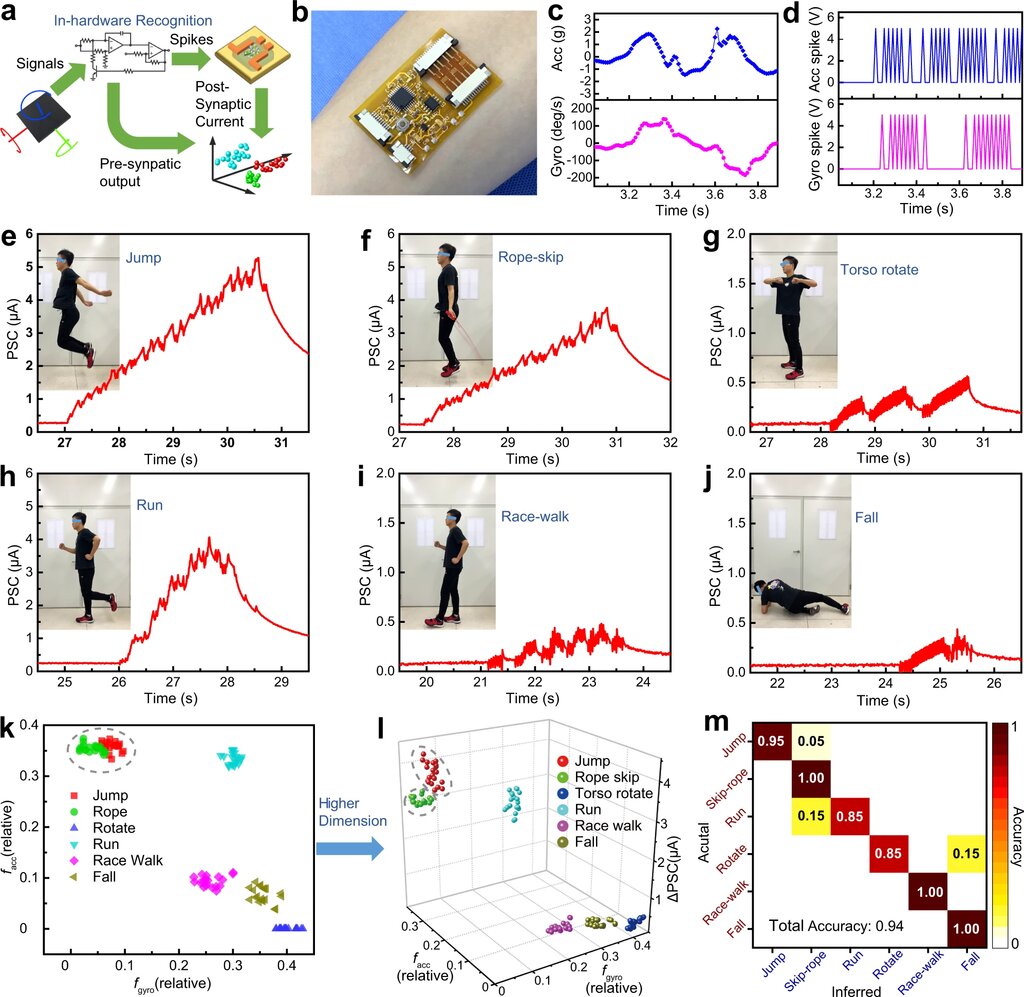
To capture this level of detail, we use motion capture technology. Athletes wear markers on specific anatomical landmarks. High-speed cameras record the markers' positions from multiple angles, and software reconstructs the movement into a 3D digital skeleton. This allows for a frame-by-frame breakdown of technique, revealing subtle patterns that are invisible in real-time.
The Forces Behind Movement
While kinematics tells us how an athlete moves, kinetics tells us why. It's the study of the forces that cause motion. Every jump, sprint, and change of direction is governed by forces, both internal (from muscles) and external (like gravity and ground reaction forces).
Kinetics
noun
The branch of mechanics that deals with the actions of forces in producing or changing the motion of masses.
One of the most powerful tools in kinetic analysis is the force plate. These platforms are built into the floor and measure the forces exerted on them. When an athlete stands, runs, or jumps on a force plate, it precisely records the ground reaction forces—the equal and opposite force the ground exerts back on the athlete.
This data is critical. Analyzing the magnitude and direction of ground reaction forces can tell us about an athlete's power output during a vertical jump, their braking and propulsive forces while running, or their stability when landing. It quantifies concepts that coaches often describe by feel.
Inside the Engine
The ultimate source of human movement is, of course, the muscles. Muscle mechanics delves into how muscles generate force and produce movement. It's more complex than a simple on/off switch. The force a muscle can produce depends on its length, its contraction velocity, and its architecture.
A key concept is the force-velocity relationship. A muscle can produce its maximum force at zero velocity (an isometric contraction). As the speed of contraction increases, the maximum force it can generate decreases. Conversely, when a muscle is actively lengthened (an eccentric contraction), it can produce even greater forces. This is why you can lower a heavier weight than you can lift.
Another crucial factor is the muscle-tendon unit. Tendons are not just simple connectors; they are elastic structures that store and release energy, contributing to power and efficiency. The timing of muscle activation relative to the stretching and recoiling of the tendon is fundamental to explosive movements like throwing or jumping.
A sports scientist analyzing the exact angle of a swimmer's elbow and the speed of their hand through the water is conducting what type of analysis?
Which piece of equipment is essential for directly measuring the ground reaction forces generated by an athlete during a vertical jump?
By combining kinematic and kinetic analysis with an understanding of muscle mechanics, we can build a complete picture of athletic movement, identifying opportunities for improved performance and reduced injury risk.