Advanced Sport Science Concepts
Biomechanical Analysis
Finding the Signal in the Noise
You already know that biomechanics governs every athletic movement. But moving from general principles to concrete performance gains requires a sharper focus. It's about identifying the specific, measurable variables that truly matter for success in a given sport. These are the Key Performance Indicators, or KPIs.
KPIs are the biomechanical data points that correlate most directly with an athletic outcome. They cut through the noise of complex movements to tell us what to measure, analyze, and improve.
Identifying the right KPIs is the first step. For a sprinter, it might be ground contact time and stride frequency. For a weightlifter, it's the bar path and the velocity at which it's lifted. Every sport has its own unique set of critical variables. The goal is to isolate the few metrics that have the biggest impact, rather than getting lost in every possible measurement.
| Sport | Primary KPI | Secondary KPI | Biomechanical Goal |
|---|---|---|---|
| 100m Sprint | Ground Contact Time | Stride Length | Minimize braking forces, maximize propulsion |
| Swimming (Freestyle) | Distance Per Stroke | Stroke Rate | Reduce drag, increase propulsive force |
| Baseball Pitching | Peak Trunk Rotation Velocity | Arm Slot Angle | Efficiently transfer energy through the kinetic chain |
| Olympic Weightlifting | Bar Path Efficiency | Peak Bar Velocity | Apply force vertically with minimal wasted movement |
Optimizing Movement Efficiency
Once KPIs are identified, the next step is to apply biomechanical principles to improve them. This is about making an athlete's movement more efficient, ensuring that the maximum amount of energy is channeled into the desired outcome with minimal waste.
A classic example is analyzing the kinetic chain in a throwing athlete. Energy is generated from the ground up, transferred from the legs, through the core, to the shoulder, and finally to the hand. A breakdown anywhere in this chain forces other parts to compensate, which reduces performance and increases the risk of injury. By analyzing the timing and velocity of each segment's rotation, we can pinpoint inefficiencies and correct them.
This principle of optimizing the kinetic chain applies everywhere, from a golf swing to a high jump. It's about sequencing movements to build and transfer momentum effectively. Analyzing movement patterns reveals where energy is leaking out of the system, allowing for targeted corrections through coaching cues and drills.
The Modern Analyst's Toolkit
The human eye is a remarkable tool, but it has its limits. Technology allows us to see and measure movements with a precision that was once impossible. High-speed cameras capture details too fast for the eye to see, while 3D motion capture systems provide a complete kinematic breakdown of an athlete's movement in space.
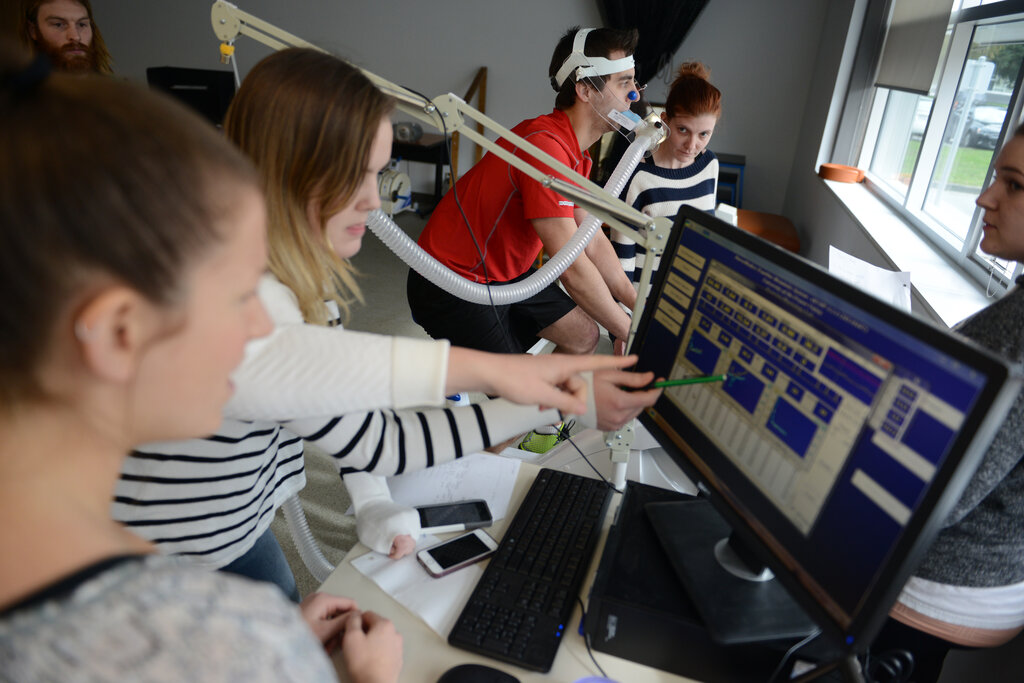
Force plates measure the ground reaction forces an athlete produces, revealing exactly how they interact with their environment to generate momentum. Wearable inertial measurement units (IMUs) can track the orientation and acceleration of different body segments, providing valuable data in a field setting without the constraints of a lab. These tools don't replace good coaching; they enhance it by providing objective, quantitative data to guide decision-making.
Case Study: The Long Jumper
Consider an elite long jumper whose performance has plateaued. Using motion capture and force plates, a biomechanist analyzes their final three strides and takeoff.
KPIs: Horizontal velocity at takeoff, vertical velocity at takeoff, and takeoff angle.
Analysis: The data reveals two key issues. First, the athlete is applying excessive braking force on their final step, significantly reducing their horizontal velocity as they plant to jump. Second, their trunk is too upright at takeoff, resulting in a takeoff angle that is too high, converting precious horizontal speed into non-productive height.
Intervention: The coach implements drills focused on maintaining speed through the final strides, using cues to encourage the athlete to "run through the board." They also use video feedback to help the athlete achieve a more powerful forward lean at takeoff.
Result: By targeting these specific biomechanical flaws, the athlete is able to better conserve momentum into the jump, resulting in a measurable increase in distance.
A critical challenge in contemporary sports science lies in filling the gap between group-level insights derived from controlled hypothesis-driven experiments and the real-world need for personalized coaching tailored to individual athletes' unique movement patterns.
This case highlights the core value of biomechanical analysis. It moves beyond generic advice and provides a data-driven path to personalized performance enhancement.
What is the primary purpose of identifying Key Performance Indicators (KPIs) in sports biomechanics?
A biomechanist analyzes a long jumper and finds they are applying excessive braking force on their final step. How does this specific issue negatively affect their performance?
Ultimately, biomechanical analysis is a problem-solving process. It's about using the right tools to ask the right questions, identifying the key factors that limit performance, and developing targeted strategies to help athletes reach their full potential.