Advanced Spec-Driven Development with BDD
Introduction to Spec-Driven Development
The Blueprint Before the Build
In traditional software development, we often start with a general idea, write some code, and then write documentation to explain what we built. The code itself becomes the ultimate source of truth. But what if we flipped that around? What if a detailed blueprint, or specification, came first and guided every step that followed?
Spec-Driven Development (SDD) is a methodology where you write detailed specifications BEFORE generating code, making the spec—not the code—your source of truth.
This is the core idea of Spec-Driven Development (SDD). It's an approach where a detailed, often machine-readable, specification serves as the primary contract for a project. This spec isn't just a Word document that gets filed away. It's a living, breathing guide that defines the system's behavior, its structure, and its requirements before a single line of implementation code is written.
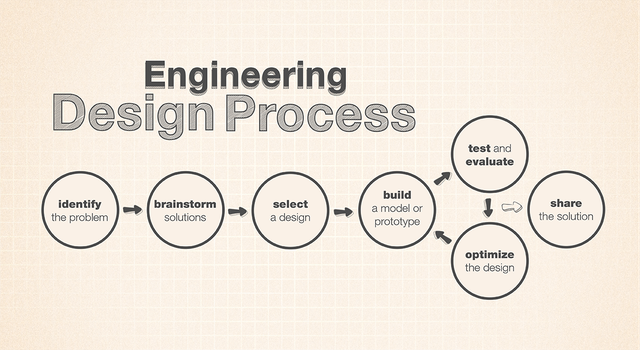
Think of it like building a house. You wouldn't just start mixing concrete and nailing boards together. You'd start with an architect's blueprint that details every room, every electrical outlet, and every plumbing fixture. In SDD, the spec is that blueprint.
How Is It Different?
SDD is part of a family of development methodologies that prioritize planning and testing, but it has a unique focus. Let's compare it to two other popular approaches: Test-Driven Development (TDD) and Behavior-Driven Development (BDD).
Test-Driven Development (TDD) is a cycle: write a failing test, write the minimum code to make it pass, and then refactor. Here, the tests effectively act as the specification. They define what the code should do in very specific scenarios.
Behavior-Driven Development (BDD) is an evolution of TDD. It focuses on the overall behavior of the system from the user's perspective. It uses natural language to describe scenarios (e.g., "Given I'm a logged-in user, When I click 'add to cart', Then the item appears in my cart"). This makes the requirements understandable to non-technical stakeholders.
Spec-Driven Development zooms out even further. While TDD focuses on unit-level correctness and BDD focuses on user-level behavior, SDD aims to create a comprehensive specification for the entire system or feature. This spec includes not just behavior but also data models, API contracts, and architectural constraints. It defines the 'what' so thoroughly that the 'how' (the code) can be implemented or even generated with greater confidence and automation.
| Methodology | Primary Goal | "Source of Truth" |
|---|---|---|
| Test-Driven (TDD) | Ensure code correctness | The tests |
| Behavior-Driven (BDD) | Align development with user behavior | User scenarios |
| Spec-Driven (SDD) | Create a complete system contract | The specification |
The Benefits of a Spec-First Mindset
Adopting SDD requires a shift in thinking, but it brings significant advantages.
1. Unmatched Clarity and Alignment: When the spec is the single source of truth, everyone from product managers to junior developers is on the same page. Ambiguity is resolved before development starts, not during a late-stage crisis.
2. Reduced Rework: It is far cheaper and faster to fix a logical error in a specification document than it is to fix it in a complex, interconnected codebase. SDD helps catch misunderstandings early.
3. Powering Automation and AI: A well-defined, machine-readable spec is the perfect input for modern tools. It allows for automated code generation, better API testing, and gives AI coding assistants a clear and unambiguous contract to follow.
4. Living Documentation: Because the spec is central to the development process, it's constantly updated. Your documentation never becomes stale because it is the guide for the code.
Ultimately, SDD is about moving from 'code-as-truth' to 'spec-as-truth'. It's a strategic move to build more reliable and maintainable software by defining intent with precision from the very beginning.
Let's review the key terms we've discussed.
Now, check your understanding of these concepts.
What is the core principle of Spec-Driven Development (SDD)?
How does the scope of Spec-Driven Development (SDD) typically compare to Behavior-Driven Development (BDD)?
By starting with a clear blueprint, SDD provides a structured path for turning great ideas into great software.