Advanced Somatic Relaxation and Stress Mastery
Parasympathetic Nervous System Mastery
The Body's Braking System
You already know that the autonomic nervous system has two main branches: the sympathetic (fight-or-flight) and the parasympathetic (rest-and-digest). Think of them as the gas pedal and the brake pedal for your body. While the sympathetic system revs the engine in response to stress, the parasympathetic nervous system (PNS) applies the brakes, slowing things down and shifting the body into a state of recovery and repair.
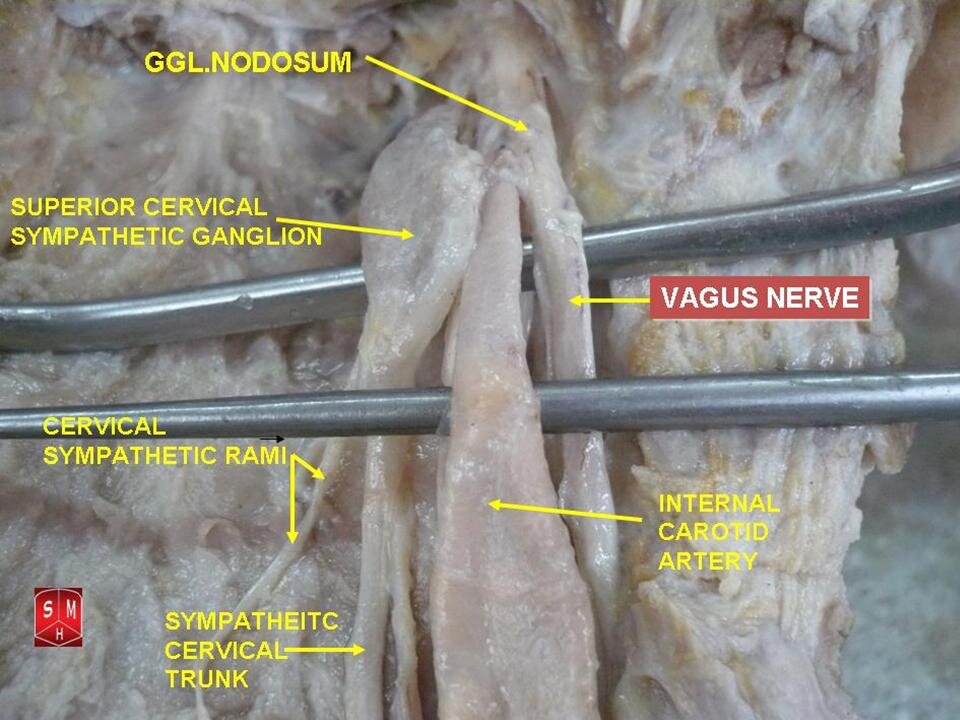
The star player of the PNS is the vagus nerve, a massive nerve that wanders from the brainstem down to the abdomen, connecting to the heart, lungs, and digestive tract. The health and responsiveness of this nerve, often called vagal tone, is a key indicator of your stress resilience. Strong vagal tone means your body can quickly shift from a stressed state back to a calm one. It's the difference between a car that screeches to a halt and one that smoothly decelerates.
This ability to downshift isn't just a vague feeling of calm. It's a precise physiological process. When the vagus nerve is stimulated, it releases a specific neurotransmitter.
Acetylcholine
noun
The chief neurotransmitter of the parasympathetic nervous system. It acts as a chemical messenger, transmitting signals between nerve cells and target cells like muscle or gland cells.
When acetylcholine is released at the heart's sinoatrial node (the natural pacemaker), it acts like a tranquilizer for your heart muscle, causing your heart rate to slow down. This is the direct mechanism behind the 'rest' in 'rest-and-digest.' It’s a targeted chemical signal that tells your cardiovascular system the emergency is over.
Regulating Your Rhythm
Your body has an elegant, built-in feedback loop for managing blood pressure and heart rate called the baroreflex. Specialized sensors, called baroreceptors, are located in the walls of your major arteries, like the aorta and carotid arteries. They constantly monitor the stretching of these vessel walls, which tells them how high your blood pressure is.
When blood pressure rises, the baroreceptors fire more frequently. This signal travels up to the brainstem, which then increases vagal nerve activity. More vagus nerve activity means more acetylcholine is released at the heart, which slows the heart rate and helps lower blood pressure back to a normal range. Conversely, if your blood pressure drops, the baroreceptors fire less, vagal activity decreases, and your heart rate increases to compensate. It's a continuous, self-regulating process.
This mechanism is the physiological basis for heart rate variability (HRV), the measure of the variation in time between each heartbeat. High HRV is a sign of good vagal tone and a healthy, adaptable nervous system. By using techniques like slow, deep breathing, you can consciously tap into this baroreflex. The deep breaths gently increase pressure in the chest, stimulating the baroreceptors and activating the vagal brake to slow your heart rate.
By deactivating the sympathetic and activating the parasympathetic nervous system, NSDR may promote feelings of relaxation by increasing dopamine in the brain, while reducing heart rate and blood pressure.
Beyond Calm to Restoration
There's a significant difference between feeling passively calm and actively engaging in deep restoration. Feeling 'calm' might simply mean the absence of a major stressor. Your sympathetic system isn't firing on all cylinders, but your parasympathetic system isn't fully engaged either. You're idling.
Deep restoration, however, is an active state driven by the PNS. This is when the 'digest' part of 'rest-and-digest' truly kicks in. Blood flow is redirected from the skeletal muscles to the digestive organs. The liver begins to process nutrients and store energy. Cellular repair processes, which are often suppressed during periods of high stress, are initiated throughout the body. It’s a state of profound internal housekeeping.
Achieving this state requires more than just sitting still. It requires intentionally activating the vagal brake. This is why practices that modulate breath and heart rate are so effective. They provide a direct, physical lever to pull your nervous system out of neutral and into a restorative drive, bypassing the 'fight-or-flight' instinct even when mental stressors are present.
Let's review the key terms we've covered.
Now, test your understanding of these mechanisms.
What is the primary nerve of the parasympathetic nervous system, responsible for the 'rest-and-digest' response?
Which neurotransmitter is released by the vagus nerve to slow down the heart rate?
By understanding these physiological mechanisms, you can move from simply avoiding stress to actively cultivating a state of deep recovery.