Advanced Social-Semiotic Multimodality
Multimodal Metafunctions
Beyond Words: Decoding Multimodal Messages
Your expertise in Van Dijk's critical discourse analysis provides a strong foundation for dissecting the power dynamics within texts. However, communication rarely relies on words alone. To understand the full picture, we need to extend this analysis to the rich, layered world of multimodal communication, where images, sounds, and layout all work together to create meaning.
We can do this by adapting the metafunctions from M.A.K. Halliday's systemic functional linguistics. He proposed that every act of communication simultaneously performs three jobs: it represents some aspect of the world, it forges a social relationship, and it organises itself into a coherent message. These are the ideational, interpersonal, and textual metafunctions. By applying this framework to multimodal artefacts, we gain a powerful toolkit for social semiotic analysis, revealing how meaning and power are constructed through a combination of modes.
The Ideational: Constructing Reality
The ideational metafunction is about representation. It's how we use semiotic resources to construe our experience of the world, describing who is doing what, to whom, where, and when. In language, this happens through clauses that link participants (nouns) with processes (verbs). But in multimodal contexts, this function is much broader.
Think of a news website. A photograph doesn't just decorate the text; it is a representation. It presents participants and vectors of action. A person looking or pointing creates a narrative. A diagram showing a process or a map displaying locations are both performing the ideational function. They classify the world and explain how its parts relate to one another. Every choice, from the elements included in a chart to the specific moment captured in a photo, is a representational act that frames our understanding of reality.
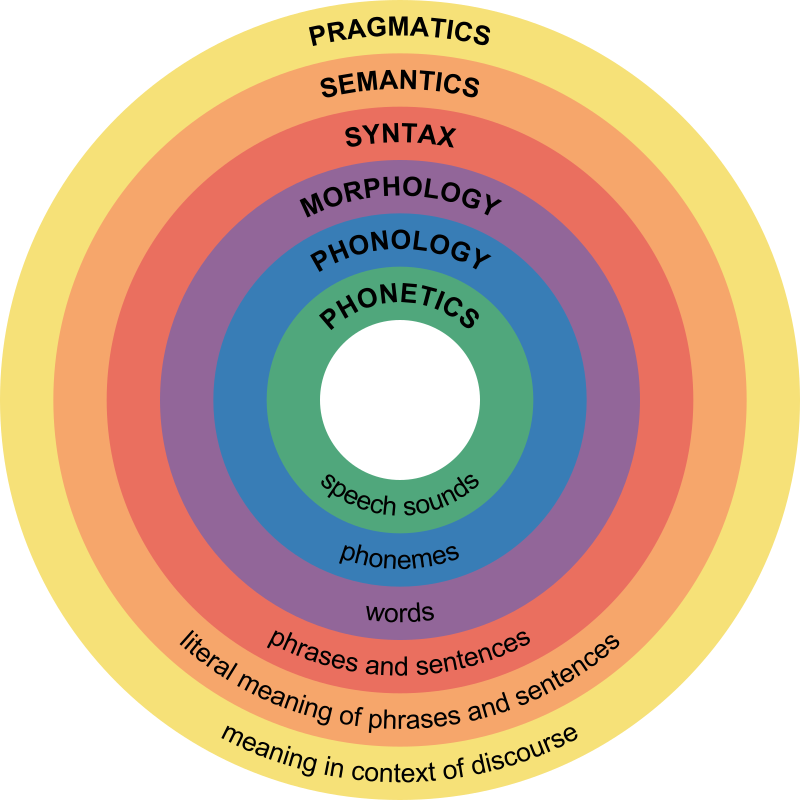
The ideational metafunction organises the resources we use when we construe our experience of both the inner (mental) and the external (social and physical) world.
The Interpersonal: Forging Relationships
Communication isn't just about information; it's about interaction. The interpersonal metafunction is what enacts our social relationships. In text, this is achieved through choices of mood (e.g., declarative, interrogative), modality (e.g., 'might' vs. 'must'), and pronouns ('we' vs. 'you').
Visually, this metafunction is incredibly rich. Consider the concept of gaze. When a person in an image looks directly at the viewer, it creates a symbolic 'demand', forging a direct connection. If they look away, it's an 'offer', positioning the viewer as an observer. Proximity also plays a key role. A close-up shot creates a sense of intimacy or confrontation, while a long shot establishes distance and objectivity. Perspective is another powerful tool. An image taken from a low angle makes the subject appear powerful and dominant, whereas a high-angle shot can make them seem vulnerable or small. These visual choices are not accidental; they actively shape the relationship between the artefact and its audience.
The choices made in both the ideational and interpersonal realms reveal power dynamics. How is reality represented? Who is shown as active and who is passive? What kind of relationship is the text trying to build with you? By choosing a low-angle shot of a politician, a publication can non-verbally suggest their authority. By using intimate close-ups in a charity appeal, an organisation fosters a personal connection designed to elicit an emotional response. These are not neutral design choices; they are rhetorical moves that position subjects and viewers within a social hierarchy.
The Textual: Weaving a Coherent Whole
Finally, the textual metafunction is what holds everything together. It ensures that a communicative act is coherent and understandable as a unified whole. In written language, this involves information structure (the order of given and new information), and cohesion (the use of pronouns, conjunctions, and lexical chains to link parts of a text).
In multimodal documents, this function governs composition. It's about how different elements—images, headlines, body text, captions—are arranged in space. The most prominent elements, determined by size, colour, or position (e.g., top-left in Western cultures), are presented as the most important. Lines, vectors, and frames guide the viewer's eye, creating a path through the information. For example, on a webpage, a large, central image might serve as the anchor, with headlines and text blocks arranged around it in a specific reading order. This compositional structure is the 'glue' that binds the various semiotic resources into a single, meaningful text. It manages the flow of information and makes the overall message navigable.
The third metafunction, the textual, organises the resources we use to create cohesive and context sensitive texts when we choose to exchange a certain experiential meaning.
Each mode has different for realising these metafunctions. Language is excellent at expressing logical connections and abstract concepts (ideational). Images are powerful for evoking emotion and creating immediate social connection (interpersonal). Layout and typography are essential for creating information hierarchy and coherence (textual).
By analysing how these metafunctions are realised across different modes, we can perform a comprehensive multimodal critical discourse analysis. We move beyond simply asking "What does the text say?" to asking "How does this entire multimodal artefact represent the world, position its audience, and structure its message to achieve a particular social purpose?" This integrated approach allows us to uncover the subtle, often invisible, layers of meaning and power embedded in the media we consume every day.
According to the systemic functional linguistics framework adapted for multimodal analysis, what are the three core metafunctions that every act of communication performs?
A charity advertisement displays a large, central photograph of a child looking directly into the camera. How does this use of gaze primarily function according to the interpersonal metafunction?