Advanced Sexual Reproduction in Angiosperms
Microsporogenesis and Male Gametophyte
Inside the Anther
Within the anther of a flowering plant, several chambers called microsporangia are busy at work. Think of them as microscopic nurseries. Initially, each microsporangium is filled with a mass of similar-looking cells known as sporogenous tissue. These are the parent cells, diploid (2n) just like the rest of the plant, holding a full set of chromosomes.
As the anther matures, the cells within this tissue differentiate. They become larger, with dense cytoplasm and prominent nuclei. At this stage, they are called microspore mother cells (MMCs), or microsporocytes. Each MMC is destined to undergo a specialised type of cell division to dramatically reduce its chromosome number.
From One Cell to Four
The key event in creating male gametes is meiosis. Each diploid (2n) microspore mother cell divides twice in quick succession. The first meiotic division produces two haploid (n) cells. The second division turns those two cells into a total of four haploid microspores. Because they are formed together, they initially cling to one another in a cluster called a s, held together by a substance called callose.
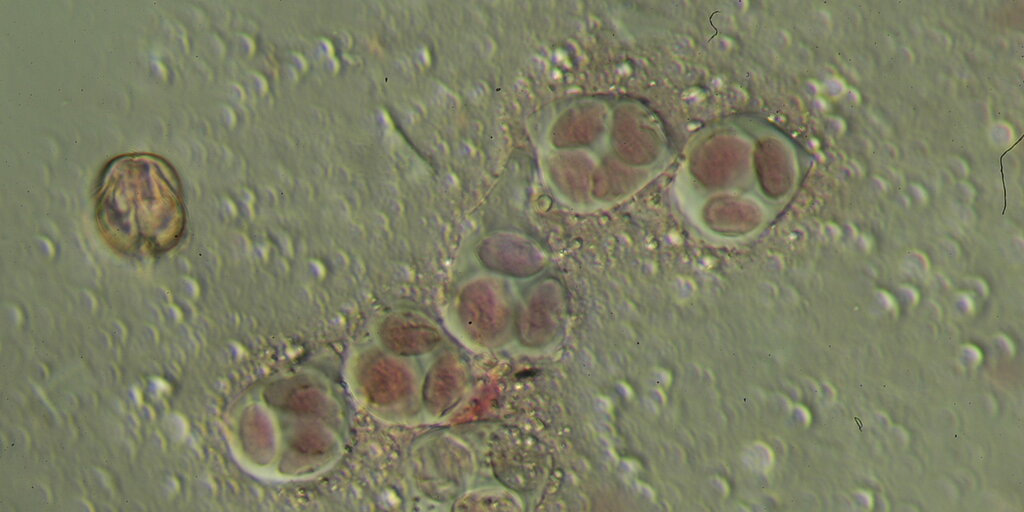
This process, from a single diploid MMC to a tetrad of haploid microspores, is called microsporogenesis. Once formed, the tetrads break apart as the callose wall dissolves, releasing the four individual microspores. Each of these single-celled microspores will then mature into a pollen grain.
Building the Pollen Grain
A pollen grain is more than just a single cell; it's a tiny, resilient vehicle for delivering male genetic material. Its development involves forming a sophisticated two-layered wall. The outer layer is the exine, an incredibly tough coating made of s. This substance is one of the most durable organic materials known, resistant to chemical and biological decay. It protects the fragile genetic contents from drying out, UV radiation, and other environmental hazards.
The exine isn't a completely sealed shell. It has weak spots or openings called germ pores. These are crucial because they are the points where the pollen tube will eventually emerge after landing on a stigma.
Beneath the exine lies a thinner, more flexible inner wall called the intine. It is made primarily of cellulose and pectin, similar to a typical plant cell wall. The intine's main job is to grow out through a germ pore to form the pollen tube.
gametophyte
noun
The haploid, gamete-producing phase in the life cycle of a plant.
With its protective walls in place, the microspore's internal contents change, too. The single haploid nucleus divides once by mitosis. This division is unequal, producing two very different cells within the same pollen grain.
One is the large vegetative cell (or tube cell), which makes up most of the pollen grain's volume. It contains a lot of cytoplasm and nutrients, and its primary role is to produce the pollen tube.
The other is the smaller generative cell. This cell is initially attached to the pollen wall but later detaches and floats within the cytoplasm of the vegetative cell. The generative cell's sole purpose is to divide again to form the two male gametes, or sperm cells.
The pollen grain, with its vegetative and generative cells, is the mature male gametophyte. It's a highly reduced, self-contained organism ready for dispersal.
In most angiosperms, the generative cell divides into two sperm cells after the pollen has been shed from the anther and has landed on a stigma. In some species, however, this division happens even before the pollen leaves the anther. This means a mature pollen grain can be either two-celled (vegetative + generative) or three-celled (vegetative + two sperm cells) at the moment of dehiscence, when the anther splits open to release its contents.
What is the direct product of meiosis in a microspore mother cell (MMC)?
The incredible durability of pollen, allowing it to be preserved in fossils, is primarily due to which substance?
This entire sequence ensures that a well-protected package containing the male genetic material is ready for the journey of pollination.