Advanced SEO Mastery
Advanced SEO Techniques
Beyond Keywords to Topic Clusters
You already know how to find good keywords. The next level is to stop thinking about individual keywords and start thinking in terms of topics. Search engines are smarter now. They understand the relationships between concepts. Your goal is to show them that you're an authority on an entire subject, not just a single search term.
This is where topic clustering comes in. The idea is to create a central 'pillar' page that gives a broad overview of a major topic. Then, you create multiple 'cluster' pages that dive deep into specific subtopics related to that pillar. Every cluster page links back to the pillar page, and the pillar page links out to all its cluster pages. This creates a strong internal linking structure that signals expertise to search engines.
For example, if your pillar page is about 'Electric Car Maintenance,' your cluster pages might be 'Tesla Battery Health,' 'EV Tire Rotation Guide,' and 'Charging Port Troubleshooting.' By covering the topic comprehensively, you answer a user's initial query and their follow-up questions, keeping them on your site and demonstrating your authority.
To build these clusters, start with your core topic. Use your keyword research tools to find long-tail keywords, related questions, and common subtopics. Group these into logical clusters, and you'll have a roadmap for your content strategy.
Winning with Technical SEO
Technical SEO is the foundation of your website. Without a solid technical base, even the best content can go unseen. You've covered the basics like site maps and robots.txt, but advanced technical SEO goes deeper.
Structured Data: This is a standardized format for providing information about a page and classifying its content. Using schema markup, you can explicitly tell search engines what your data means. This can lead to 'rich snippets' in search results, like star ratings for a product, cooking times for a recipe, or an event's date and location. These don't just look better; they can significantly improve your click-through rate.
| Schema Type | What It Does | Why It's Useful |
|---|---|---|
Product | Describes a product, including price and availability. | Gets you star ratings and pricing info in search results. |
Article | Identifies content as a news or blog article. | Helps your content appear in Top Stories carousels. |
LocalBusiness | Provides details like address, hours, and phone number. | Enhances your visibility in local search and map packs. |
FAQPage | Marks up a Frequently Asked Questions page. | Can result in a dropdown of your questions directly in the SERP. |
Crawl Budget Optimization: Google doesn't have infinite resources. It allocates a certain 'crawl budget' to every site, which is the number of pages it will crawl and index in a given period. For large websites, managing this budget is critical. You need to ensure Googlebot is spending its time on your most important pages, not getting lost in low-value ones like expired pages, faceted navigation URLs, or old profiles.
Regularly perform a site audit to find and fix crawl errors, redirect chains, and orphaned pages. Use the nofollow and noindex tags strategically to guide crawlers away from unimportant content, preserving your budget for the pages that matter.
Advanced Content and Link Strategies
Great content is more than just well-written text. It has to serve a purpose and satisfy user intent. One powerful strategy is to conduct a 'content gap' analysis. This involves analyzing your competitors' content to find valuable keywords they rank for that you don't. Tools like Ahrefs or Semrush can automate this, giving you a list of proven topics to create content around.
Another key tactic is historical optimization. Go back to your older blog posts that are almost ranking on page one. Update them with new information, add internal links, improve the formatting, and republish them. Often, a simple refresh is enough to push them onto the first page and triple their traffic.
Your content should be written for humans and optimized for search engines, not the other way around.
When it comes to link building, quality trumps quantity every time. Instead of chasing hundreds of low-quality links, focus on acquiring authoritative, relevant backlinks.
One advanced method is analyzing a competitor's backlink profile. Find out who links to them, and for what content. If a reputable site linked to their guide on a topic, they might also be interested in linking to your newer, more comprehensive guide on the same topic. This is a targeted way to find relevant link opportunities.
The Future: AI and SEO
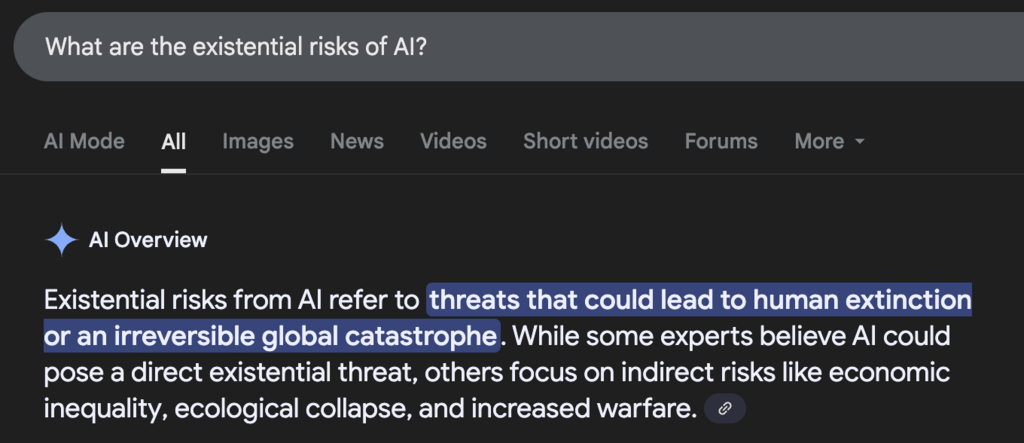
The world of search is changing rapidly, driven by artificial intelligence. Google's AI Overviews and other generative AI search engines are shifting the focus from a list of blue links to a single, synthesized answer. This introduces a new discipline: Generative Engine Optimization (GEO).
Generative Engine Optimization is the next evolution of SEO – one built for a world where AI engines curate and synthesize answers, not just index web pages.
GEO is about making your content easy for AI models to understand, parse, and cite. This means using clear, concise language, structuring your content with headers and lists, and directly answering questions. It also means building brand authority and trust, as AI engines will prioritize information from reputable sources.
Optimizing for voice search is another key part of this future. People speak differently than they type. Voice searches are often longer and phrased as questions. To capture this traffic, create content that directly answers 'who,' 'what,' 'where,' 'when,' and 'why' questions. An FAQ page is a great way to start.
The fundamentals of SEO still apply, but the game is evolving. Focusing on expertise, authority, and trustworthiness (E-A-T) is more important than ever. Create truly helpful content, build a strong technical foundation, and earn authoritative backlinks, and you'll be well-positioned for the future of search, no matter what it looks like.
Ready to test your knowledge on these advanced techniques?
What is the primary strategic goal of using a topic cluster model for your content?
What is the most direct user-facing benefit of implementing structured data (schema markup) on a webpage?