Advanced Self-Discovery and Development
Personality Framework Mastery
Putting Personality Frameworks to Work
You're likely familiar with personality models like the Big Five, which uses the acronym OCEAN (Openness, Conscientiousness, Extraversion, Agreeableness, Neuroticism) to describe broad domains of personality. Instead of redefining these traits, let's explore how they actually function in the real world. Your personality isn't a static blueprint; it's a dynamic system that interacts with your environment.
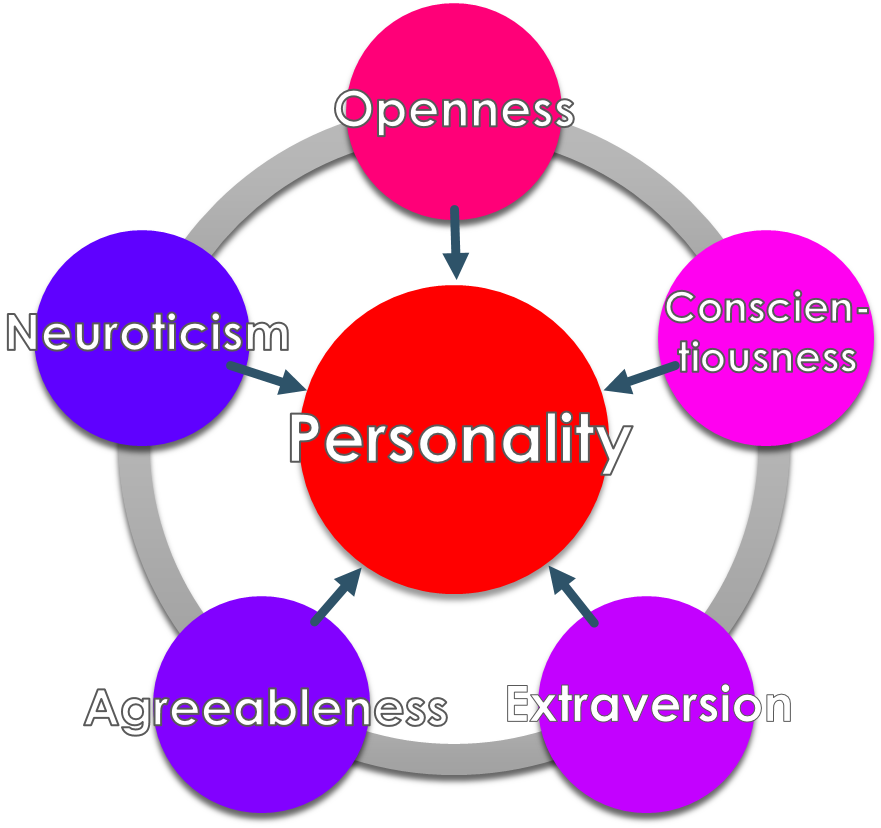
The key is understanding trait situationality, the idea that the expression of our traits can change depending on the context. Think of it like a set of sliders. In a relaxed setting with friends, your 'Agreeableness' slider might be high. But during a tense negotiation where you need to hold your ground, you might dial it down. This isn't being inauthentic; it's being adaptable.
Behavioral flexibility, the ability to adjust your actions to fit the situation, is a critical skill that can be developed by understanding your natural personality tendencies.
Traits Under Pressure
Let's consider how a specific trait, Neuroticism, impacts decision-making. Someone with high Neuroticism experiences emotional instability more readily and may be prone to anxiety and stress. In a stable, predictable work environment, this might manifest as being a meticulous planner who anticipates potential problems. They might be the person who always has a Plan B, C, and D.
However, place that same person in a sudden crisis, like a critical system failure. The pressure can amplify their natural tendency toward anxiety, potentially leading to indecisiveness or a focus on worst-case scenarios that paralyzes action. For a leader, knowing this about themselves is vital. They can preemptively create clear crisis-response protocols or designate a calmer colleague to take the lead in emergencies. This is self-management in action—using personality insights to build systems for success.
Beyond Behavior: The Enneagram
While the Big Five describes what you do, other frameworks like the aim to uncover why you do it. The Enneagram is a system of nine interconnected personality types that focuses on core fears, desires, and motivations. It can offer a deeper layer of understanding to your Big Five profile.
For example, two people might score high on Conscientiousness. The first person, an Enneagram Type 1 (The Perfectionist), is driven by a desire to be good and right, fearing they are corrupt or defective. Their conscientiousness comes from a place of moral integrity. The second person, an Enneagram Type 6 (The Loyalist), is driven by a need for security and support, fearing being without them. Their conscientiousness is a way to create a stable, predictable world and avoid potential threats. Same trait, different motivation.
Finding Your Role
Understanding these frameworks allows for a more nuanced analysis of personality-role fit. It's not about finding a 'perfect' job for your personality, but about understanding where a role might feel natural and where it might demand more energy and conscious adaptation. A role that requires constant networking might be draining for a strong introvert, but it doesn't make it impossible. It simply means they need to be strategic about managing their energy.
Here’s a simplified look at how different traits might align with the demands of certain roles.
| Role | High Openness | High Conscientiousness | High Extraversion | High Agreeableness | Low Neuroticism |
|---|---|---|---|---|---|
| Creative Director | Essential | Helpful | Helpful | Neutral | Helpful |
| Accountant | Neutral | Essential | Neutral | Helpful | Helpful |
| Sales Executive | Helpful | Helpful | Essential | Helpful | Essential |
| ER Nurse | Helpful | Essential | Helpful | Essential | Essential |
| Researcher | Essential | Essential | Neutral | Neutral | Neutral |
This table is a generalization, but it illustrates a point: different jobs pull on different traits. By analyzing a role's demands against your own personality profile, you can identify potential strengths and areas where you'll need to develop coping mechanisms or new skills to thrive.
What is the best definition of "trait situationality"?
A manager who scores high on Neuroticism might be highly effective in a stable environment because they...
Applying these models is a journey of self-discovery. The goal isn't to label yourself, but to gain a vocabulary and a framework for understanding your own patterns and navigating the complex world of human interaction more effectively.