Advanced Science Model Design
Modeling Principles and Abstraction
From Reality to Representation
Scientific models aren't perfect copies of reality. They're useful simplifications. Think of a model as a deliberate translation of the messy, complex world into a cleaner, more understandable language. The goal isn't to replicate every detail but to create a framework that helps us ask specific questions and find clear answers.
Models are powerful tools for teaching science as they provide useful simplifications of structures and processes, helping to make the unseen seen and the complex simple.
This translation process is guided by three core principles: purpose, fidelity, and scalability. Every effective model balances these criteria. The purpose dictates the entire process. Are you trying to predict tomorrow's weather or explain long-term climate change? The first requires a model with high detail on current atmospheric conditions, while the second focuses on broader energy systems over decades. The question you're asking defines the shape of the answer.
refers to how accurately the model represents the real-world system it's based on. A high-fidelity model for a car engine might include the exact dimensions and material properties of every piston and valve. A low-fidelity model might just represent the engine as a box that converts fuel into power. Neither is inherently better; their value depends on the purpose.
Scalability is about flexibility. A good model should be adaptable. Can your model of a single ant colony's foraging behaviour be scaled up to understand the interactions between ten colonies in a forest? Can your climate model be adjusted to represent a smaller region, like the Indian subcontinent, with greater detail? A scalable model grows with your questions, allowing you to zoom in or out without starting from scratch.
The Art of Abstraction
The bridge between raw data and a functional model is built through abstraction. This is the process of stripping away non-essential details to highlight a specific phenomenon. It's about consciously deciding what to ignore. When physicists model a falling apple, they often disregard air resistance, the Earth's rotation, and the gravitational pull of the moon. These factors exist, but their impact is so minimal for this specific problem that including them would add complexity without improving understanding. It's a key skill for any scientist: separating the signal from the noise.
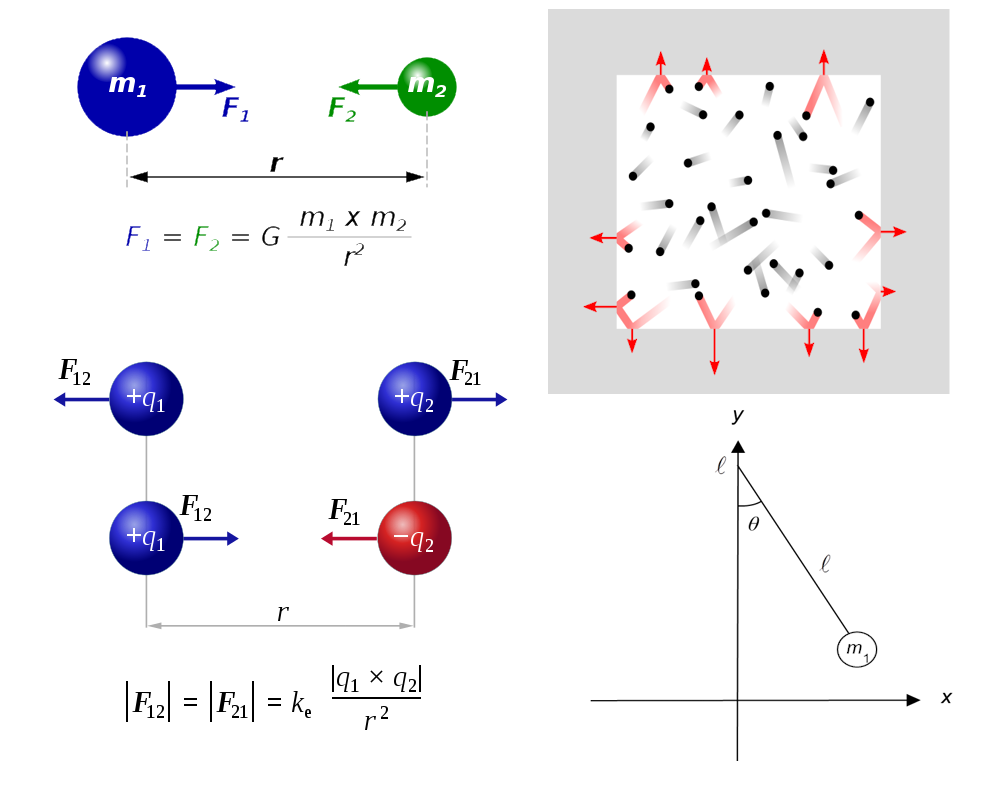
This process of simplification is guided by a principle often called Occam's Razor, which suggests that when faced with competing explanations, the one with the fewest assumptions is usually the best. In modeling, this translates to: don't make your model more complex than it needs to be to serve its purpose. Every variable you add should earn its place by significantly improving the model's accuracy or explanatory power.
Balancing simplicity and accuracy is the central challenge of modeling. An oversimplified model is useless, while an overly complex one is incomprehensible.
So, how do you decide what's essential? It starts with deep domain knowledge. An ecologist knows that to model a predator-prey relationship, you need to include birth rates, death rates, and food availability. They also know you can probably ignore the exact daily weather patterns, unless those patterns directly impact one of the core variables. You identify the key drivers of the system—the components whose changes have the biggest effects. These become the pillars of your conceptual framework.
Conceptual Frameworks
Once you've identified the essential components, you arrange them into a conceptual model. This is a visual or narrative representation of the system's structure and the relationships between its parts. It’s the blueprint for any mathematical or computational model that follows.
This framework makes your assumptions explicit. It forces you to define what you believe are the most important parts of a system and how they interact. This is the heart of scientific modeling: creating a simplified, purposeful representation of reality that allows you to explore, predict, and understand.
The primary goal of a scientific model is to replicate every detail of a real-world system with perfect accuracy.
An engineer creates a simple computer simulation of a bridge that represents the entire structure as a single beam to test its load-bearing capacity. This process of deliberately ignoring details like the individual nuts, bolts, and paint colour is an example of: