Advanced Rhetorical Strategy and Application
Audience Psychology
The Psychology of Understatement
Effective persuasion is rarely about shouting the loudest. It's often about what you don't say. Advanced rhetoric moves beyond direct statements and into the subtle art of guiding an audience's thoughts. By intentionally creating a gap between your words and your meaning, you invite the listener to participate in constructing the message. This shared effort builds a stronger, more lasting connection.
Consider the difference between "That was a great presentation" and "That wasn't a bad presentation at all." The second phrase uses a device called litotes, which expresses an affirmative by negating its opposite. On the surface, it seems weaker. But psychologically, it's far more compelling. Instead of passively accepting a compliment, the listener's brain has to perform a quick mental calculation: "Not bad" means... good. How good? The listener fills in the blank, often arriving at a conclusion that feels more personal and genuine than a direct compliment would have.
Litotes
noun
An understatement in which an affirmative is expressed by the negative of its contrary.
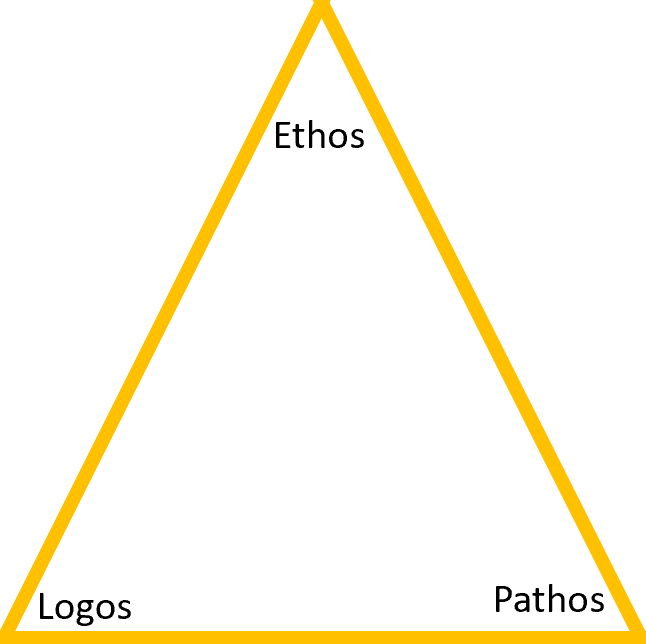
This act of decoding forces engagement. The audience isn't just receiving information; they are actively processing it. This process triggers a mild form of —the mental discomfort experienced when holding two or more contradictory beliefs or values. The phrase is negative, but the implied meaning is positive. To resolve this tension, the listener must work to find the intended meaning, which makes the conclusion feel earned. Using litotes also enhances your ethos, or character. It signals restraint and confidence. You don't need to use hyperbole; you trust the audience is intelligent enough to grasp your subtle meaning. This builds credibility far more effectively than loud self-promotion.
Irony and Audience Collaboration
Irony operates on a similar principle of collaboration. When you say, "Lovely weather we're having" during a thunderstorm, you're not trying to deceive anyone. You're relying on the shared context to communicate your actual meaning. The listener understands the literal words are false and must infer the intended, opposite message. This creates an 'in-group' feeling. Speaker and listener are in on the same joke, united against the absurdity of the situation.
The power of irony lies in the unspoken agreement between the speaker and the audience. It's a shared secret that strengthens the rhetorical bond.
This act of decoding is a participatory exercise. The listener doesn't just hear the message; they co-create it. This is why irony can feel so satisfying to 'get'. It’s a small mental puzzle that, when solved, delivers a little jolt of satisfaction and a sense of connection with the speaker. From a persuasive standpoint, this is invaluable. An audience that feels allied with you is far more likely to be receptive to your core arguments.
But be warned: the risk is higher. If the audience doesn't grasp the irony, the message fails completely. Unlike litotes, which at worst sounds like a weak compliment, failed irony can lead to genuine misunderstanding or even offence. Success depends entirely on a shared understanding and context. That’s why selecting the right device requires a keen understanding of your audience’s psychology. Are they primed for a collaborative mental exercise, or do they require a more direct approach?
By moving beyond simple statements, you engage your audience on a deeper cognitive level. You’re not just talking at them; you’re inviting them into a conversation. This shift from passive reception to active participation is the foundation of true rhetorical mastery.