Advanced Reward and Compensation Strategies
Introduction to Total Rewards
What are Total Rewards?
When you think about a job's compensation, the salary is probably the first thing that comes to mind. But that's only one piece of the puzzle. Total Rewards is the complete package of everything an employee receives from their employer in exchange for their time and effort.
A “total compensation” approach to benefits and compensation promotes the idea that your employees’ compensation is more than their paycheck – it’s the total of what’s available to them.
Think of it as the entire value proposition for an employee. It includes not just the tangible, monetary rewards, but also the intangible benefits that contribute to a positive work experience. A strong Total Rewards strategy helps a company attract the right people, keep them motivated, and encourage them to stay for the long haul. The package is typically broken down into a few key areas.
| Component | Description | Examples |
|---|---|---|
| Compensation | The direct pay an employee receives. | Base salary, bonuses, commissions |
| Benefits | Indirect, non-cash compensation. | Health insurance, retirement plans, paid time off |
| Well-being | Programs that support employees' overall health. | Flexible work schedules, wellness programs, mental health support |
| Development | Opportunities for professional growth. | Training programs, tuition reimbursement, career pathing |
| Recognition | Acknowledging employee contributions. | Awards, public praise, extra responsibility |
More Than Just Money
A well-designed Total Rewards program does more than just pay the bills. It signals what a company values and invests in its people, which is crucial for employee engagement. When employees feel that their company cares about their financial security, health, work-life balance, and career growth, they're more likely to be engaged and productive.
This idea is similar to Maslow's Hierarchy of Needs, a psychological theory about human motivation. The theory suggests that people must have their basic needs met before they can focus on higher-level goals. A Total Rewards strategy works the same way in the workplace.
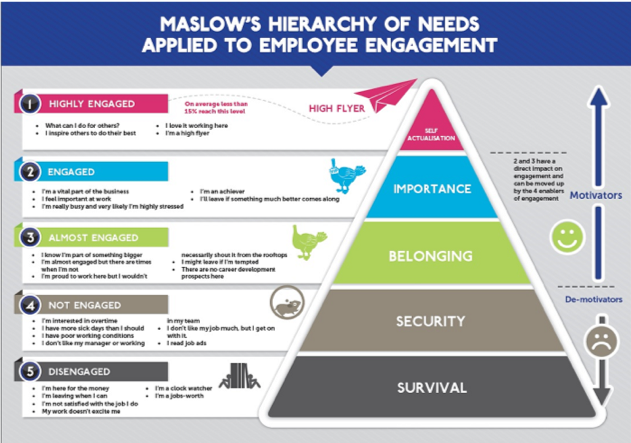
Base pay and benefits cover the fundamental needs for survival and security. Once those are met, elements like well-being programs, recognition, and a sense of community help employees feel a sense of belonging. Finally, opportunities for development and meaningful work allow them to achieve self-actualization, or reaching their full potential.
Companies that successfully address these needs across the board create an environment where employees don't just work for a paycheck, they feel connected to the company's mission and are motivated to do their best work. This leads to higher retention, better performance, and a stronger company culture.
Building a Winning Strategy
There is no one-size-fits-all Total Rewards strategy. The best approach is one that is tightly aligned with a company's specific goals, industry, and culture. A fast-paced tech startup trying to attract top engineers will have a very different package than a stable, established non-profit focused on community impact.
A company's strategy should directly support its objectives. For instance, if a primary goal is to foster innovation, the rewards system might heavily feature professional development opportunities and bonuses for creative problem-solving. If the goal is to reduce employee turnover, the company might invest more in retirement plans, generous paid time off, and flexible work arrangements.
By understanding what they want to achieve, organizations can design a Total Rewards package that not only attracts the right candidates but also reinforces the behaviors and outcomes that are most important for success. It's about creating a symbiotic relationship where the employee's needs and the company's goals are met simultaneously.
Ready to check your understanding?
What is the primary concept behind a "Total Rewards" strategy?
The structure of a Total Rewards program is often compared to Maslow's Hierarchy of Needs. In this analogy, what do elements like professional development opportunities and meaningful work represent?
Ultimately, Total Rewards is a strategic tool that frames the entire relationship between an employer and an employee, moving beyond a simple transactional exchange of work for pay.