Advanced Retail Management Strategies
Advanced Inventory Management
Predicting the Future
Moving beyond basic inventory counts means learning to predict what your customers will want next. This is demand forecasting, and it's more science than guesswork. The simplest way to start is by looking at the past. By analyzing historical sales data over time—a method called time series analysis—you can spot patterns like seasonal spikes or steady growth trends.
But past sales don't tell the whole story. A competitor's big sale, a new marketing campaign, or even shifts in the economy can all affect demand. This is where more advanced methods come in. Predictive analytics uses statistical algorithms and machine learning to analyze massive, complex datasets. These systems can identify subtle patterns that a human might miss, leading to far more accurate forecasts.
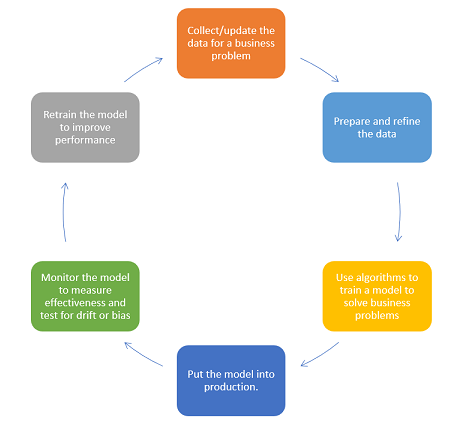
Instead of just looking at last year's sales, a machine learning model might analyze weather patterns, social media trends, and economic indicators simultaneously to predict, for example, how many winter coats a store in a specific city will sell next November.
Finding the Perfect Balance
Once you have a solid forecast, the next challenge is optimization. How do you hold just enough stock to meet demand without tying up too much money in products that just sit on a shelf? Storing inventory costs money—in warehouse space, insurance, and the risk of the product becoming obsolete. But ordering products also has costs, from shipping fees to the labor involved in placing and receiving an order.
Effective inventory management strikes a balance between having enough product to meet customer demand and minimizing the costs of holding that inventory.
A classic formula for finding this balance is the Economic Order Quantity (EOQ). It helps determine the ideal order size to minimize the total costs of ordering and holding inventory.
While EOQ is powerful, not all inventory is created equal. Some items are far more valuable to your business than others. That's where ABC analysis comes in. It's a method for prioritizing your inventory by categorizing items based on their value to the business.
| Category | Percentage of Items | Percentage of Value | Management Focus |
|---|---|---|---|
| A | ~20% | ~80% | Tight control, frequent review |
| B | ~30% | ~15% | Moderate control, regular review |
| C | ~50% | ~5% | Simpler control, less frequent review |
By applying this 80/20 rule, you can focus your most rigorous inventory control efforts on the 'A' items that generate the most revenue, while using a more relaxed approach for the low-value 'C' items.
Putting It on Autopilot
With a strong forecast and clear optimization strategies, the final step is to automate the process. Automated replenishment systems use software to manage your inventory with minimal human intervention. These systems connect your forecasting data and optimization rules directly to your purchasing process.
Replenishment
noun
The process of restocking inventory to meet demand.
Here’s how it works: the system monitors stock levels in real-time. When an item's quantity drops to a predetermined level, known as the reorder point, the software automatically generates a purchase order. The reorder point isn't just a random number; it’s calculated based on your demand forecast and desired safety stock levels—the extra inventory you keep on hand to prevent stockouts from unexpected demand spikes.
Leverage Technology: Utilize inventory management software to track stock levels in real-time, automate reorder points, and generate reports that highlight slow-moving items or popular products.
Modern systems can even be programmed with your EOQ and ABC analysis rules. For high-value 'A' items, the system might use more complex forecasting models and maintain a higher safety stock. For low-value 'C' items, it could use simpler rules and order in larger, less frequent batches to save on ordering costs. This level of automation frees up time and reduces the risk of human error, ensuring you have the right products in the right place at the right time.
Which forecasting method primarily relies on historical sales data to identify patterns like trends and seasonality?
What is the primary goal of using the Economic Order Quantity (EOQ) formula?
Mastering these advanced techniques turns inventory management from a simple necessity into a strategic advantage, boosting efficiency and keeping customers happy.