Advanced Recombinant DNA Techniques
Gene Expression Analysis
Measuring Gene Activity
Once a gene is inserted into an organism using recombinant DNA, the next big question is: is it working? Genes don't just sit there; they are turned on or off, a process called gene expression. When a gene is "on," it's transcribed into messenger RNA (mRNA), which then serves as the blueprint for building a protein. To understand if our genetic engineering was successful, we need to measure how much mRNA is being produced. This is the core of gene expression analysis.
Think of it like checking the activity in a factory. You could count the final products (proteins), but that can be slow and complicated. A faster way is to count the number of instruction manuals (mRNA) being printed. More manuals usually mean more production. Several powerful techniques let us do just that.
Counting the Copies
One of the most established methods is quantitative PCR, or qPCR. It's a highly sensitive technique that targets and amplifies a specific mRNA sequence. Imagine you have a massive library and you want to know how many copies of one specific page exist. qPCR is like a magical photocopier that only copies that single page. It runs through cycles, doubling the number of copies each time, and a fluorescent dye makes the copies glow. By measuring how quickly the glow intensifies, we can calculate how many copies of the mRNA we started with.
qPCR is excellent for precision. When you know exactly which gene you're interested in and need an accurate count, it's the gold standard. However, it can only look at a few genes at a time.
But what if you want to see the activity of thousands of genes at once? For this, scientists developed microarrays. A microarray is a small chip, often the size of a postage stamp, with thousands of microscopic spots. Each spot contains a known DNA sequence that corresponds to a single gene. To use it, you extract all the mRNA from a cell sample, convert it back to DNA (called cDNA), and label it with a fluorescent tag. This glowing soup of cDNA is then washed over the microarray chip. If a gene is being expressed, its corresponding cDNA will stick to its spot on the chip, making it light up. The brightness of each spot indicates the level of expression for that gene.
The most modern and comprehensive method is RNA sequencing (RNA-seq). Instead of using a chip with pre-selected genes, RNA-seq takes all the mRNA from a sample and sequences every single molecule. It reads the genetic code of each mRNA transcript and counts how many times it sees each one. This approach gives a complete, unbiased snapshot of all the gene activity in a cell at a specific moment. It can even discover brand-new genes or variations in how genes are spliced together.
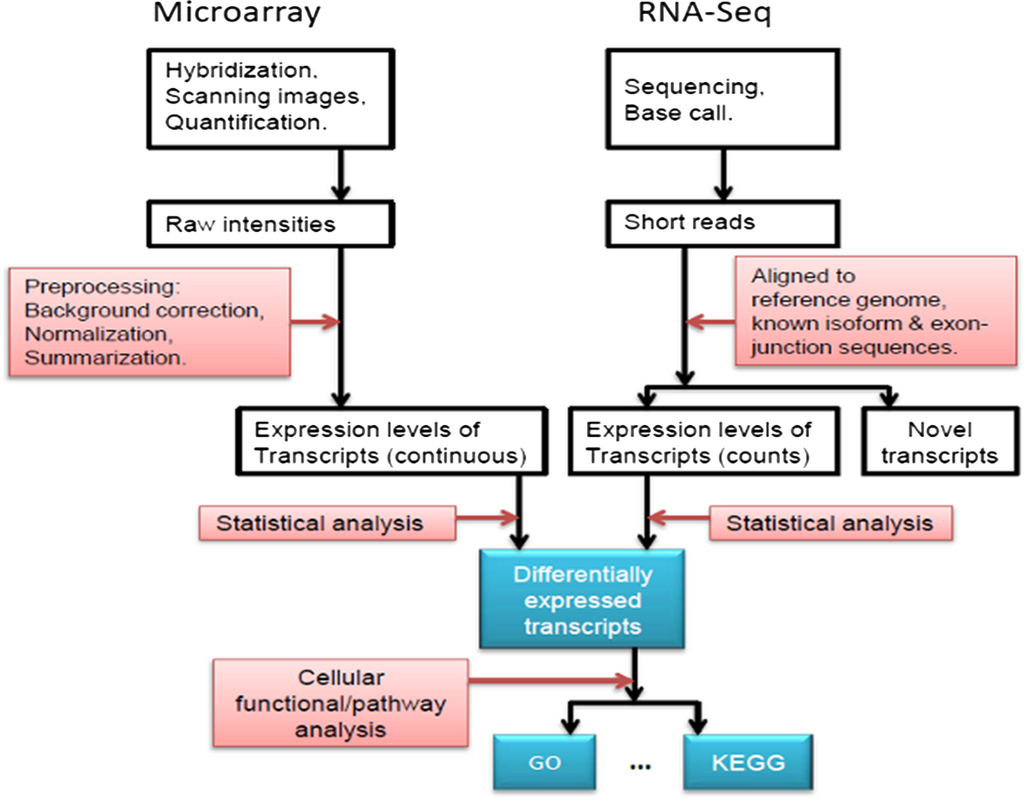
Choosing between these methods depends on the research question. For a detailed look at a handful of genes, qPCR is perfect. For a broad survey of thousands of known genes, a microarray is a good choice. For the most complete and discovery-oriented picture, RNA-seq is the way to go.
| Technique | What it Measures | Best For... | Key Limitation |
|---|---|---|---|
| qPCR | Abundance of a few specific mRNAs | Validating results, precise quantification | Low throughput (few genes at a time) |
| Microarray | Expression levels of thousands of known genes | Large-scale gene expression surveys | Can only detect genes on the chip |
| RNA-Seq | Abundance of all mRNAs in a sample | Discovery, detailed transcriptome analysis | More complex data analysis |
Making Genes Glow
Sometimes, we don't need a number. We just need to see where and when a gene is active in a living organism. For this, we use reporter genes. These are genes that produce an easily detectable signal, like a glow or a color change. The idea is to attach the regulatory part of your gene of interest—the "on/off switch"—to a reporter gene. Then, wherever and whenever your gene would normally be turned on, the reporter gene is turned on instead, creating a visible signal.
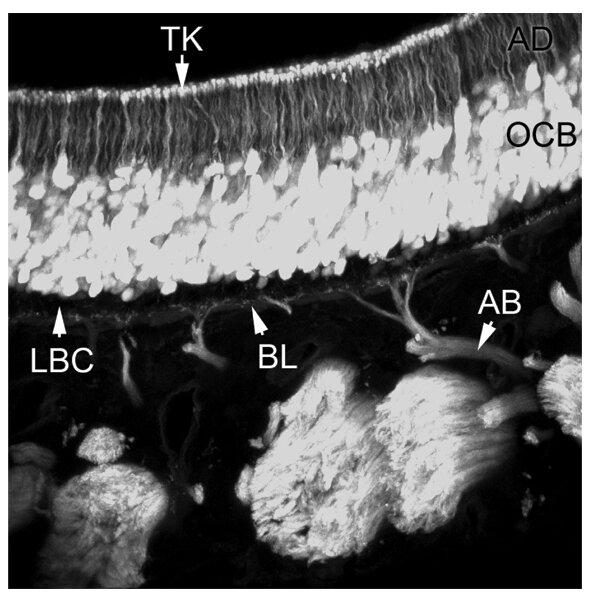
The most famous reporter is Green Fluorescent Protein (GFP), originally isolated from a jellyfish. When the gene for GFP is expressed, the cells produce a protein that glows bright green under blue light. Another common reporter is luciferase, the enzyme that makes fireflies light up. Cells expressing luciferase will glow when given a specific chemical substrate. Reporters are fantastic tools for visualizing gene expression in real-time within living cells and tissues. Their main limitation is that they only report on the activity of the gene's promoter (the on/off switch), not necessarily the amount of final, functional protein.
Practical Challenges
Gene expression analysis is powerful, but it's not without its challenges. The first hurdle is getting a good sample. RNA is a fragile molecule, easily destroyed by enzymes. Proper sample collection and storage are critical to prevent it from degrading. The amount of starting material can also be an issue; sometimes you only have a few cells to work with, which requires highly sensitive techniques.
Once you have the data, you need to make sense of it. A key step is normalization. Cells can have different overall amounts of mRNA, so you need to adjust your data to compare samples fairly. It's like comparing the number of pizza orders from two different towns; you first need to account for the different population sizes.
Finally, no single technique is perfect. The best practice is to validate findings. If an RNA-seq experiment suggests a dozen genes are highly active, a researcher will often use qPCR to confirm the expression levels of the most important ones. This cross-verification ensures the results are accurate and reproducible.
Why is measuring messenger RNA (mRNA) a common method for analyzing gene expression?
A scientist wants to precisely measure the expression levels of three specific genes known to be involved in a particular disease. Which technique is most suitable for this task?