Advanced Reasoning and Geometry Refresher
Advanced Spatial Reasoning
Folding and Unfolding Shapes
Spatial reasoning often involves thinking about objects in three dimensions. One common challenge is visualizing how a flat, 2D pattern, called a net, can be folded to create a 3D shape like a cube. Imagine you have a cardboard cutout that you need to fold into a box. That cutout is the cube's net.
Not every arrangement of six squares can form a cube. To figure it out, you have to mentally fold the squares. A useful trick is to identify opposite faces. When a net is folded into a cube, faces separated by one other face in a straight line will be opposite each other. If two faces that should be opposite end up overlapping, the net is invalid.
Another powerful technique is picking a base square. Imagine one square is flat on the table. Then, mentally fold up the adjacent squares to form the sides. Finally, picture the last square folding over to become the top. If a side is missing or if two squares try to occupy the same position, the net won't work.
Finding Hidden Figures
Next, let's look at embedded figures. These are problems where you must find a simple shape hidden inside a more complex design. The hidden shape will have the exact same size and orientation, unless the problem states it can be rotated. It’s like a game of visual hide-and-seek.
The key is to not get distracted by the extra lines in the complex figure. Focus only on finding the target shape.
Start by looking for a distinctive part of the target shape. If it has a sharp corner or a unique bend, scan the complex figure for that specific feature first. Once you find a potential match, trace the rest of the shape with your eyes to see if it's a perfect fit. This method is much faster than randomly searching the entire design. The hidden shape is part of the main figure's lines; it doesn't just sit on top.
Reflections and Rotations
Mirror and water images test your ability to mentally flip and invert shapes. For a mirror image, imagine a vertical mirror placed next to the figure. Everything on the left will appear on the right, and vice-versa. The parts of the shape closest to the mirror will remain closest in the reflection.
A is a reflection across a horizontal line. Think of looking at the shape's reflection in a still pond. The top of the object becomes the bottom in the reflection, and the bottom becomes the top. The left and right sides, however, stay in the same position.
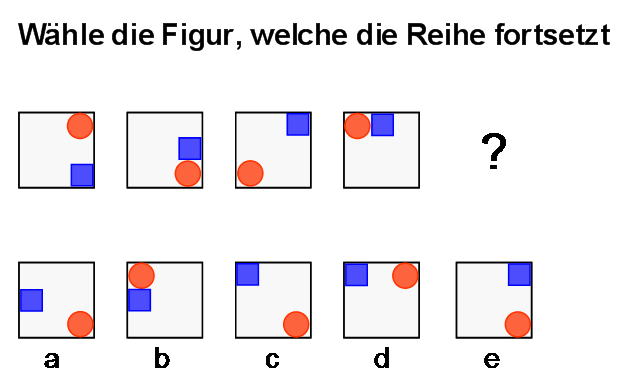
Pattern completion and dot situation puzzles also rely on this kind of thinking. In pattern completion, you're given a grid with a missing piece and must find the option that fits the grid's logical pattern. The pattern might involve rotation, reflection, or the addition and subtraction of elements.
Dot situation problems require you to identify a shape that meets the same conditions as a given figure. For example, a dot might be placed in a region common to a circle and a square, but not a triangle. You must then find which of the answer choices has a similar region where a dot could be placed. The focus here is on understanding overlapping regions.
When transforming a figure into its mirror image using a vertical mirror, which aspect of the figure changes?
Which of the following is a key strategy for solving embedded figure puzzles efficiently?
Practising these types of problems sharpens your ability to see and manipulate shapes in your mind. This is a crucial skill not just for exams, but for many fields that require strong problem-solving abilities.