Advanced Raised Bed Gardening
Structural Design Principles
From Pixels to Planters
Designing a raised garden bed is a lot like laying out a user interface. You’re working within constraints, optimising for user experience, and making choices about materials and structure. But instead of pixels and code, your components are soil, wood, and stone. Your user’s goal isn’t to click a button, but to easily plant, tend, and harvest. Let's translate your design thinking into the physical world.
Choosing Your Materials
The material you choose for your raised bed walls defines its longevity, thermal properties, and aesthetic. It's the foundational choice that impacts everything else. Just like choosing a front-end framework, each option has distinct trade-offs.
| Material | Pros | Cons | Best For |
|---|---|---|---|
| Western Red Cedar | Naturally rot-resistant, lightweight, beautiful ageing. | Expensive, can be soft and prone to dings. | Gardeners prioritising natural aesthetics and longevity without chemicals. |
| Composite Timber | Extremely durable, low maintenance, won't rot or warp. | Can be costly, less natural appearance than real wood. | Set-and-forget gardens where durability is the top priority. |
| Masonry (Brick/Stone) | Excellent durability, provides thermal mass to regulate soil temperature. | High initial effort and cost, requires a solid foundation. | Serious gardeners in climates with large temperature swings. |
Western Red Cedar contains natural oils that act as preservatives, warding off moisture and insects. Composite materials, made from a mix of wood fibre and recycled plastics, offer a maintenance-free alternative that can last for decades. Masonry, while the most labour-intensive, creates a permanent structure that can become a garden's centrepiece. Its ability to absorb heat during the day and release it slowly at night can extend the growing season.
Handling the Pressure
A raised bed isn't just a container; it's a small-scale retaining wall. The soil inside, especially when wet, exerts significant outward pressure on the walls. This force, known as lateral earth pressure, increases with depth. A 30cm-high bed might hold together with simple corner joints, but a 90cm-high bed is a different engineering challenge.
The pressure at the bottom of a 90cm bed is roughly three times greater than at the bottom of a 30cm bed. This is why taller beds are much more likely to bow outwards or even fail completely if not properly braced.
For beds taller than 30-45cm or longer than 1.5m, internal cross-bracing is essential. This can be a simple wooden strut or a steel rod connecting the long sides of the bed, usually halfway up. This brace works in tension, preventing the walls from bowing out under the constant load of the soil.
Ergonomics and Access
Good design is human-centred. In UI design, you ensure buttons are easy to reach and tap. In garden design, you ensure every part of the bed is easy to reach without straining or stepping into the bed, which leads to soil compaction and harms plant roots.
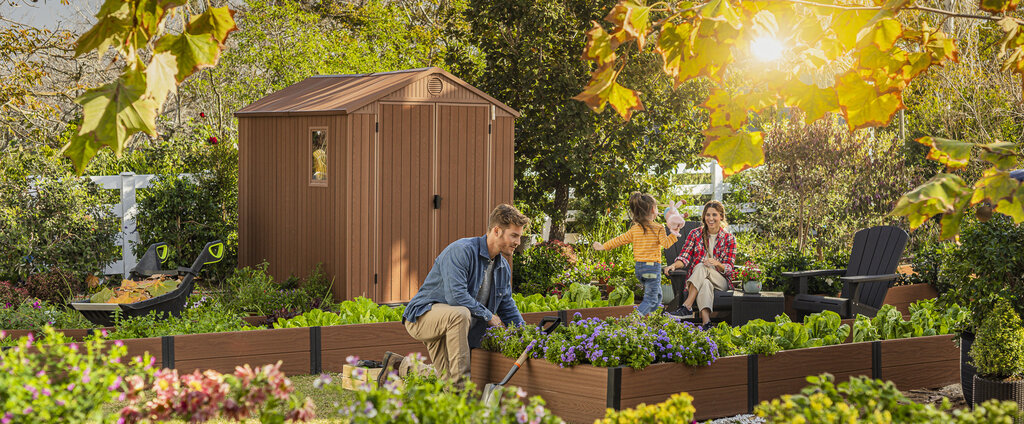
The golden rule is to make the bed no wider than 1.2 metres if you can access it from both sides. This allows the average adult to comfortably reach the centre from either side. If the bed is against a wall or fence, its width should be halved to about 60cm.
The height is also an ergonomic choice. A 30cm bed is fine for young gardeners, but a 60-90cm bed reduces the need to bend over, making it more accessible for people with back problems or mobility issues. A smart accessibility feature is to add a wide capping rail, about 15-20cm wide, on top of the bed walls. This provides a convenient place to sit while gardening or to rest tools.
Now that you understand the core principles behind building a strong, accessible, and well-placed raised bed, you can start applying them to your own space. Before we move on, let's test your knowledge.
Which material for a raised bed is best known for its ability to extend the growing season by absorbing and slowly releasing heat?
To ensure you can reach the centre of a raised garden bed without stepping on the soil, what is the maximum recommended width if you have access from both sides?