Advanced RAG Architectures and Optimization
Advanced RAG Architectures
Advanced RAG Architectures
Standard Retrieval-Augmented Generation (RAG) models, which combine a retriever with a generator, have established a powerful baseline for knowledge-intensive tasks. However, scaling these systems to production environments with massive, dynamic datasets reveals limitations in efficiency, relevance, and contextual understanding. Advanced R-A-G architectures address these challenges by moving beyond simple retrieve-and-generate pipelines. These sophisticated frameworks incorporate techniques like deep hashing for retrieval, multi-stage pipelines for synthesis, and metadata enrichment to achieve superior performance.
Deep Hashing for Efficient Retrieval
In large-scale systems, the computational cost of nearest neighbor search in high-dimensional vector spaces becomes a significant bottleneck. Deep hashing offers a solution by learning a function that maps high-dimensional input data to compact binary codes. Retrieval is then performed by calculating Hamming distance, which is orders of magnitude faster than cosine similarity or Euclidean distance calculations on dense vectors.
Unlike traditional hashing methods, deep hashing uses neural networks to learn data-dependent hash functions. This allows the model to capture complex semantic relationships and generate more effective binary codes. The objective is typically to minimize two competing losses: a similarity-preserving loss that keeps similar items close in the Hamming space, and a quantization loss that encourages the network's output to be close to binary values.
In practice, deep hashing can be implemented as a pre-filtering step. An initial set of candidates is retrieved quickly using Hamming distance on binary codes. This smaller set is then re-ranked using a more computationally expensive dense vector model. This hybrid approach balances speed and accuracy, making it well-suited for real-time applications with vast knowledge bases.
Multi-Stage Information Synthesis
A simple RAG pipeline retrieves a fixed number of documents and feeds them directly to the generator. This can be suboptimal. The retrieved documents may contain redundant or conflicting information, and the most relevant snippets might be buried within longer passages. Multi-stage pipelines address this by refining and processing information before generation.
The initial retrieval stage often prioritizes recall, using fast but less precise methods to gather a broad set of potentially relevant documents. Subsequent re-ranking stages use more powerful and computationally intensive models, such as cross-encoders, to score the relevance of each document in the context of the query. The final processing stage might involve extracting specific facts, summarizing key points, or compressing the context to fit within the LLM's context window. This ensures the generator receives a concise, relevant, and noise-free context, leading to more accurate and coherent responses.
Metadata and Semantic Enrichment
Relying solely on the raw text of documents ignores a wealth of contextual information. Metadata enrichment involves embedding structured information alongside the text content. This can include publication dates, authorship, document type, source reliability scores, or hierarchical information about where a chunk of text originated within a larger document.
During retrieval, this metadata can be used to filter or boost documents. For example, a query about recent events should prioritize documents with recent timestamps. For a question about a specific chapter in a book, the document's structural metadata (book title, chapter, section) is critical. This information can also be passed to the generator, giving it additional context to ground its response. For instance, the LLM can be prompted to cite its sources or to acknowledge the time-sensitivity of the information it is using, directly referencing the metadata provided.
A RAG system answering a medical query could use metadata to filter for peer-reviewed articles published in the last two years, significantly improving the reliability and timeliness of its generated answer.
Challenges in Production
Scaling advanced R-A-G systems introduces several challenges. Maintaining and updating the knowledge base, including vector indexes and metadata stores, in real-time is a complex data engineering problem. As data grows, the cost and latency of retrieval and re-ranking can become prohibitive, requiring careful optimization of each pipeline stage.
Another key challenge is handling the 'lost in the middle' problem, where LLMs tend to ignore information located in the middle of a long context. Multi-stage pipelines with context compression are a direct solution. Additionally, evaluating the end-to-end performance of a complex RAG pipeline is difficult. It requires a suite of metrics that measure not only the accuracy of the final answer but also the relevance of retrieved documents and the efficiency of each pipeline stage.
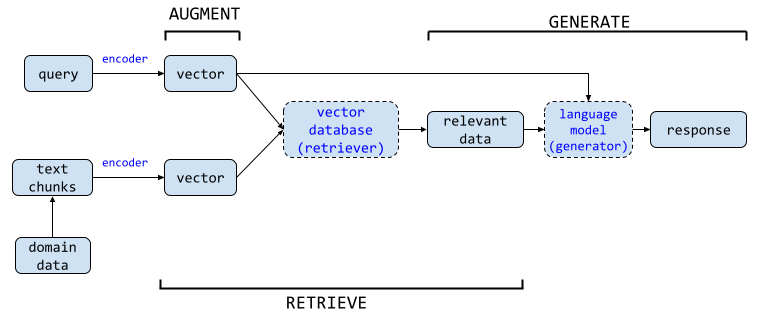
Effective solutions often involve a combination of algorithmic optimization, such as using approximate nearest neighbor (ANN) indexes, and strategic system design, like caching common queries and their retrieved results. Robust monitoring and evaluation frameworks are essential to identify bottlenecks and regressions as the system evolves.
What is the primary advantage of using deep hashing for retrieval in a large-scale RAG system?
In a multi-stage RAG pipeline, what is the typical role of a cross-encoder model?