Advanced Quantum Computing Concepts
Quantum Error Correction Codes
Fighting Quantum Noise
Quantum computers are incredibly powerful, but also incredibly delicate. Their computational power comes from qubits, which can exist in a superposition of 0 and 1. This fragile state is easily disturbed by the environment, a process called decoherence. Even tiny vibrations or temperature fluctuations can introduce errors, flipping a qubit's value or altering its phase.
In classical computing, we solve this by simply making copies of a bit. If you want to protect a '1', you can store it as '111'. If one bit flips due to an error, becoming '101', you can tell the original was likely a '1'. This is called redundancy. But in the quantum world, we can't do this. The no-cloning theorem states that it's impossible to create an identical copy of an unknown quantum state. Measuring a qubit to check its value also destroys its superposition. So how can we possibly correct errors we can't even look at?
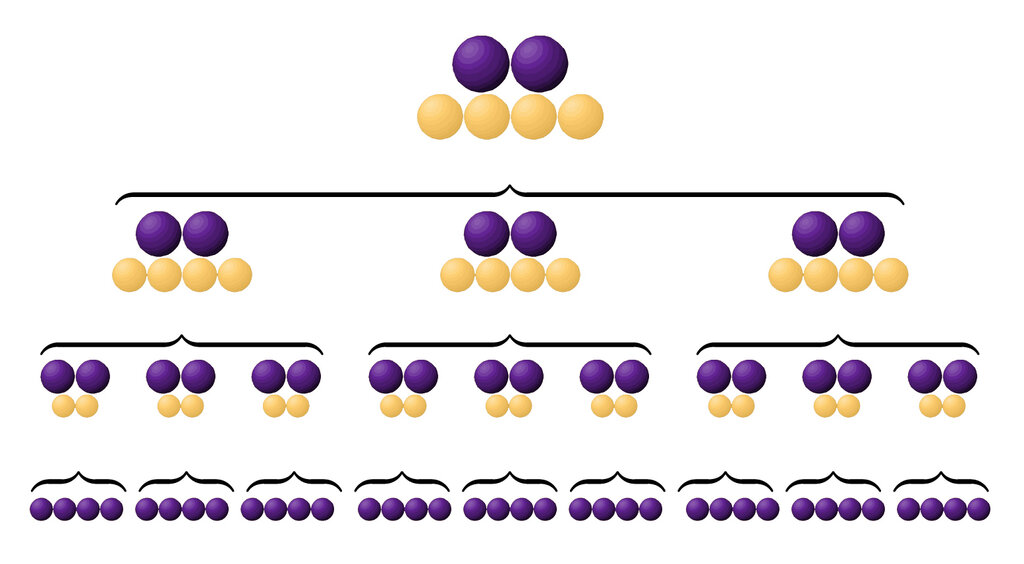
Because physical qubits are so fragile, quantum error correction encodes a single logical qubit across many physical qubits.
The solution is to use a clever form of redundancy. Instead of copying the qubit's state, we distribute its information across several physical qubits. This group of physical qubits works together to represent a single, more robust quantum bit.
Logical Qubit
noun
A quantum bit of information that is encoded using multiple physical qubits to protect it from errors. It is the robust, error-corrected version of a fragile physical qubit.
The core idea is to entangle the primary data qubit with several helper qubits, often called ancilla qubits. By measuring only the ancilla qubits, we can deduce what kind of error occurred on the data qubit and where, without ever measuring (and thus collapsing) the data qubit itself. This information, called the error syndrome, tells us exactly which correction to apply to fix the problem.
The Shor Code
The first quantum error correction code was developed by Peter Shor in 1995. It's a foundational example that shows how to protect a single logical qubit from both bit-flip and phase-flip errors. It's a bit of a brute-force approach, using nine physical qubits to encode one logical qubit, but it elegantly demonstrates the key principles.
The code works in two stages. First, it protects against phase-flip errors. Then, it protects that entire block against bit-flip errors.
Let's say our original qubit state is . The Shor code first encodes this to protect against phase flips, and then that result is encoded again to protect against bit flips. The final, fully encoded state of the nine qubits is a complex superposition:
While groundbreaking, the Shor code's requirement of nine qubits for one logical qubit makes it inefficient for building large-scale quantum computers. This led researchers to develop more resource-friendly codes.
More Efficient Codes
After Shor's discovery, several other codes were developed. Two of the most important are the Steane code and the surface code. They offer better efficiency, meaning they use fewer physical qubits to create a single logical one.
The Steane code, developed by Andrew Steane in 1996, is more efficient. It uses seven physical qubits to encode one logical qubit. It has a beautiful, symmetric structure based on a classical error-correcting code called the Hamming code. It can correct any single bit-flip or phase-flip error on any of the seven qubits.
Even more promising for practical quantum computers is the surface code. This approach arranges qubits in a 2D grid, like a checkerboard. The logical qubit's information is encoded in the collective properties of this grid of physical qubits.
The key advantage of the surface code is its high threshold. This means it can tolerate a relatively high physical error rate before the error correction process starts introducing more errors than it fixes. It's also well-suited to the 2D architecture of many current quantum chips. Its main drawback is that it requires a large number of physical qubits, potentially thousands, for a single, highly reliable logical qubit.
| Code | Physical Qubits per Logical Qubit | Corrects | Key Feature |
|---|---|---|---|
| Shor Code | 9 | 1 bit-flip or 1 phase-flip | The original; conceptually simple but inefficient |
| Steane Code | 7 | 1 bit-flip or 1 phase-flip | More efficient; based on classical Hamming codes |
| Surface Code | Many (e.g., 17 to thousands) | Multiple errors | High error threshold; suited for 2D hardware |
The Road Ahead
Implementing these codes is a massive challenge. It's not enough to have extra qubits; we also need to perform complex measurements on them and apply corrections, all without disturbing the fragile quantum information. This requires extremely fast, high-fidelity control over every qubit. The process of error correction itself can introduce new errors, so the physical qubits must be of very high quality to begin with.
The number of physical qubits needed to create a useful, fault-tolerant quantum computer is a major bottleneck. This is often referred to as the 'qubit overhead'.
The development of robust quantum error correction is one of the most significant hurdles separating today's noisy, intermediate-scale quantum (NISQ) devices from the fault-tolerant quantum computers of the future.
Despite the difficulties, progress is steady. Researchers are constantly designing better codes and building hardware with lower error rates. Each improvement brings us closer to the goal of a quantum computer that can correct its own mistakes and solve problems beyond the reach of any classical machine.
Ready to check your understanding?
Why can't classical redundancy techniques, like making simple copies of a bit (e.g., '1' becomes '111'), be used to protect qubits?
In quantum error correction, information about an error on a data qubit is obtained without directly measuring the data qubit itself. What is this information called?
Overcoming the challenge of quantum errors is a critical step in the journey toward powerful and reliable quantum computation.