Advanced Psychology of Cognitive Biases
Dual Process Theory Integration
Beyond Autopilot and Analysis
You already know about the two famous modes of thinking: the fast, intuitive System 1 and the slow, deliberate System 2. But modern neuroscience is pushing us beyond this simple division. Instead of two distinct 'systems' physically located in different parts of the brain, it's more accurate to think of them as Type 1 and Type 2 processing – flexible modes of operation that the brain shifts between.
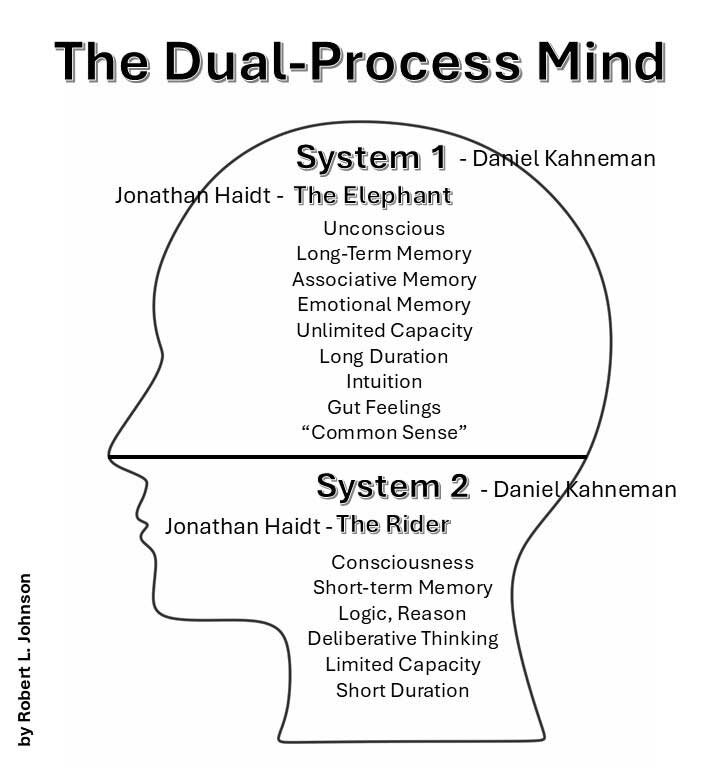
These aren't rivals in a mental tug-of-war. They are partners. Type 1 processing is your brain's default setting, handling thousands of daily tasks efficiently. Type 2 processing is the energy-intensive specialist called in for heavy lifting. The real question is how they work together, and who decides when to switch modes.
The Brain's Conflict Monitor
The idea that Type 1 and Type 2 processing happen in isolated brain regions is outdated. Instead, specific areas act as referees. A key player is the Anterior Cingulate Cortex (ACC), a region deep inside the frontal lobe. Think of the ACC as the brain’s conflict monitor. It doesn't perform the slow, logical thinking itself, but it detects when a fast, intuitive answer might be clashing with the available information.
When your gut feeling says one thing but the data suggests another, the ACC lights up. It sends a signal that essentially says, "Hold on, let's double-check this."
This signal prompts other regions, like the prefrontal cortex, to engage in more deliberate Type 2 processing. It’s the neural mechanism that pulls the emergency brake on autopilot. This is the core of the Default-Interventionist model of cognition: your brain defaults to fast, easy processing (Type 1) and only intervenes with effortful thought (Type 2) when a potential error is flagged.
When Your Gut Is a Genius
Fast thinking isn't always flawed. We've seen how biases like anchoring and confirmation bias are byproducts of Type 1 processing running unchecked. But what happens when that rapid intuition is actually correct? This is the phenomenon of logical intuition – a quick, seemingly effortless answer that is also logically sound.
All thinking, including musculoskeletal clinical reasoning, involves a combination of fast System 1 first impressions, inductions or pattern recognition and slow System 2 deliberations, testing of hypotheses and deductions.
Logical intuition isn't magic. It's expertise. A master chess player doesn't analyze every possible move on the board; they recognize patterns and 'feel' the right move instantly. A seasoned firefighter can assess a dangerous situation in seconds, long before they could consciously list all the variables. Their brains have encoded years of experience into sophisticated heuristics, allowing Type 1 processing to deliver highly accurate results.
The key for any professional is developing this expert intuition while also knowing its limits. The challenge lies in recognizing a novel situation where old heuristics might fail. This is where the ACC's conflict-monitoring becomes critical. It's the mechanism that helps you distinguish between a moment that calls for trusted instinct and one that requires you to stop, engage Type 2, and think things through from the ground up.
Ready to test your understanding of these cognitive modes?
According to modern neuroscience, what is the most accurate way to describe Type 1 and Type 2 thinking?
What is the primary role of the Anterior Cingulate Cortex (ACC) in the cognitive model described?