Advanced Psychological Frameworks and Applications
Model Integration
Beyond the Silos
To understand complex human experiences, looking at just one piece of the puzzle isn't enough. We can't explain something like clinical depression by only pointing to brain chemistry, negative thought patterns, or social withdrawal. Each perspective is a valid, but incomplete, part of a larger story. The real insights emerge when we see how these elements interact.
The Bio-Psycho-Social (BPS) model provides a framework for this integrated view. It treats biological, psychological, and social factors not as separate domains, but as interconnected systems that constantly influence one another. It's less a list of causes and more a map of dynamic relationships.
While single modality models evaluate how to treat a patient’s immediate symptoms, the biopsychosocial model strives to identify the underlying cause of the symptoms in order to treat the patient in a more holistic manner.
Consider depression through this lens. A genetic predisposition or neurochemical imbalance (biological) can make someone more vulnerable. This biological state can fuel distorted cognitive patterns, like automatically assuming the worst (psychological). These thoughts might then lead the person to avoid friends and stop engaging in hobbies (social/behavioral). This isolation and lack of positive reinforcement can deepen the feelings of sadness, further altering brain chemistry. It’s a self-perpetuating cycle.
A Two-Way Street
This idea of mutual influence is captured by the concept of reciprocal determinism, which suggests that a person's behavior is shaped by both personal factors (like thoughts and biology) and the environment. But it's not a one-way street. The person's behavior also shapes their environment. Albert Bandura, who developed this idea, saw it as a continuous feedback loop between three factors: behavior, personal factors, and the environment.
Let’s stick with the example of depression. An individual's pessimistic thoughts (personal factor) might lead them to interpret a neutral comment from a friend as criticism. Their resulting withdrawn behavior (behavior) causes the friend to call less often, altering the person's social environment (environment). This reduced social contact then reinforces the initial belief that "no one cares," strengthening the cognitive distortion.
This model shows that we are both products and architects of our own worlds. Breaking the cycle of depression might involve tackling any of these points: medication to adjust biology, therapy to change thought patterns, or behavioral activation to re-engage with a rewarding environment.
Thinking in Loops
This integrated approach borrows heavily from systems theory, which views a person as a complex system made up of smaller, interacting subsystems (like the nervous system, cognitive schemas, and social networks). A change in one part of the system inevitably ripples through the others. A core concept here is the feedback loop.
A negative feedback loop helps maintain stability. Think of a thermostat: when the room gets too hot, the AC kicks in to cool it down, maintaining a set temperature. In psychology, this might be the process of reaching for a sugary snack to temporarily alleviate a bad mood, returning you to an emotional baseline.
A positive feedback loop, despite its name, amplifies change and can lead to instability. It's an escalating cycle. Panic attacks are a classic example. A person feels a slight heart palpitation (biological). They interpret this as a sign of a heart attack (psychological). This thought triggers a flood of adrenaline, which makes the heart beat even faster (biological), which reinforces the catastrophic thought (psychological). The cycle escalates until it peaks.
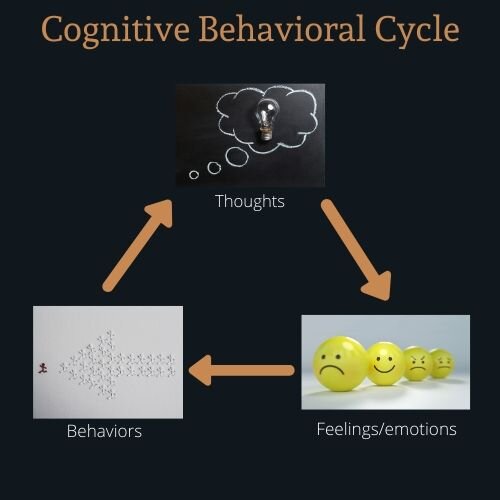
Understanding these loops is crucial. Interventions often aim to interrupt a positive feedback loop or strengthen a negative one. For instance, in the case of panic, a cognitive technique would be to challenge the thought that a racing heart equals a heart attack. A biological approach could involve deep breathing exercises to activate the parasympathetic nervous system and calm the physical response. Both are trying to break the same amplifying cycle.
By integrating these biological, psychological, and behavioral perspectives, we move beyond simplistic, one-dimensional explanations. We see people not as collections of separate parts, but as dynamic, complex systems constantly adapting to their internal and external worlds.