Advanced Psychological Copywriting and Persuasion Mastery
Applying Cognitive Biases
Influence in Action
You already know the basic principles of persuasive writing. Now it's time to go deeper. The most effective copy doesn't just present benefits; it frames them in a way that taps into predictable patterns of human decision-making. We're moving beyond simple persuasion into psychological influence.
Let's start with a foundational concept: Loss Aversion. Research by Nobel laureate Daniel Kahneman and his partner Amos Tversky showed that people feel the pain of a loss about twice as strongly as the pleasure of an equivalent gain. Losing $20 feels worse than finding $20 feels good. In copywriting, this means framing your offer not just as something to gain, but as something to avoid losing.
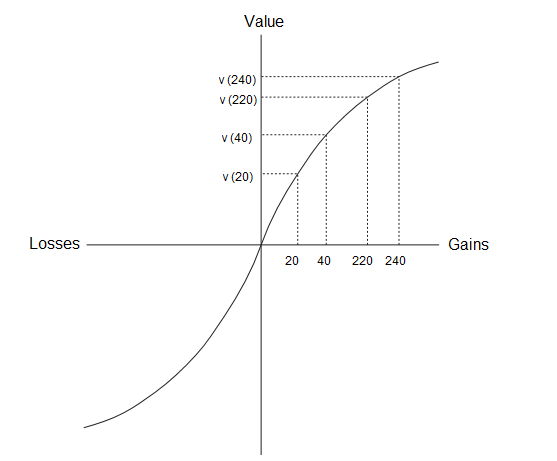
Instead of: "Sign up to save 20% on your energy bills." Try: "Stop overpaying on your energy bills. See how you can save 20%."
The first version offers a gain, which is good. The second highlights an existing loss—the money they're currently wasting. This creates a stronger sense of urgency. You're not just offering a benefit; you're solving a problem they might not have even realized they had.
Structuring Choice
The way you present options can dramatically influence a customer's decision. This is where anchoring and decoys come into play.
Anchoring is the tendency to rely heavily on the first piece of information offered. When you see a product listed as "$199 Now $99," the original price of $199 acts as an anchor. It makes the $99 price seem like a fantastic deal, even if the product's actual value is closer to $99. The first number sets the context for value.
The takes this a step further by introducing a third, slightly inferior option to make one of the other options seem more attractive. It works by making one choice clearly superior to the decoy, which in turn makes it seem superior to the other original choice as well.
| Plan | Price | Features |
|---|---|---|
| Basic | $9/mo | 10 Projects, 1 GB Storage |
| Pro (Decoy) | $19/mo | 50 Projects, 10 GB Storage |
| Pro Plus | $21/mo | Unlimited Projects, 100 GB Storage |
In the table above, the "Pro" plan is the decoy. For just $2 more, the "Pro Plus" plan offers significantly more value. The decoy's purpose isn't to be chosen; it's to make the Pro Plus plan look like an irresistible deal compared to the other options.
Time and Trust
Humans are wired to prefer immediate rewards over future ones, even if the future reward is larger. This is called Hyperbolic Discounting. You can use this to your advantage by emphasizing instant benefits.
For example, offering an "instant 15% discount" is often more effective than offering a "$50 voucher for your next purchase." The immediate gratification of the discount triggers a stronger response. Similarly, a free trial that gives instant access is more compelling than a promise of future savings.
Finally, let's talk about building trust. It seems counterintuitive, but admitting a small flaw can make you seem more honest and trustworthy. This is known as the A company that presents itself as perfect can seem inauthentic. By acknowledging a minor weakness, you make your strengths more believable.
Consider the famous ad campaign for the Volkswagen Beetle: "Lemon." The ad openly admitted to a tiny imperfection (a small blemish on the chrome), which paradoxically made VW's claims about its otherwise high quality and rigorous inspections far more credible.
These psychological triggers aren't about manipulation; they're about understanding how the human mind works. By aligning your message with these natural tendencies, you can create copy that resonates more deeply and drives action more effectively.