Advanced Prop Making for Theater
Advanced Prop Design
Beyond Basic Construction
Advanced prop design moves beyond simply creating objects that look right. It's about building pieces that are integral to the performance. These props might need to perform a specific function, withstand rigorous use every night, or contain intricate details that tell a story all on their own.
Think of a magical locket that must glow on cue, a breakaway chair that shatters safely and consistently, or a period-accurate scientific instrument with moving parts. These items are more than set dressing; they are active participants in the storytelling. The focus shifts from appearance alone to a blend of aesthetics, engineering, and durability.
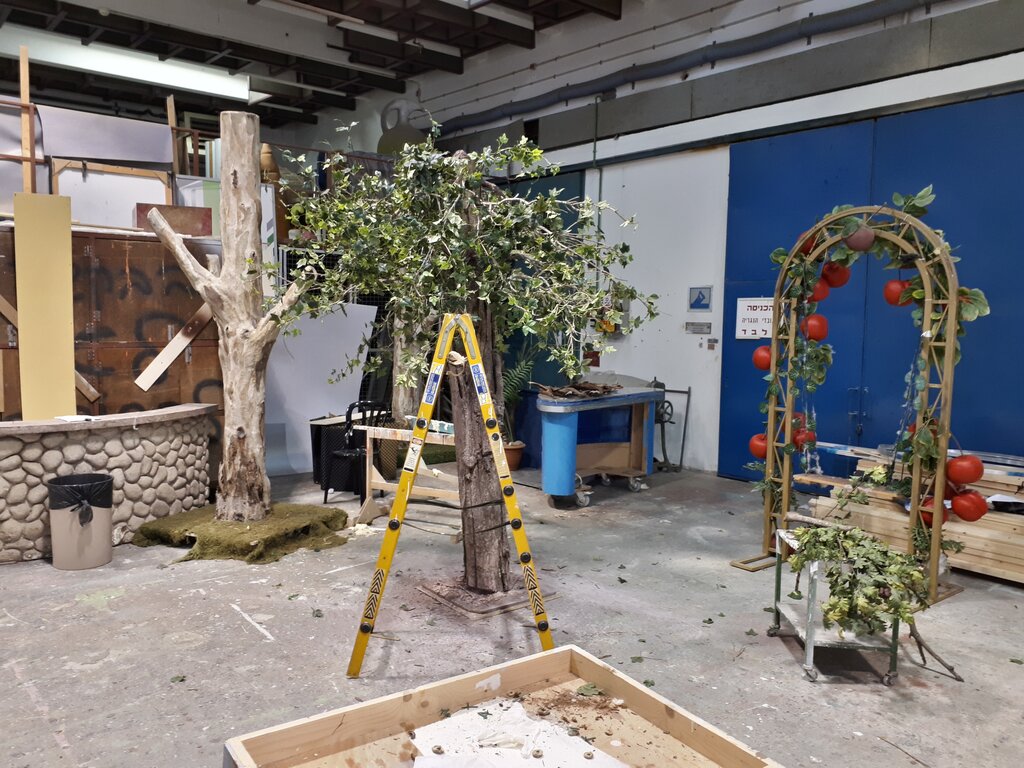
This level of design requires a deep understanding of the play's mechanics. You're not just a builder, but an inventor, figuring out how to make the impossible possible on stage.
The Collaborative Blueprint
No prop exists in isolation. Advanced props are born from a constant conversation between the prop master, the director, and the scenic, lighting, and costume designers. The director provides the vision for the prop's role in the action, while the designers ensure it fits within the visual language of the production.
This process is iterative. A first draft of a prop is built, tested in rehearsal, and then refined based on feedback. An actor might find a prop too heavy to handle naturally, or the director might realize it needs to break differently to achieve the desired dramatic effect. This feedback loop is essential for integrating the prop seamlessly into the performance.
For example, a prop sword for a fight scene must be approved by the fight choreographer for balance and safety, by the scenic designer for its aesthetic, and by the director for its dramatic impact. The final product is a synthesis of these multiple expert perspectives.
Digital Drafting and Fabrication
While sketches on paper remain a quick way to share ideas, digital tools have revolutionized the design of complex props. Computer-Aided Design (CAD) software and 3D modeling programs allow for meticulous planning before any materials are cut.
Using software like Blender, Fusion 360, or Rhino, a designer can build a virtual model of the prop. This offers several advantages:
- Precision: You can plan exact dimensions and ensure all parts fit together perfectly.
- Visualization: The director and other designers can see the prop from any angle and request changes before fabrication begins.
- Mechanical Planning: For functional props, you can model internal mechanisms, like gears or simple electronics, to work out the engineering challenges in a virtual space.
- Digital Fabrication: These models can be sent directly to 3D printers or CNC machines to create complex components with a high degree of accuracy.
Digital modeling allows you to build and break a prop a dozen times before touching a single piece of material, saving time, money, and frustration.
Materials and Techniques
Choosing the right materials is a balancing act between aesthetics, function, and safety. An ornate throne needs to look heavy and ancient, but it must be light enough for stagehands to move it quickly during a scene change. A prop weapon must look menacingly real but be completely safe for the actors.
This is where a deep knowledge of materials comes into play. You might use a lightweight foam carved and painted to look like stone, or a flexible urethane rubber cast to create a durable but soft replica of a metal tool. Modern composites, plastics, and even electronics are now standard in the advanced prop builder's toolkit.
| Material Category | Common Use Case | Key Considerations |
|---|---|---|
| Rigid Foams | Carving large, lightweight objects (statues, rocks) | Easy to shape, but requires a hard protective coating for durability. |
| Casting Resins | Duplicating detailed objects; creating clear or colored parts. | Can be brittle or flexible depending on the type; requires a mold. |
| Plastics (e.g., Worbla) | Armor, intricate decorations, durable shells. | Heat-formable, lightweight, and very strong. |
| Silicone/Rubber | Creating safe, flexible props (e.g., stunt knives, breakaway glass). | Excellent for safety and creating molds for casting other materials. |
Techniques for finishing are just as important. A prop maker must be a master of illusion, using paint, texture, and weathering to make new plastic look like aged wood or foam look like solid metal. The final prop isn't just an object; it's a piece of the world you're helping to create on stage.
What is the primary distinction between a simple set dressing prop and an advanced prop?
A prop maker might use CAD and 3D modeling software primarily to:
Ultimately, advanced prop design is a multidisciplinary art. It combines sculpting, engineering, painting, and collaborative problem-solving to create objects that are not only beautiful but essential to the life of the production.