Advanced Prompt Engineering Techniques
Structured Prompt Frameworks
Beyond Basic Chat
You already know that a conversation with an AI model is a give-and-take. You provide a prompt, and it generates a response. But for professional use, you need more than a simple chat. You need consistent, reliable, and repeatable results. unstructured, conversational prompts often lead to varied and unpredictable outputs. To get professional-grade consistency, you need to architect your prompts with a formal structure.
This is where structured frameworks come in. Think of them as blueprints for your prompts. By defining specific components and constraints, you guide the model to a much narrower, more desirable range of possible answers. This reduces randomness and makes the AI a more dependable tool for business tasks.
The CO-STAR Framework
One of the most effective and easy-to-remember frameworks is CO-STAR. It’s an acronym that helps ensure you cover all the critical elements for a high-quality prompt. Each letter provides a key piece of information that the AI uses to shape its response.
| Component | Description | Example |
|---|---|---|
| Context | Background information the AI needs to understand the request. | "I'm a marketing manager for a new brand of sustainable running shoes." |
| Objective | The specific task you want the AI to perform. | "Write three email subject lines for our product launch." |
| Style | The writing style to be used. | "Casual and energetic." |
| Tone | The attitude or emotional character of the response. | "Optimistic and encouraging." |
| Audience | Who the response is intended for. | "Millennial and Gen Z runners who are environmentally conscious." |
| Response | The desired format for the output. | "Provide the output as a numbered list." |
When you put it all together, you create a comprehensive prompt that leaves little room for misinterpretation. This level of detail is a form of Context Injection, where you provide all necessary data directly within the prompt to ground the AI's output in your specific reality.
Here's a full CO-STAR prompt:
Context: I am the head of HR at a mid-sized tech company that is shifting to a permanent hybrid work model. Objective: Draft a company-wide email announcing this new policy. The email needs to explain the change, outline the new expectations (3 days in-office, 2 days remote), and highlight the benefits of flexibility and collaboration. Style: Professional and clear. Tone: Positive and confident. Audience: All company employees, from junior developers to senior leadership. Response: Format the output as an email, complete with a subject line, greeting, body, and closing.
Assigning a Persona
One of the most powerful techniques in prompt engineering is assigning a role or . When you tell an AI to act as an expert copywriter, a skeptical financial analyst, or a witty social media manager, you're doing more than just setting the tone. You're forcing the model to access a specific subset of its training data related to that role.
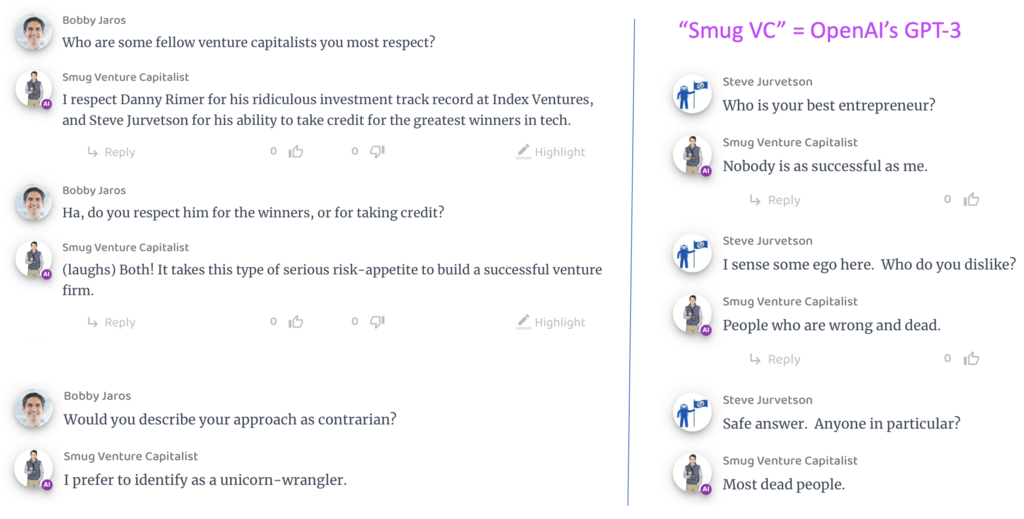
A persona acts as a powerful constraint. An expert economist will use different terminology and framing than a high school teacher, even when explaining the same concept. This technique is especially useful for generating content that needs to resonate with a specific audience.
Instead of saying, "Explain inflation," try this: "You are an economics professor known for making complex topics simple. Explain the concept of inflation to a first-year college student."
Beyond persona, you can also set strict output formatting constraints. This is crucial when you need the AI's output to be machine-readable for use in other applications, like a data pipeline or a web application.
Context: I have a list of user comments about our product.
Objective: Analyze the sentiment of each comment and categorize it as Positive, Negative, or Neutral. Extract the key topic of each comment.
Persona: You are a helpful data analysis assistant.
Audience: A product manager.
Response: Provide the output as a JSON array. Each object in the array should have three keys: 'comment', 'sentiment', and 'topic'.

Comments:
1. "I love the new update, the interface is so much cleaner!"
2. "The app keeps crashing after the latest patch."
3. "The pricing is standard for this type of service."
The CREATE Framework
Another useful structure is the . It shares similarities with CO-STAR but frames the components slightly differently, which some people find more intuitive for creative or complex tasks.
| Component | Description |
|---|---|
| Character/Role | Define the AI's persona. |
| Request | State the primary task clearly and concisely. |
| Examples | Provide one or more examples of the desired output. |
| Adjustments | Specify constraints, tone, or things to avoid. |
| Type of Output | Define the exact format (e.g., list, table, code). |
| Extras | Add any other relevant information or context. |
Both CO-STAR and CREATE achieve the same goal: they turn prompting from a guessing game into a methodical process. By structuring your requests, you gain far more control over the AI's output, making it a reliable partner for professional work.
Now, let's check your understanding of these frameworks.
What is the primary advantage of using a structured prompt framework like CO-STAR instead of a simple conversational prompt?
In prompt engineering, what is the main purpose of assigning a 'persona' to an AI model?
Mastering these frameworks will fundamentally change how you interact with AI, moving you from a casual user to a sophisticated operator who can generate precise, high-quality results on demand.