Advanced Prompt Engineering for Educators
Introduction to Prompt Engineering
Talking to an AI
Using an AI language model is like having a conversation. You give it an instruction, and it gives you a response. But unlike talking to a person, you can't rely on shared experiences or unspoken understanding. The AI only knows what you tell it. This is where prompt engineering comes in.
Prompt engineering is the practice of designing inputs (prompts) to guide AI models toward producing desired outputs.
Think of it as giving directions. If you tell someone to "go to the store," they might get lost. Which store? What's the best route? But if you say, "Go to the grocery store on Main Street, and take Elm Avenue to get there," you'll get a much better result. The quality of your instruction directly impacts the quality of the outcome.
This skill is crucial because language models, despite their power, are not mind readers. They are complex systems trained on vast amounts of text, and they generate responses by predicting the most likely sequence of words based on your input. A well-crafted prompt steers that prediction process in the right direction.
The Anatomy of a Prompt
An effective prompt isn't just a question; it's a set of clear instructions. While formats vary, strong prompts often contain a few key ingredients that work together to guide the AI.
| Component | Purpose | Simple Example |
|---|---|---|
| Instruction | The specific task you want the AI to perform. | "Write a short story..." |
| Context | Background information to narrow the focus. | "...about a lonely robot..." |
| Constraints | Rules or limits the AI must follow. | "...that is exactly 50 words long." |
Putting it all together, you get a prompt like: "Write a short story about a lonely robot that is exactly 50 words long."
Let's compare this to a vague prompt like "tell me about a robot." The first prompt is specific and gives the AI a clear goal. The second is too broad and could result in anything from a technical definition to a list of famous fictional robots.
Clarity is key. The more specific and unambiguous your instructions are, the more likely you are to get the output you want on the first try.
Common Challenges
Even with a good understanding of prompt structure, you'll run into challenges. AI models can sometimes misunderstand your intent, provide factually incorrect information (a phenomenon known as "hallucination"), or generate generic, unhelpful responses.
One common mistake is using ambiguous language. Words can have multiple meanings. For example, asking an AI to "summarize the plot of Glass" could refer to a movie, a novel, or a play. Providing context, like "the 2019 M. Night Shyamalan film," removes this ambiguity.
Another challenge is getting the right tone. An AI doesn't have feelings, but it can mimic writing styles. If you want a formal email, you need to ask for one. If you want a playful poem, you need to specify that. Without guidance on tone, the output might feel flat or inappropriate for your needs.
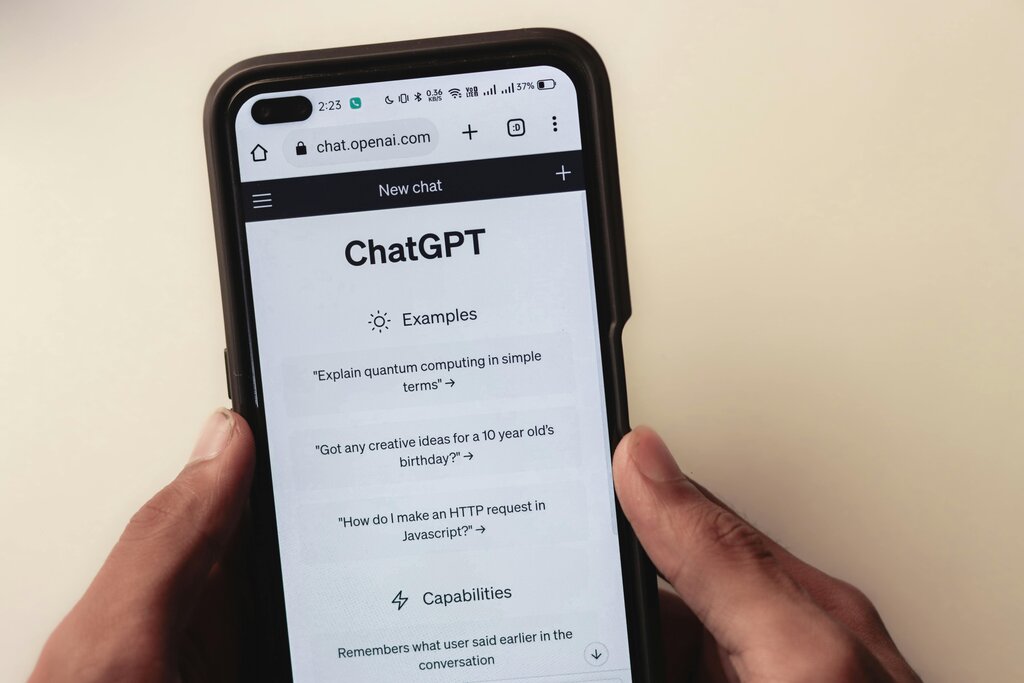
The solution to most of these problems is iteration. Don't expect the perfect response on your first attempt. Start with a simple prompt, see what the model produces, and then refine your instruction with more detail, constraints, or examples. Prompt engineering is a process of dialogue and refinement.
Ready to test your knowledge? This quiz will cover the fundamental concepts of prompt engineering we've discussed.
Why is prompt engineering a crucial skill when using AI language models?
Which of the following is the most effective prompt?
Mastering these basics is the first step. By providing clear, contextual, and constrained prompts, you can turn a powerful tool into a precise and reliable partner for your tasks.